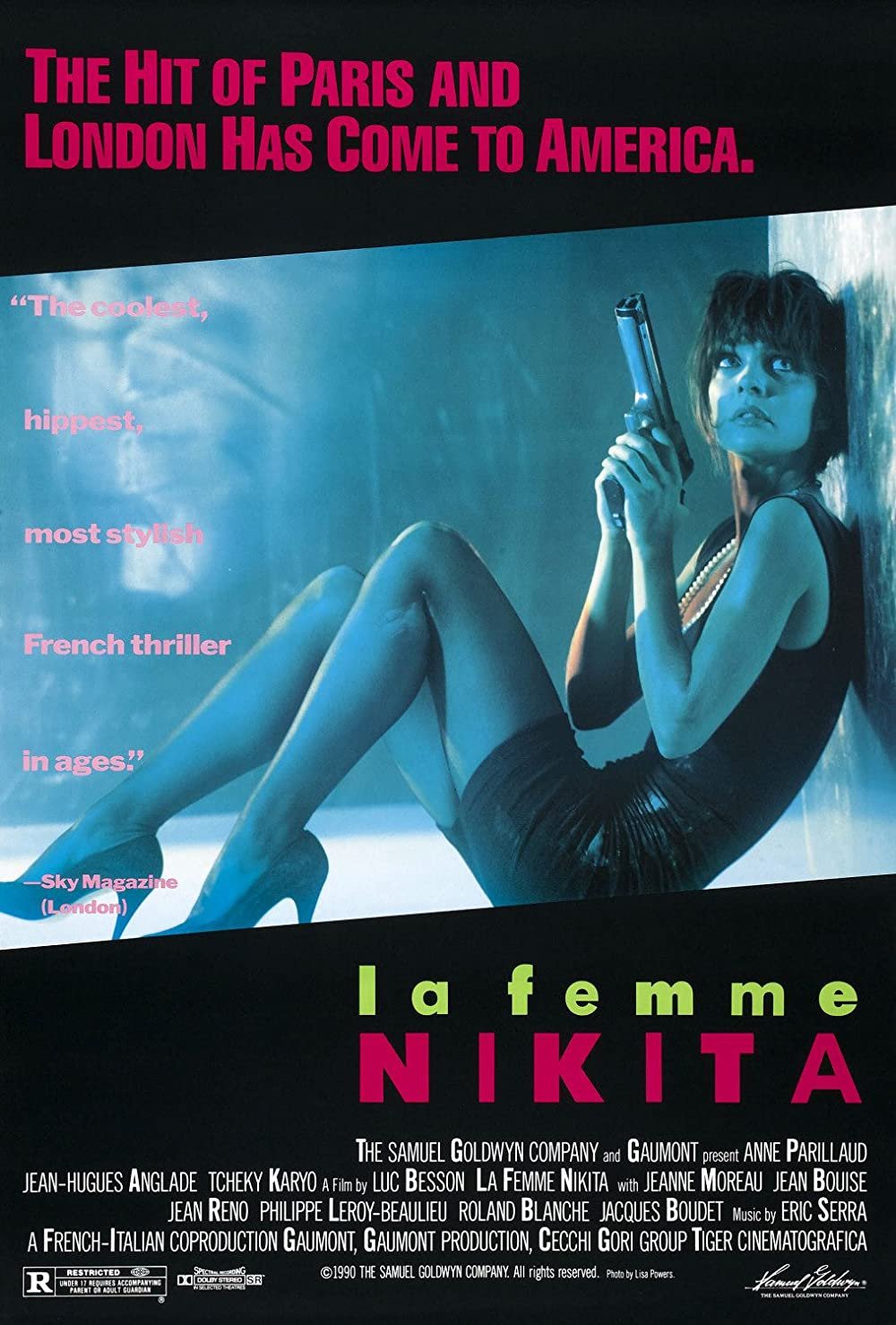
“Nikita” is a critically acclaimed French action thriller film from 1990, skillfully directed by Luc Besson. It is also known as “La Femme Nikita” or “Nikita” in some regions. The movie stars Anne Parillaud in the title role of Nikita, a young criminal who is given a second chance by a secret government agency to become an assassin.
The story revolves around Nikita, a drug-addicted and violent young woman who is convicted of a brutal crime. Instead of serving a prison sentence, she is trained and transformed into a skilled assassin by a covert government organization known as “Division.” Under the guidance of her mentor, Bob (played by Tchéky Karyo), Nikita learns various combat and espionage skills.
As Nikita adjusts to her new life as a highly trained operative, she develops conflicted feelings about her violent actions and struggles to maintain her humanity. She forms a romantic relationship with a supermarket employee named Marco (played by Jean-Hugues Anglade), which further complicates her life as she tries to balance her personal and professional lives.
“Nikita” gained international acclaim for its stylish direction, intense action sequences, and Anne Parillaud’s performance as the complex and vulnerable protagonist. The film has been influential in the action genre and has inspired numerous adaptations and spin-offs, including a popular television series titled “La Femme Nikita.”
Overall, “Nikita” is a gripping French thriller that explores themes of redemption, identity, and the consequences of violence. It is known for its visually striking cinematography, emotional depth, and engaging storytelling.
I find Nikita an intense thriller with room for improvement and hence my rating for this movie is 3.5/5.
“Nikita,” directed by Luc Besson, is a gripping and intense thriller that explores the dark world of espionage and assassins. The film showcases Besson’s signature visual style and offers a compelling narrative that keeps the audience engaged from start to finish. However, despite its many strengths, “Nikita” falls short in certain areas, preventing it from reaching its full potential.
One of the film’s notable strengths lies in its lead performance by Anne Parillaud as Nikita. Parillaud delivers a captivating portrayal of a troubled, yet resilient young woman thrust into a life of crime. Her transformation from a drug-addicted criminal to a skilled government operative is both believable and mesmerizing. Parillaud effectively conveys the emotional complexity of her character, making her the driving force behind the film’s success.
The film’s visual style is another highlight, with Besson’s signature flair evident in every frame. The use of vibrant colors, sleek cinematography, and stylish set designs create a visually striking world that adds to the film’s overall atmosphere. Besson’s direction creates a sense of tension and urgency, particularly during the action sequences, which are expertly choreographed and executed.
Where “Nikita” falters is in its pacing and character development. The film tends to meander at times, with certain scenes feeling unnecessarily prolonged. This slow pacing detracts from the overall momentum of the story, making it feel disjointed and uneven. Additionally, while Nikita’s character is well-developed, the supporting characters lack depth and often feel underutilized. The audience is left craving more insight into their motivations and backstories, which could have enriched the overall narrative.
Furthermore, the film’s treatment of violence and its portrayal of female characters could be considered problematic by some viewers. While the depiction of violence serves to heighten the tension and highlight the brutal realities of Nikita’s world, some scenes may be overly graphic and exploitative. Additionally, the female characters, aside from Nikita, are primarily presented as sexual objects or disposable pawns. A more nuanced and balanced representation of women would have elevated the film’s thematic depth.
Despite its flaws, “Nikita” remains a thrilling and entertaining watch, thanks to its strong lead performance, stylish direction, and gripping storyline. The film’s intense action sequences and visual flair create a captivating experience that keeps audiences engaged. However, the film’s pacing issues, underdeveloped supporting characters, and problematic treatment of violence and female characters prevent it from achieving greatness.
In the end, “Nikita” is a flawed gem that showcases Luc Besson’s directorial prowess while highlighting the need for better character development and more thoughtful storytelling choices. It’s a movie worth watching for its unique style and Anne Parillaud’s compelling performance, but it falls short of reaching its full potential.
But the story doesn’t end here. I watched this movie once again. And this time I found Nikita as a riveting exploration of eedemption and empowerment. And thus I rate it 4/5
“Nikita,” directed by Luc Besson, is a captivating thriller that delves deep into the themes of redemption and empowerment. The film excels in several aspects, offering a compelling narrative, exceptional performances, and thought-provoking character development that elevates it above typical action fare.
One of the standout elements of “Nikita” is its exploration of Nikita’s journey from a troubled young woman to a formidable government operative. Anne Parillaud delivers a stellar performance, bringing Nikita’s complex emotions and inner struggles to life. Parillaud’s portrayal is nuanced and impactful, capturing the character’s vulnerability and resilience with equal measure. The transformation of Nikita throughout the film is both believable and inspiring, as she finds strength and purpose in a world that initially seems devoid of hope.
The film’s narrative structure is another strong point, offering a fresh take on the spy thriller genre. It skillfully blends elements of action, drama, and romance, keeping the audience engaged and guessing throughout. Besson’s direction is confident and assured, with well-paced sequences that build tension and effectively showcase Nikita’s evolution. The film’s climax is particularly satisfying, offering a powerful culmination of Nikita’s journey that leaves a lasting impact.

Moreover, “Nikita” features strong supporting performances that further enhance the film’s depth. Tchéky Karyo’s portrayal of Bob, Nikita’s mentor, adds an intriguing dynamic to the story. His complex relationship with Nikita serves as a catalyst for her growth and adds layers of emotional resonance to the narrative. Jean-Hugues Anglade also shines as Marco, a love interest who provides both emotional support and conflict, contributing to the film’s engaging character dynamics.
The visual style of “Nikita” is both visually striking and thematically appropriate. Luc Besson’s meticulous attention to detail is evident, with each frame conveying a sense of gritty realism and stylish sophistication. The film’s sleek cinematography and atmospheric set designs create a visually immersive experience that enhances the overall narrative.
“Nikita” also tackles societal themes, such as gender roles and the struggle for self-determination. The film subverts traditional gender norms by presenting Nikita as a powerful and capable protagonist, challenging stereotypes and empowering female audiences. It provides a compelling examination of personal agency and the ability to shape one’s own destiny, resonating on a deeper level beyond its thrilling action sequences.
In summary, “Nikita” shines as a riveting exploration of redemption and empowerment. Anne Parillaud’s exceptional performance, coupled with Luc Besson’s skillful direction, elevates the film above standard action fare. The film’s compelling narrative, strong supporting cast, and thematic depth make it a standout entry in the spy thriller genre. “Nikita” is a must-watch for those seeking an engaging and thought-provoking cinematic experience.

 Poetry Hub
Hello. Thanks for visiting. I’d love to hear your thoughts! What resonated with you in this piece? Drop a comment below and let’s start a conversation.