Auschwitz: The Darkest Chapter of World War II
World War II, one of the most devastating conflicts in human history, left behind a dark legacy of suffering and atrocities. Among the multitude of horrors that unfolded during this period, Auschwitz stands as a haunting symbol of the depths of human cruelty and the systematic genocide perpetrated by the Nazis. This article delves into the harrowing story of Auschwitz, exploring its origins, the unimaginable brutality that took place within its confines, and the enduring lessons it holds for humanity.
Auschwitz holds a significant place in history due to its status as the largest and most infamous concentration camp during World War II. There are several reasons why Auschwitz is widely recognized and studied:
- Scale and Scope: Auschwitz was a vast complex comprising several camps, including Auschwitz I, Auschwitz II-Birkenau, and Auschwitz III-Monowitz. Its sheer size and capacity for mass extermination distinguish it as a central site of Nazi atrocities.
- Systematic Genocide: Auschwitz was a key component of the Nazis’ “Final Solution,” the systematic plan to exterminate European Jews. Over one million Jews, along with other targeted groups such as Romani people, Poles, Soviet prisoners of war, and others, were murdered in Auschwitz’s gas chambers or through forced labor, starvation, and disease.
- Symbolic Importance: Auschwitz has come to symbolize the Holocaust itself, representing the epitome of human suffering, dehumanization, and genocide. It stands as a stark reminder of the consequences of unchecked hatred, prejudice, and totalitarianism.
- Survivors’ Testimonies: Many survivors of Auschwitz have shared their firsthand accounts, providing invaluable insights into the daily life, horrors, and resilience within the camp. Their testimonies serve as a testament to the strength of the human spirit and the importance of remembrance and education.
- Historical Documentation: Auschwitz was extensively documented by the Nazis themselves, including photographs, records, and testimonies. This wealth of evidence allows for a comprehensive understanding of the camp’s operations and the crimes committed there.
- Lessons for Humanity: Auschwitz serves as a reminder of the need for vigilance in safeguarding human rights, combating hate, and preventing the reoccurrence of such atrocities. It compels us to confront the darkest aspects of human nature and strive for a more compassionate and just world.
By studying Auschwitz, we gain a deeper understanding of the Holocaust, its causes, and its lasting impact on individuals, communities, and societies. It is through this understanding that we can honor the victims, learn from the past, and work towards a future free from hatred and violence.
Auschwitz was established by the Nazis in 1940 as a concentration camp for several reasons:
- Nazi Ideology: The establishment of Auschwitz was driven by the Nazis’ anti-Semitic ideology, which regarded Jews as racially inferior and sought to eliminate them from society. The Nazis believed in a warped concept of racial purity and viewed Jews as a threat to their vision of a racially homogeneous society.
- Expansion of the “Final Solution”: Auschwitz played a crucial role in the implementation of the Nazis’ “Final Solution,” which was their plan for the systematic extermination of European Jews. The camp was strategically located near a major railway junction, making it a convenient hub for transporting Jews from various parts of Europe to be imprisoned, exploited, and ultimately murdered.
- Forced Labor: In addition to its role as an extermination camp, Auschwitz also served as a major forced labor camp. The Nazis exploited the prisoners’ labor for economic purposes, using them in various industries, such as construction, manufacturing, and agriculture. The camp’s location and infrastructure made it suitable for large-scale forced labor operations.
- Experimental Site: Auschwitz was used as a testing ground for various sadistic medical experiments conducted by Nazi doctors, including Dr. Josef Mengele. Prisoners were subjected to inhumane medical procedures and experiments, often resulting in severe pain, suffering, and death. The camp provided a controlled environment for these unethical experiments.
- Strategic Location: Auschwitz’s location in Poland was strategically chosen by the Nazis for several reasons. Poland was occupied by Germany during World War II, providing the Nazis with easier control over the camp’s operations. Additionally, the camp was situated near a network of railway lines, facilitating the transportation of prisoners and supplies.
Overall, Auschwitz was established as a concentration camp by the Nazis as part of their broader agenda to exterminate Jews and other targeted groups, exploit forced labor, and carry out cruel medical experiments. It was a manifestation of the Nazis’ ideology, strategic planning, and ruthless pursuit of their vision for a racially pure society.
- The Origins of Auschwitz:
Auschwitz, located in present-day Poland, was established by the Nazis in 1940 as a concentration camp. Originally designed to imprison political opponents and dissidents, it later evolved into a sprawling complex comprising multiple camps, with Auschwitz II-Birkenau serving as the extermination center.
- The Horror Unveiled:
The true horror of Auschwitz lay in its purpose as an extermination camp, where the systematic genocide of millions took place. The ruthless machinery of death was fueled by Nazi ideology, driven by a warped belief in racial superiority and a desire to eradicate perceived “undesirable” elements from society.
- Life and Death in the Camp:
Inside the barbed wire fences of Auschwitz, prisoners endured unimaginable suffering. They were subjected to forced labor, malnutrition, disease, and rampant brutality. Families were torn apart, as men, women, and children were separated upon arrival, with most destined for immediate extermination in gas chambers.
- Medical Experiments and Dehumanization:
Auschwitz became a breeding ground for sadistic medical experiments conducted on prisoners. Dr. Josef Mengele, infamously known as the “Angel of Death,” conducted cruel and inhumane experiments on inmates, pushing the boundaries of human endurance and morality.
- Resistance and Resilience:
Despite the overwhelming odds stacked against them, acts of resistance and resilience emerged within Auschwitz. Prisoners displayed incredible bravery, risking their lives to sabotage Nazi operations, document atrocities, and preserve a semblance of humanity in the face of unspeakable horror.
- Liberation and Remembrance:
The liberation of Auschwitz by Soviet forces in January 1945 brought an end to the horrors within its walls. However, the world was left to grapple with the enormity of the crimes committed. Auschwitz serves as a stark reminder of the consequences of unchecked hatred, prejudice, and totalitarianism.
- Lessons for Humanity:
The legacy of Auschwitz compels us to confront the darkest aspects of human nature and strive for a more compassionate and just world. It serves as a potent reminder of the need for vigilance in safeguarding human rights, combating hate, and preventing the reoccurrence of such atrocities.
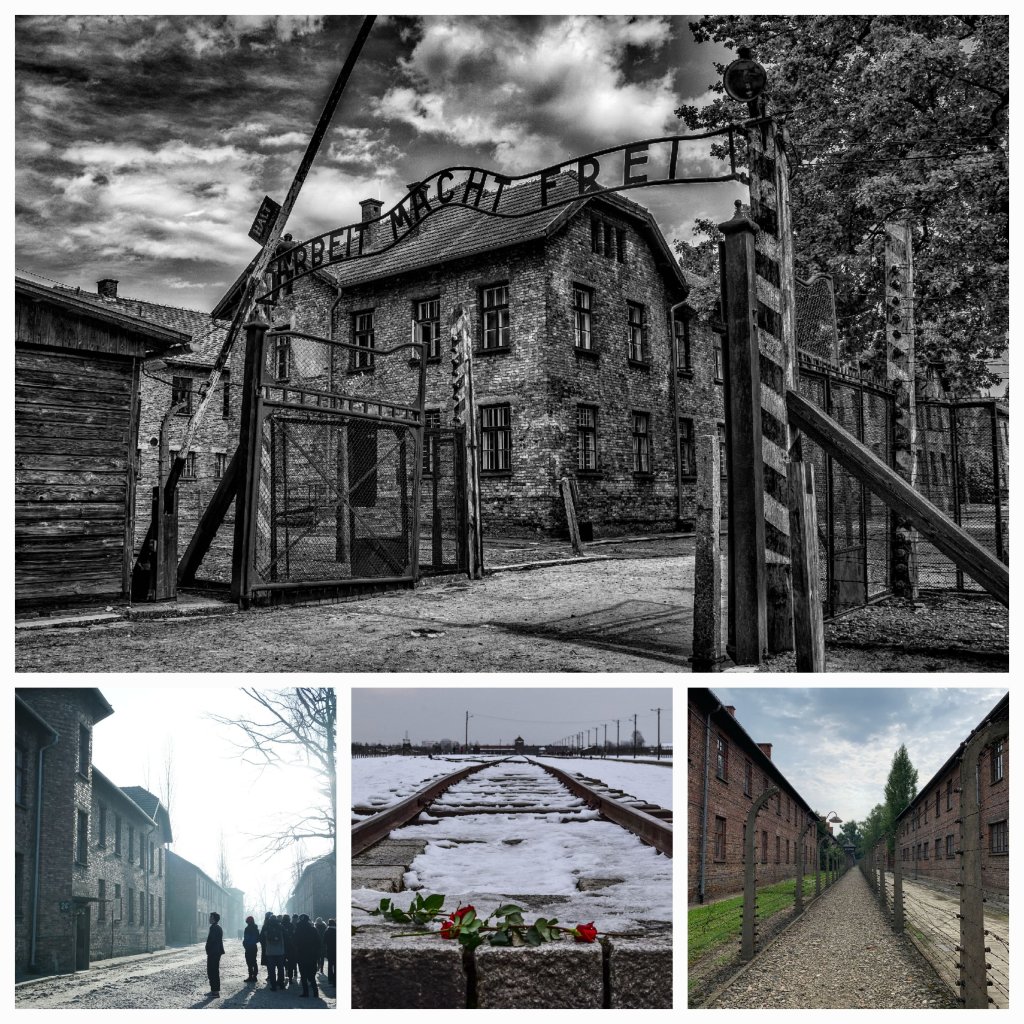
Conclusion:
This is the darkest chapter in the history of world war II. The world’s largest and most dangerous concentration camp Auschwitz.
Auschwitz stands as an indelible testament to the depths of human depravity and the capacity for evil that can arise in times of unchecked power and ideology. It serves as a harrowing reminder of the millions of lives lost and the enduring scars left on humanity. Remembering Auschwitz is not only an act of honoring the victims but also a commitment to ensure that such atrocities are never repeated. It is our collective responsibility to carry the lessons learned from Auschwitz forward, fostering empathy, tolerance, and justice to shape a better future for all.

 Poetry Hub
Hello. Thanks for visiting. I’d love to hear your thoughts! What resonated with you in this piece? Drop a comment below and let’s start a conversation.