The Cauvery water dispute: A case of litigation over cooperation
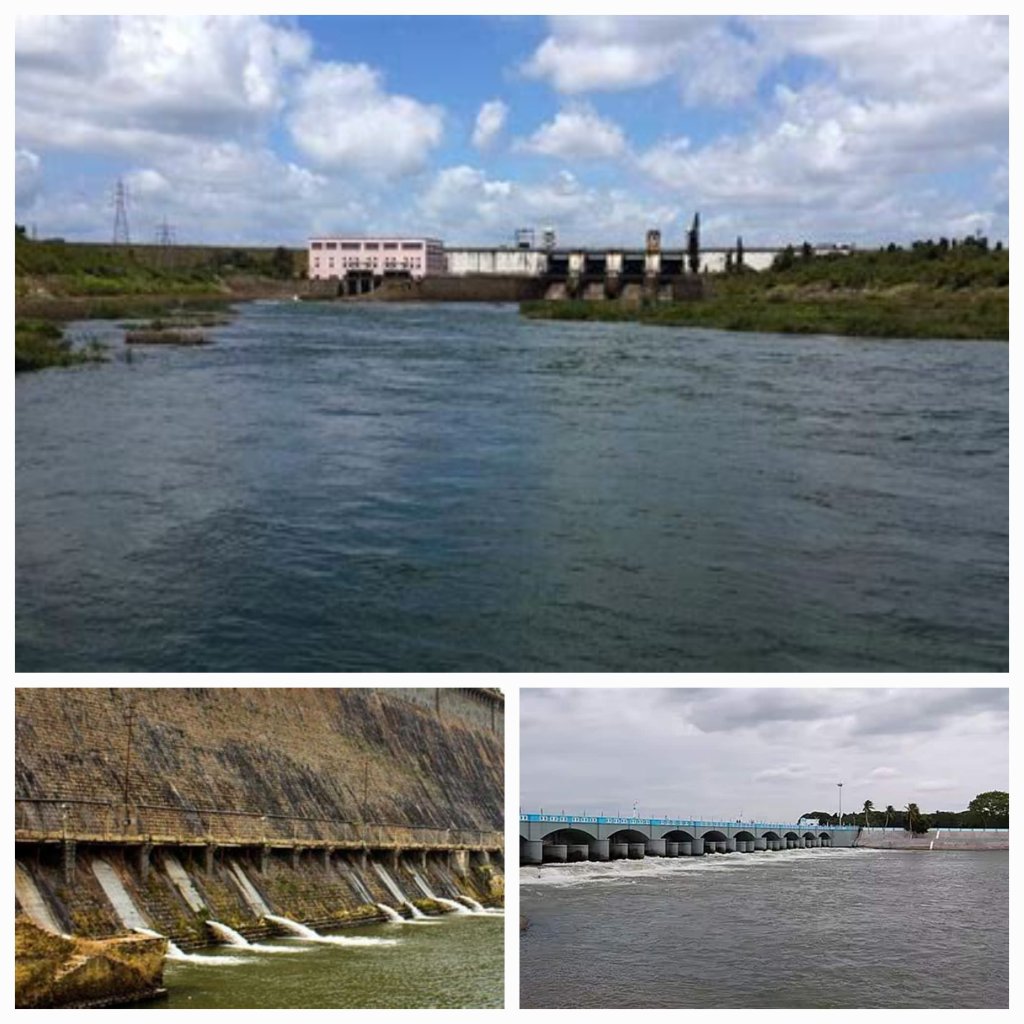
The Cauvery river is a lifeline for millions of people in the southern states of India, namely Karnataka, Tamil Nadu, Kerala and Puducherry. It originates in the Western Ghats in Karnataka and flows through Tamil Nadu before joining the Bay of Bengal. The river basin covers an area of about 81,000 square kilometers and supports agriculture, industry, power generation and domestic use in the region.
However, the sharing of the river water has been a contentious issue between Karnataka and Tamil Nadu for over a century. The dispute dates back to the colonial era, when two agreements were signed between the princely state of Mysore (now Karnataka) and the Madras Presidency (now Tamil Nadu) in 1892 and 1924, allocating fixed shares of water to each state. These agreements were challenged by Karnataka after independence, claiming that they were unfair and violated the principle of equitable apportionment. Tamil Nadu, on the other hand, argued that the agreements were valid and binding, and that any reduction in its share would affect its irrigation needs and food security.
The dispute escalated in the 1970s and 1980s, when both states undertook major projects to increase their water utilization from the river. In 1990, the central government set up a Cauvery Water Disputes Tribunal (CWDT) to adjudicate the matter and determine the quantum of water to be allocated to each state. After 16 years of hearings and deliberations, the CWDT gave its final award in 2007, allocating 419 thousand million cubic feet (TMC) of water to Tamil Nadu, 270 TMC to Karnataka, 30 TMC to Kerala and 7 TMC to Puducherry out of the total annual availability of 740 TMC at the Lower Coleroon Anicut site. The award also stipulated a monthly schedule of water releases by Karnataka to Tamil Nadu, taking into account the seasonal variations and crop patterns.
However, neither state was satisfied with the award, and both filed petitions in the Supreme Court challenging its validity and seeking modifications. The Supreme Court took up the case in 2013 and delivered its verdict in 2018, partially modifying the CWDT award. The court reduced Tamil Nadu’s share by 14.75 TMC and increased Karnataka’s share by the same amount, taking into account the drinking water requirements of Bengaluru city and other towns in Karnataka. The court also directed the central government to frame a scheme for implementing the award and ensuring compliance by both states.
The central government subsequently constituted a Cauvery Water Management Authority (CWMA) and a Cauvery Water Regulation Committee (CWRC) in 2018 to oversee the distribution and regulation of water among the states. The CWMA is headed by a chairman appointed by the central government and consists of representatives from all four states. The CWRC is headed by a chief engineer from the Central Water Commission and comprises engineers from each state. The CWMA has the power to monitor the storage, apportionment, regulation and control of Cauvery waters, issue directions to the states, supervise the operation of reservoirs and regulate water releases. The CWRC has the responsibility to collect data on rainfall, inflows, storage and releases from each state and submit monthly reports to the CWMA.
Despite these institutional mechanisms, the Cauvery water dispute remains unresolved and prone to flare-ups. The main reasons for this are:
The lack of trust and cooperation between Karnataka and Tamil Nadu. Both states have often accused each other of violating or manipulating the water sharing arrangements. They have also resorted to political protests and legal battles whenever there is a shortfall or excess of water due to climatic factors or human interventions.
The absence of a comprehensive and integrated approach to water management in the basin. The existing arrangements are based on a narrow and rigid allocation of water among states without considering the holistic aspects of water conservation, efficiency, quality, ecology and equity. There is no provision for joint planning, monitoring or evaluation of water use or for addressing inter-sectoral or intra-state conflicts over water.
The lack of public participation and awareness in the decision-making process. The stakeholders affected by the water dispute, such as farmers, fishermen, industries, urban dwellers and environmentalists, have little or no say in how their water needs are met or how their rights are protected. They are often kept in the dark about the technical details or legal implications of the water sharing arrangements. They are also not informed or educated about the importance of water conservation or sustainable use.
The way forward for resolving the Cauvery water dispute lies in moving from litigation to cooperation. This requires:
Building trust and dialogue between Karnataka and Tamil Nadu through regular meetings, consultations and exchanges at various levels – political, bureaucratic, technical and civil society. Both states should respect and abide by the judicial and statutory orders and refrain from unilateral or provocative actions that may jeopardize the water sharing arrangements. They should also explore the possibilities of mutual adjustments, compensations or trade-offs in water use during times of surplus or deficit.
Adopting a basin-wide and participatory approach to water management that takes into account the multiple dimensions and interdependencies of water in the region. This involves developing a comprehensive and integrated water resources plan for the Cauvery basin that covers all aspects of water availability, demand, allocation, utilization, conservation, quality, ecology and equity. Such a plan should be prepared with the involvement and consent of all stakeholders, including the central government, the four states, the CWMA, the CWRC and the various users and interest groups.
Enhancing public awareness and education on the Cauvery water dispute and its implications for the people and the environment. This entails disseminating accurate and timely information on the water situation, the water sharing arrangements, the rights and responsibilities of the states and the users, and the benefits and costs of cooperation or conflict. It also involves promoting a culture of water conservation and efficiency among all sectors and segments of society through campaigns, incentives, regulations and best practices.
The Cauvery water dispute is not just a legal or technical issue, but a human and ecological one. It affects the lives and livelihoods of millions of people and the health and diversity of the river ecosystem. It also reflects the larger challenges of water governance and security in India and beyond. Therefore, it deserves a solution that is based on cooperation rather than confrontation, on dialogue rather than litigation, and on sustainability rather than exploitation.
Is this dispute lingering on for political benefits and gaining traction and public sympathy while the people of both states want a permanent solution?
The Cauvery water dispute is influenced by various factors, such as geography, hydrology, climate, agriculture, industry, population, history, law and politics. Therefore, it is difficult to isolate the political motives behind the dispute and assess their impact on the resolution process.
However, some of the web search results suggest that politics does play a significant role in shaping the perceptions and positions of the states involved in the dispute. For example, a result states that “political parties capitalize on water disputes for mobilization”.
These statements indicate that there are political interests and agendas that influence the way the Cauvery water dispute is framed and presented to the public. These may include gaining electoral support, asserting regional identity, challenging historical injustices, or defending state sovereignty. Such political motives may create obstacles for finding a cooperative and sustainable solution to the dispute, as they may fuel mistrust, hostility, or resentment between the states.
On the other hand, there may also be political motives that facilitate dialogue and compromise between the states. For instance, one result mentions that “the Supreme Court took up the case in 2013 and delivered its verdict in 2018, partially modifying the CWDT award”. Another result reports that “the central government constituted a Cauvery Water Management Authority (CWMA) and a Cauvery Water Regulation Committee (CWRC) in 2018 to oversee the distribution and regulation of water among the states“. These statements suggest that there are political institutions and actors that aim to resolve the dispute through judicial and statutory mechanisms, based on legal principles and scientific data.
Moreover, there may also be political motives that reflect the aspirations and demands of the people of both states for a harmonious solution. For example, one result quotes a farmer leader as saying that “we want both Karnataka and Tamil Nadu to live in peace and harmony. We are not against giving water to Tamil Nadu, but we want our share of water too”. Another result cites an environmental activist as saying that “we need to look at the Cauvery as a living entity, not as a commodity. We need to respect its ecological integrity and ensure its equitable use for all”. These statements indicate that there are political voices and visions that advocate for a holistic and participatory approach to water management, based on ecological awareness and social justice.
Therefore, it is possible to say that there are different kinds of political motives behind the Cauvery water dispute, some of which may hinder and some of which may help in finding a lasting solution. The challenge is to identify and balance these motives in a way that serves the common interests and needs of both states and their people.

 Poetry Hub
Hello. Thanks for visiting. I’d love to hear your thoughts! What resonated with you in this piece? Drop a comment below and let’s start a conversation.