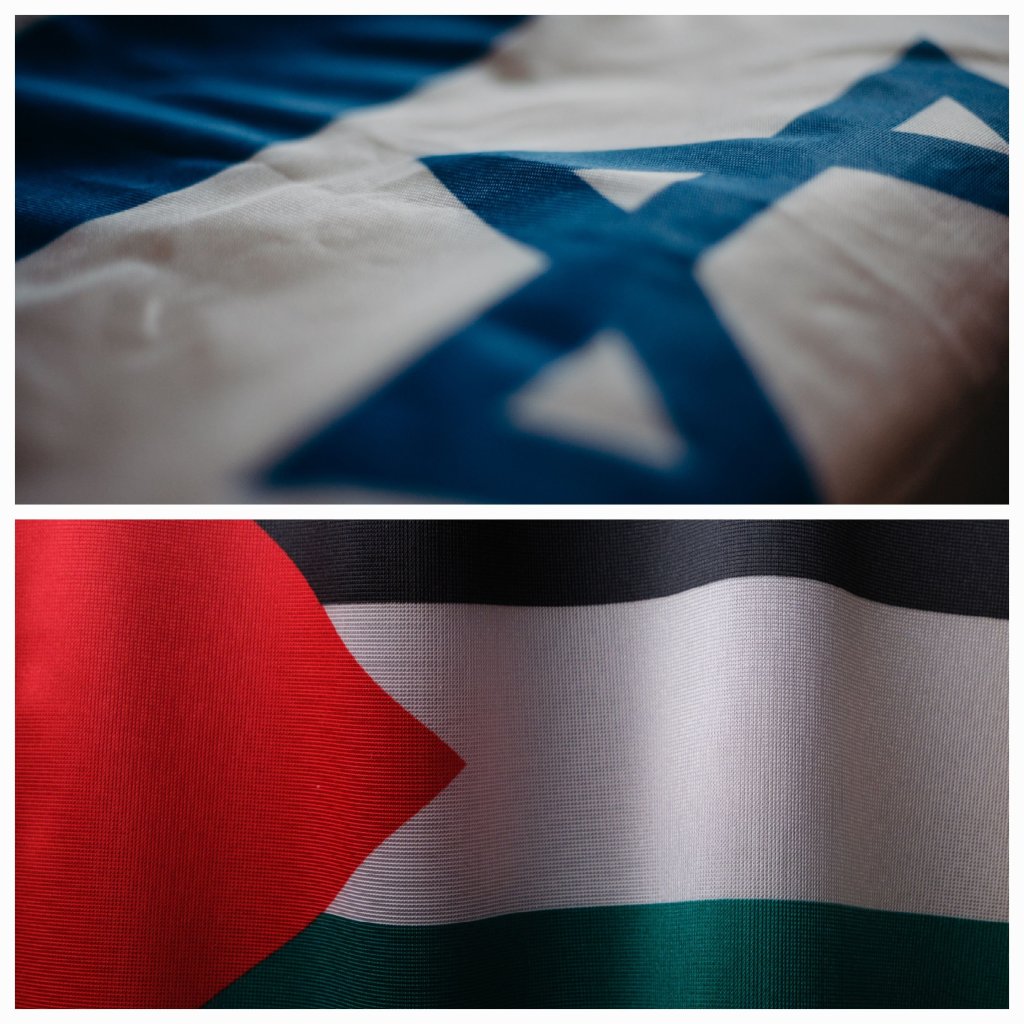
The Israeli-Palestinian conflict is a complex and deeply rooted issue that has been the subject of intense debate and international scrutiny. The question of self-defense and occupation is at the heart of this ongoing dispute, and it is essential to examine the arguments from both sides within the framework of international law.
It is important to note that international law is not monolithic, and interpretations can vary. The Israeli perspective argues for its right to self-defense based on its view of the conflict, while the Palestinian perspective argues for their right to self-defense in the context of their own narrative. The following discussion aims to provide an overview of these opposing viewpoints.
Israeli Perspective:
Israel contends that its right to self-defense is enshrined in international law, particularly under Article 51 of the United Nations Charter. According to Israel, its actions in the occupied territories are aimed at protecting its citizens from threats such as terrorism and violence emanating from Palestinian territories. Israel’s interpretation is that its presence in these territories is a consequence of defensive actions taken in response to attacks on its sovereignty and security.
When Israel refers to “occupied territories” in the context of protecting its citizens from threats, it primarily means the following regions:
- West Bank: This area includes the West Bank and East Jerusalem. Israel captured these territories during the Six-Day War in 1967 and has maintained control over them since. Israel often argues that its presence in the West Bank is necessary for security reasons, citing concerns about potential threats and violence emanating from this region.
- Gaza Strip: While Israel withdrew its military and settlements from the Gaza Strip in 2005, it maintains control over some aspects, such as access to the territory’s borders, airspace, and coastline. Israel argues that its actions in relation to the Gaza Strip are also driven by security concerns, particularly in response to rocket attacks launched from Gaza.
Israel’s position is that its presence in these territories is a response to security threats and that it maintains a military presence there to protect its citizens from violence and terrorism originating from these areas. However, it’s important to note that this perspective is a subject of contention, and various international actors and organizations have different views on the legality and justification of Israel’s actions in these territories.
Palestinian Perspective:
Palestinians and their supporters argue that they have the right to self-defense under international law due to their status as an occupied people. They cite various international conventions, including the Fourth Geneva Convention, which outlines the rights of occupied populations. From their perspective, resistance to occupation is a legitimate form of self-defense against what they view as an illegal occupation.
The Israeli-Palestinian conflict is a long-standing and complex issue with various perspectives and interpretations of international law. Here’s an overview of the arguments made by Palestinians and their supporters regarding their right to self-defense under international law due to their status as an occupied people.
- The Fourth Geneva Convention: Palestinians and their supporters often refer to the Fourth Geneva Convention, a key element of international humanitarian law. This convention was established in 1949 and is aimed at protecting civilians in times of armed conflict, particularly in occupied territories. It outlines several key principles:
- Protection of civilians: The convention emphasizes the need to protect civilians who find themselves under occupation.
- Prohibition of collective punishment: It explicitly prohibits the collective punishment of an entire population for the actions of individuals.
- Freedom of movement: The convention affirms the right of civilians to move freely within the occupied territory.
- Occupation and self-defense: Palestinians argue that they are living under prolonged military occupation, particularly in the West Bank and Gaza Strip, and that this occupation is in violation of international law. They claim that the right to self-defense, as outlined in the UN Charter, applies to them as an occupied people. This self-defense is seen as a response to the perceived illegal occupation and the actions of the occupying power.
- Legitimate resistance: From the Palestinian perspective, resistance to occupation is considered a legitimate form of self-defense. This resistance can take various forms, including peaceful protest, civil disobedience, and, in some cases, armed resistance. They argue that the right to resist foreign occupation is recognized in international law.
- United Nations resolutions: Palestinians often refer to numerous United Nations resolutions that call for an end to the Israeli occupation and the establishment of a Palestinian state. These resolutions are seen as supporting their claim to self-defense under international law.
- Critics and counterarguments: It’s important to note that there are differing interpretations of international law in this context. Critics argue that acts of violence or armed resistance by Palestinian groups, such as Hamas, are not legitimate self-defense but rather acts of terrorism. They also highlight the need for distinguishing between self-defense and acts of violence targeting civilians.
In summary, Palestinians and their supporters argue that their right to self-defense is grounded in international law, particularly the Fourth Geneva Convention, due to their status as an occupied people. They view resistance to what they consider an illegal occupation as a legitimate form of self-defense. However, this interpretation is not universally accepted, and there are ongoing debates and disputes surrounding the Israeli-Palestinian conflict and its legal aspects.
International Legal Framework:
The interpretation of international law in the context of the Israeli-Palestinian conflict is highly contested. While Israel claims self-defense, Palestinians claim their right to resist occupation. Key international legal documents and resolutions, such as United Nations Security Council Resolution 242 and 338, are subject to different interpretations. They call for the withdrawal of Israeli armed forces from occupied territories but also recognize the right of all states in the region to live in peace within secure and recognized boundaries.
The International Court of Justice (ICJ) issued an advisory opinion in 2004, stating that the construction of the Israeli West Bank barrier is illegal. However, this opinion did not specifically address the broader issues of self-defense and occupation. Moreover, Israel did not accept the ICJ’s jurisdiction in this matter.
The question of legality in the Israeli-Palestinian conflict is highly divisive and politicized. Various nations and international bodies have taken different stances on the issue, contributing to the ongoing controversy.
Concluding Thoughts:
The debate over Israel’s right to self-defense in the context of its occupation and the Palestinian right to self-defense under occupation remains a fundamental and divisive issue in the Israeli-Palestinian conflict. International law, while providing some guidance, is open to interpretation and often shaped by the political positions of states involved. The situation in the region remains complex, with no clear resolution in sight.
Overall, the Israeli-Palestinian conflict is a complex and multifaceted issue that has deep historical roots dating back to the late 19th century. The conflict is characterized by sporadic violence, clashes, settlement expansion, and disputes over borders, refugees, and the status of Jerusalem. The recent developments in the region include the ongoing conflict between Israel and Hamas, which has been characterized by sporadic violence, rocket attacks, and ground invasions. The conflict has generated an outpouring of international consternation and condemnation. The Israel Defense Forces maintain a policy of avoiding deliberate targeting of civilians or civilian property and consistently strive to provide advance warning of impending strikes that might impact the civilian population effectively. However, the deliberate and cynical use by Hamas and Islamic Jihad of their own civilians as human shields, as well as their use of mosques, hospitals, schools, and private houses as weapons storage facilities and firing platforms, are severe war crimes and violations of international humanitarian law. The indiscriminate targeting of Israeli cities and civilians practiced by Hamas violates the rule of distinction in international law, which requires combatants to limit attacks to legitimate military targets.
International law provides some guidance on the issue of Israel’s right to self-defense in the context of its occupation and the Palestinian right to self-defense under occupation. However, it is open to interpretation and often shaped by the political positions of states involved. According to some experts, Israel does not have a right to defend itself in terms of the West Bank and Gaza. It has the right to protect its citizens but does not have the right to use overwhelming military force against people under its occupation. On the other hand, some experts argue that Israel has a right to conduct a military occupation in the oPt as a form of self-defense under international law on the use of force. However, they also argue that Israel has no such right under international law.
In conclusion, the situation in the region remains complex with no clear resolution in sight. The recent developments in the region include ongoing conflict between Israel and Hamas. International law provides some guidance on the issue of Israel’s right to self-defense in the context of its occupation and the Palestinian right to self-defense under occupation. However, it is open to interpretation and often shaped by political positions of states involved.

 Poetry Hub
Hello. Thanks for visiting. I’d love to hear your thoughts! What resonated with you in this piece? Drop a comment below and let’s start a conversation.