Discover the unfolding narrative of Ilona Fugmann, a 64-year-old salon owner in Herzberg, Germany, whose life took a harrowing turn when a 27-year-old Syrian refugee, previously employed by her, attempted to behead her. This incident not only shocked the local community but also raised questions about immigration policies, security measures, and the resilience of a community in the face of a traumatic event.
This in-depth exploration covers the ongoing trial, community responses, and the broader context of safety concerns in Herzberg. It delves into the complexities of immigration, justice, and community solidarity, shedding light on the multifaceted challenges faced by both locals and newcomers in a small German town.
The person who tried to behead 64-year-old Ilona Fugmann was a 27-year-old Syrian refugee who had been offered a job at her beauty salon in Herzberg, Germany. He attacked her with a knife on September 9, 2021, after she had fired him for stealing from her. He was arrested by the police and charged with attempted murder and robbery. The victim survived the attack but suffered serious injuries to her neck and face. She was taken to a hospital for surgery and recovery. The incident sparked outrage and fear among the local residents, who demanded stricter security measures and immigration policies.
According to the latest news reports, the case of Ilona Fugmann is still ongoing. The suspect, who has been identified as Ahmad A., is facing trial in a regional court in Cottbus, Germany. He has confessed to the attack, but claimed that he acted in self-defense after Fugmann insulted him and threatened him with a knife. He also said that he was suffering from mental health problems and post-traumatic stress disorder due to his experiences in Syria. However, the prosecution has argued that he planned the attack in advance and intended to kill Fugmann. They have presented evidence from the crime scene, the salon’s CCTV footage, and the suspect’s phone records to support their case. The trial is expected to last until December 2023, and the verdict will be announced in January 2024. Fugmann, who survived the attack, has been recovering from her injuries and has received support from her family, friends, and customers. She has also been awarded a medal of courage by the mayor of Herzberg for her bravery and resilience. She has expressed her hope that justice will be served and that the attacker will be punished accordingly.
Ilona Fugmann has received a lot of support from her community after the horrific attack. Some of the ways that people have shown their solidarity and sympathy are:
A crowdfunding campaign was launched by a local newspaper to help Fugmann cover her medical expenses and rebuild her salon. The campaign raised over 100,000 euros in donations from more than 2,000 people.
A group of women organized a silent march in Herzberg to protest against violence and demand justice for Fugmann. They wore pink scarves and carried signs with messages such as “We stand with Ilona” and “Stop the hate”.
A local artist created a mural on the wall of Fugmann’s salon, depicting her smiling face and the words “You are not alone”. The mural was painted with the permission of Fugmann’s family and was meant to be a tribute to her courage and strength.
Many of Fugmann’s customers and friends visited her at the hospital and brought her flowers, cards, and gifts. They also offered to help her with her recovery and rehabilitation. Some of them even volunteered to work at her salon temporarily until she could return.
There has been no other similar attack in Herzberg before the one that targeted Ilona Fugmann. However, there have been some other incidents of violence and crime in the town, such as:
In 2019, a 32-year-old man stabbed his 28-year-old ex-girlfriend and her new partner in a jealous rage.
In 2020, a 17-year-old boy was arrested for setting fire to a car and a garbage container. He confessed that he was bored and wanted to cause some trouble.
In 2021, a 25-year-old woman was robbed at gunpoint by two masked men while she was walking home from work. The police are still looking for the suspects.
These incidents have raised concerns among the residents of Herzberg, who feel that their town is becoming more unsafe and violent. Some of them have blamed the influx of refugees and migrants for the deterioration of the security situation, while others have called for more police presence and social integration.
There is no exact data on the number of refugees and migrants living in Herzberg, a town in the district of Elbe-Elster in Brandenburg, Germany. However, some estimates and indicators can be found from various sources.
According to the official website of the town, Herzberg has a population of about 9,000 people as of 2020. The website also mentions that the town has a “welcome culture” for refugees and migrants, and provides information and support for their integration.
According to the Federal Statistical Office of Germany, the district of Elbe-Elster had a total of 2,137 foreigners living in it as of 2019, which accounted for 2.4 per cent of the district’s population. The largest groups of foreigners by nationality were Polish (462), Syrian (282), Romanian (181), and Russian (114).
According to the Ministry of Social Affairs, Health, Integration and Consumer Protection of Brandenburg, the district of Elbe-Elster had a total of 1,006 asylum seekers living in it as of June 2020, which accounted for 1.1 per cent of the district’s population. The largest groups of asylum seekers by country of origin were Syria (349), Afghanistan (136), Iraq (80), and Iran (55).
According to the Migration and Integration Monitor of Brandenburg, the district of Elbe-Elster had a total of 6,211 people with a migration background living in it as of 2018, which accounted for 7.1 per cent of the district’s population. The largest groups of people with a migration background by country of origin were Poland (1,480), Russia (1,057), Kazakhstan (561), and Syria (390).
Based on these sources, it can be estimated that the number of refugees and migrants living in Herzberg is somewhere between 200 and 600, depending on the definition and criteria used. However, this is only a rough approximation and may not reflect the actual situation on the ground. More reliable and updated data are needed to obtain a more accurate picture of the refugee and migrant population in Herzberg.
Migration, both legal and illegal, can have various risks, vulnerabilities and threats for the migrants themselves, the origin and destination countries, and the international community. Some of the main ones are:
For the migrants, migration can expose them to physical, psychological, social, and economic harm, such as exploitation, abuse, trafficking, discrimination, isolation, poverty, and health problems. Migrants may also face legal and administrative barriers, such as lack of documentation, access to services, and protection of their rights. Migrants may also lose their cultural identity, social ties, and sense of belonging in the process of adaptation and integration.
For the origin countries, migration can have positive and negative impacts, such as remittances, brain drain, diaspora networks, demographic changes, and social and political instability. Migration can also affect the development, security, and governance of the origin countries, depending on the causes and consequences of the migration flows.
For the destination countries, migration can also have positive and negative impacts, such as economic growth, labor shortages, innovation, diversity, social cohesion, public services, welfare, security, and public opinion. Migration can also pose challenges for the destination countries in terms of managing the migration flows, ensuring the integration and inclusion of the migrants, and balancing the national and human interests.
For the international community, migration can have implications for the global order, cooperation, and solidarity. Migration can also create opportunities and challenges for the international community in terms of addressing the root causes and drivers of migration, developing and implementing common frameworks and standards for migration governance, and providing humanitarian assistance and protection to the migrants in need.
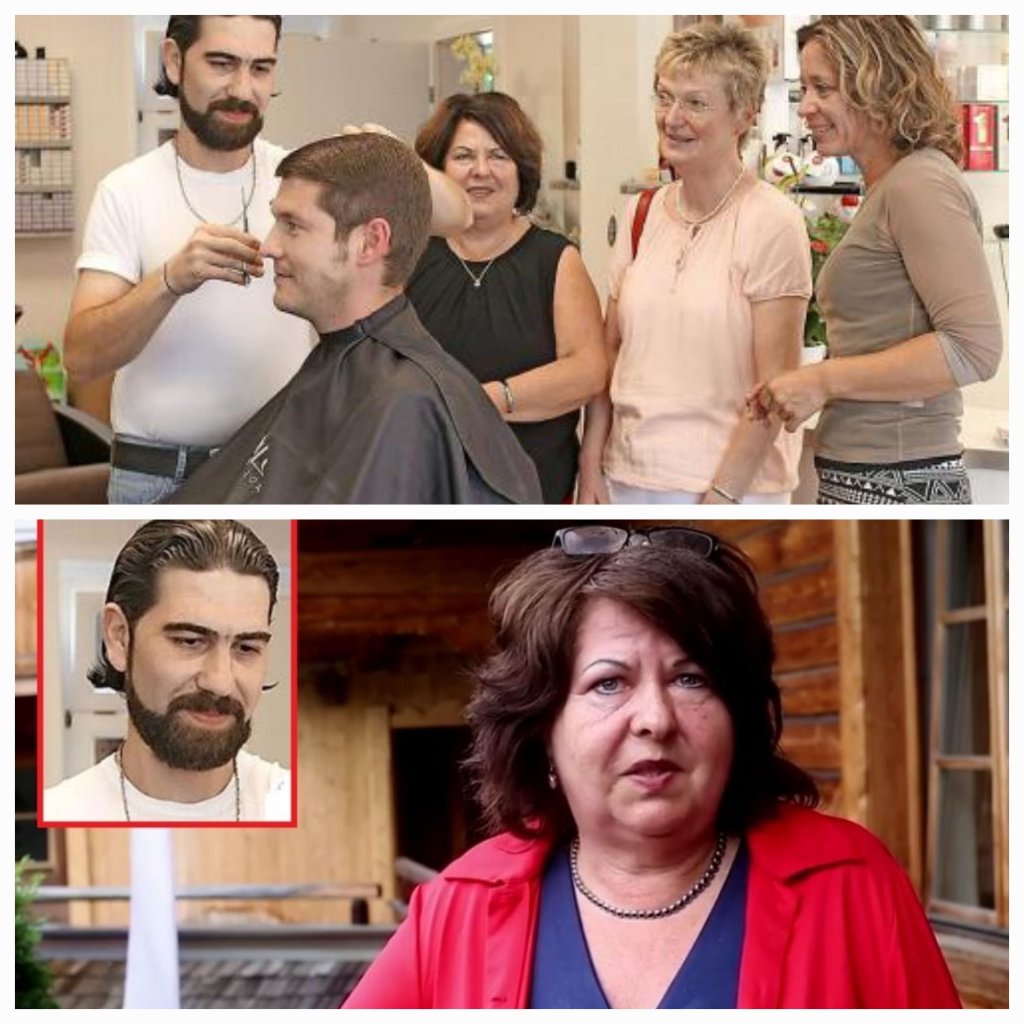
In the aftermath of the tragic assault on Ilona Fugmann, the Herzberg community stands at a crossroads, grappling with questions of security, justice, and social cohesion. The ongoing trial of the assailant, Ahmad A., serves as a focal point for addressing the complexities surrounding immigration policies and the need for comprehensive community integration strategies. As Herzberg rallies around Ilona Fugmann, the support manifested through crowdfunding, silent marches, and artistic tributes reflects a shared commitment to resilience. Beyond the confines of this small German town, the incident prompts wider reflections on the challenges and opportunities associated with migration, urging communities to engage in open dialogue and collaborative efforts towards fostering understanding, empathy, and ultimately, a harmonious coexistence.

 Poetry Hub
Hello. Thanks for visiting. I’d love to hear your thoughts! What resonated with you in this piece? Drop a comment below and let’s start a conversation.