Embarking on a journey through the diverse landscape of headscarf bans in Europe unveils a complex tapestry of cultural dynamics, legal intricacies, and societal debates. The European Union’s top court, in a series of rulings, has shaped the narrative surrounding the wearing of headscarves, setting precedents that ripple across the continent. From Belgium’s landmark decision in 2011 to the nuanced perspectives emerging in Germany, France, and the Netherlands, the discourse surrounding the veiling of Muslim women intertwines with questions of religious freedom, gender equality, and national identity. This exploration delves into the chronicles of headscarf bans, offering insights into the evolving dialogue that encapsulates the delicate balance between individual liberties and collective values within the European context.
According to a news article from Reuters, the European Union’s (EU) top court has ruled that public employees may be barred from wearing headscarves if the ban is part of a general restriction and does not discriminate against employees. The ruling was made in a case concerning a Muslim woman who was told she could not wear a headscarf when she applied to do a six-week work traineeship at a Belgian firm. The Luxembourg-based Court of Justice of the European Union (CJEU) stated that no direct discrimination should be in place while imposing the headscarf ban.
According to an article from The Guardian, the movement to limit women wearing headscarves and Muslim veils, such as the burqa and niqab, has been growing in Europe for more than a decade. The article provides a timeline of the legislation passed in various European countries.
Here are some of the key events:
In 2003, Germany’s federal constitutional court ruled in favor of an Afghan-born teacher who wanted to wear an Islamic scarf to school. But it said states could change their laws locally if they wanted to.
In 2003, Germany’s federal constitutional court made a significant ruling in favor of an Afghan-born teacher who sought the right to wear an Islamic scarf (headscarf) while teaching. The court’s decision upheld the teacher’s individual right to religious freedom, emphasizing that a general ban on teachers wearing headscarves would be unconstitutional.
However, the court also allowed for a degree of flexibility, stating that individual states within Germany could choose to implement their own regulations on this matter. Following the ruling, some German states opted to enact laws prohibiting teachers from wearing headscarves in schools.
The decisions by these states to ban headscarves for teachers often revolved around concerns about the potential influence of religious symbols in educational settings. This situation highlights the decentralized nature of education policies in Germany, allowing regional variations in the approach to issues like religious attire for teachers.
In 2004, France’s national assembly began debating a bill to ban religious symbols, including Muslim headscarves, Jewish skullcaps, and large Christian crosses, from schools.
In 2010, Belgium took a significant step toward implementing the first European ban on wearing the burqa and niqab in public. A key committee in the Belgian Parliament voted in favor of such a ban. This decision was rooted in a range of concerns, including issues related to public safety, social cohesion, and gender equality.
However, it’s important to note that the actual law prohibiting the full-face veil in public spaces did not come into effect until July 2011. This timing closely followed a similar ban that was enacted in France just three months earlier.
The bans in both Belgium and France were part of broader debates about the place of religious symbols in public life and the extent to which the state can regulate or restrict certain forms of religious expression. Proponents argued that such bans were necessary for reasons of security, social integration, and gender equality. Critics, on the other hand, contended that these measures infringed upon individual freedoms, particularly the freedom of religious expression. The implementation of these bans sparked discussions and debates not only in Belgium and France but also in other European countries contemplating similar measures.
In 2011, under a decree by the French prime minister, François Fillon, women were banned from wearing the niqab in any public place. Under the first ban of its kind in Europe, face veils were outlawed virtually anywhere outside women’s homes, except when worshipping in a religious place or traveling as a passenger in a car.
In 2015, the Dutch cabinet approved a partial ban on face-covering Islamic veils on public transport and in public areas. The ban did not apply to wearing the burqa or the niqab on the street, except when there were specific security reasons.
In 2015, the Dutch cabinet approved a partial ban on face-covering Islamic veils, such as the niqab and burqa, in certain public settings. The law, which came into effect in August 2019, prohibits the wearing of face-covering clothing in educational institutions, public transportation, healthcare institutions, and government buildings.
The rationale behind the ban is multifaceted. Supporters argue that it promotes public safety and security by ensuring that individuals’ faces are visible for identification purposes. Additionally, some proponents of the ban assert that it upholds Dutch cultural norms and values, including gender equality.
However, critics argue that such bans infringe upon individuals’ freedom of religious expression and personal choice. They contend that women should have the right to decide what they wear and that legislating clothing choices is a violation of individual liberties.
The partial ban reflects a delicate balance between security concerns, cultural values, and individual freedoms in the Dutch context. It’s worth noting that the debate surrounding the ban involves discussions on religious freedom, integration, and the role of the state in regulating personal attire.
The headscarf controversy has been a sensitive issue in Europe, and the debate around it has been ongoing for many years.
According to an article from The Guardian, the European Union’s highest court ruled in 2021 that private employers in the EU can ban people from wearing religious symbols, including headscarves, in order to present an image of neutrality. The ban can only be implemented against all religious symbols as part of a policy of neutrality and cannot discriminate against employees. The ruling was made in response to two cases brought by Muslim women in Germany who were suspended from their jobs for wearing headscarves. The ruling reaffirmed the court’s 2017 decision that companies can ban headscarves provided such a prohibition is part of a policy against all religious and political symbols.
A recent article from NDTV reports that the European Union’s top court has ruled that companies can ban headscarves as long as it is a general prohibition that does not discriminate against employees. The ruling is in line with the court’s 2017 decision.
According to a Wikipedia article, some Muslim-majority countries have banned the burqa and hijab in public schools and universities or government buildings, including Tunisia, Turkey, Kosovo, Azerbaijan, Kazakhstan, and Kyrgyzstan.
In addition, an article from Jagran Josh lists several countries where the hijab is banned, including Austria, Bosnia and Herzegovina, Canada, France, and India.
Banning the burqa and hijab in public schools, universities, or government buildings in certain Muslim-majority countries can be influenced by various factors. Governments may cite reasons such as promoting secularism, ensuring public safety and identification, fostering a unified national identity, or addressing concerns related to extremism. It’s important to note that the motivations behind such decisions can vary, and perspectives on this issue may differ among the populations affected.
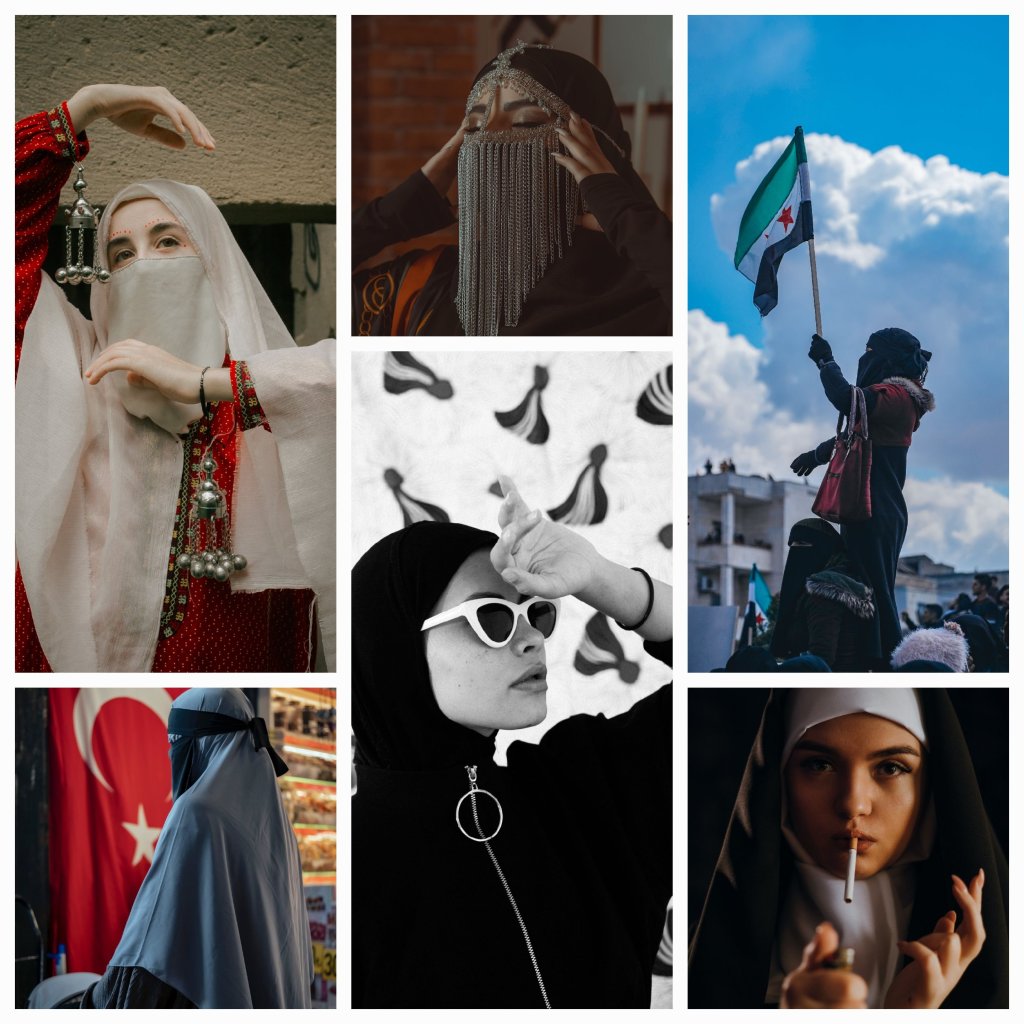
Bans on the hijab in various countries can stem from different reasons, often rooted in cultural, social, or political contexts. Some common arguments include concerns about religious symbols in public spaces, promotion of secularism, women’s rights, and national identity. In France, for instance, the ban on face-covering veils, including the niqab and burqa, is framed as a measure to uphold secularism and gender equality. In Canada, specific cases of bans or controversies may be influenced by similar considerations or local dynamics, but the overall legal context generally supports religious freedom. It’s essential to understand that the motivations and context for such bans can vary significantly from one country to another.
In conclusion, the journey through the various headscarf bans in European countries underscores the intricate interplay between individual freedoms, cultural values, and societal norms. From Belgium’s pioneering ban in 2011 to the nuanced rulings by the European Union Court, the discourse has navigated through concerns of public safety, gender equality, and the delicate balance between religious expression and secular principles. The evolving landscape, as witnessed in Germany, France, and the Netherlands, reflects a complex tapestry of regional perspectives on the place of religious symbols in public spaces. While proponents argue for security and integration, critics emphasize the potential infringement on personal liberties. As the debate continues, the challenge remains to strike a harmonious chord that respects diverse beliefs while addressing the broader societal context, echoing the ongoing dialogue on the intersection of culture, religion, and individual rights in the European landscape.

 Poetry Hub
Hello. Thanks for visiting. I’d love to hear your thoughts! What resonated with you in this piece? Drop a comment below and let’s start a conversation.