White Crane, Lend Me Your Wings is a posthumous novel by Dr Tsewang Yishey Pemba, who is considered to be the founding father of Tibetan-English literature. The novel is a historical fiction set in the Nyarong Valley of the Kham province of Eastern Tibet in the first half of the twentieth century. It is a sweeping saga of individual lives and national events, creating an epic vision of a country and people during a time of tremendous upheaval.
Dr Tsewang Yishey Pemba is considered to be the founding father of Tibetan-English literature because he was the first Tibetan to write and publish a novel and an autobiography in English. He also wrote several short stories, essays, and poems in English, reflecting his experiences and views as a Tibetan living in exile. He was a pioneer and an inspiration for many other Tibetan writers who followed his footsteps and expressed their voices in English.
The novel begins with a never-told-before story of a failed Christian mission in Tibet, led by Father Samuel, a British missionary who tries to convert the local Tibetans to Christianity. He is met with resistance and hostility by the fierce warrior tribe of Khampas, who are ruled by chieftains and follow their own traditions and religion. Father Samuel’s fate is intertwined with that of two young boys, Tsewang and Norbu, who are best friends and cousins. Tsewang is the son of a powerful chieftain, while Norbu is the son of a humble blacksmith. Their lives are changed forever by the events that unfold in the valley, such as the arrival of the Chinese warlord Liu Wenhui, the invasion of the Communist army, the rebellion of the Khampas, and the flight of the Dalai Lama.
The novel is a riveting tale of vengeance, warfare, and love, unfolded through the life story of Tsewang and Norbu and their family and friends. China’s invasion of Tibet entangles personal dramas in the midst of a national catastrophe, shattering Tibet’s isolation. The novel explores themes such as tradition versus modernity, individual choice and freedom, the nature of governance, the role of religion in people’s lives, the inevitability of change, and the importance of human values.
The novel is rich in historical and cultural details, giving the reader a vivid picture of Tibet’s past and present. The author skillfully weaves facts and fiction, drawing from his own experiences and research. The novel is based on the author’s unpublished memoir, The White Crane, which he wrote in 1957. The author was born in Gyantse in Tibet in 1932, and was the first Tibetan to become a doctor and surgeon in Western medical science. He also founded the first hospital of Bhutan in 1956, and was a member of the Bhutan delegation to WHO in Geneva in 1989. He wrote the first Tibetan-English novel, Idols on the Path, in 1966, and an autobiography, Young Days in Tibet, in 1957. He passed away in 2011, and his novel was published posthumously in 2017.
The novel is a masterpiece of Tibetan-English literature, and a valuable contribution to the world’s understanding of Tibet and its people. It is a must-read for anyone interested in the history, culture, and politics of Tibet, as well as the universal themes of human nature, identity, and destiny. It is a book that will make you laugh, cry, and think, and will stay with you long after you finish reading it.
This book is special for many reasons. Here are some of them:
It is the last novel by Dr Tsewang Yishey Pemba, who is considered to be the founding father of Tibetan-English literature. He wrote this novel based on his unpublished memoir, The White Crane, which he wrote in 1957. He passed away in 2011, and his novel was published posthumously in 2017.
It is a historical fiction set in the Nyarong Valley of the Kham province of Eastern Tibet in the first half of the twentieth century. It depicts the never-told-before story of a failed Christian mission in Tibet, and the impact of the Chinese invasion and occupation on the lives of the local Tibetans, especially the fierce warrior tribe of Khampas.
It is a sweeping saga of individual lives and national events, creating an epic vision of a country and people during a time of tremendous upheaval. It explores themes such as tradition versus modernity, individual choice and freedom, the nature of governance, the role of religion in people’s lives, the inevitability of change, and the importance of human values.
It is rich in historical and cultural details, giving the reader a vivid picture of Tibet’s past and present. The author skillfully weaves facts and fiction, drawing from his own experiences and research. The novel is based on the author’s unpublished memoir, The White Crane, which he wrote in 1957. The author was born in Gyantse in Tibet in 1932, and was the first Tibetan to become a doctor and surgeon in Western medical science. He also founded the first hospital of Bhutan in 1956, and was a member of the Bhutan delegation to WHO in Geneva in 1989. He wrote the first Tibetan-English novel, Idols on the Path, in 1966, and an autobiography, Young Days in Tibet, in 1957.
It is a masterpiece of Tibetan-English literature, and a valuable contribution to the world’s understanding of Tibet and its people. It is a must-read for anyone interested in the history, culture, and politics of Tibet, as well as the universal themes of human nature, identity, and destiny. It is a book that will make you laugh, cry, and think, and will stay with you long after you finish reading it.
This book is suitable for anyone who is interested in the history, culture, and politics of Tibet, as well as the universal themes of human nature, identity, and destiny. It is also a great choice for those who enjoy historical fiction, epic sagas, and rich storytelling. The book will appeal to readers who appreciate the diversity and complexity of the world, and who are curious to learn more about a country and people that have faced many challenges and changes.
This book may not be suitable for those who are looking for a light and easy read, or who are not comfortable with reading about violence, war, and oppression. The book does not shy away from depicting the harsh realities and struggles of the Tibetans under the Chinese invasion and occupation, and the impact of these events on their lives and culture. The book may also challenge some of the assumptions and stereotypes that some people may have about Tibet and its people, and may require an open and critical mind to appreciate the author’s perspective and vision.
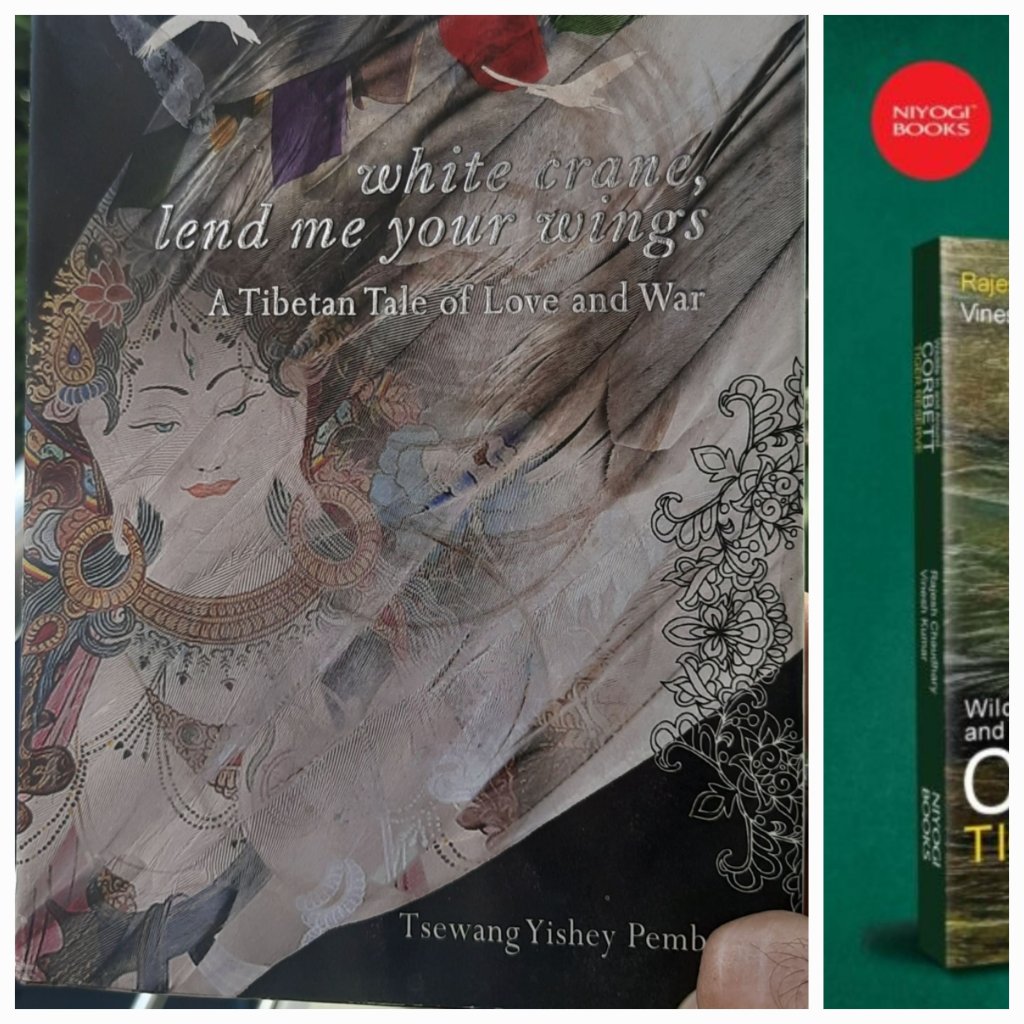
The cover shows a white crane flying over a mountainous landscape, which symbolises the freedom and beauty of Tibet, as well as the longing and nostalgia of the author and the characters. The white crane is also a reference to a famous poem by the Sixth Dalai Lama, who wrote: “Oh you white crane, lend me your wings, I will not linger far, just fly to Litang and back.” The poem expresses the unrequited love and the exile of the Dalai Lama, who was born in Litang, a town in the Kham province of Eastern Tibet. The novel also depicts the love and the exile of the main characters, Tsewang and Norbu, who are from the same region.
Some of the key takeaways from the book White Crane, Lend Me Your Wings by Tsewang Yishey Pemba are:
The book is a historical fiction set in the Nyarong Valley of the Kham province of Eastern Tibet in the first half of the twentieth century. It depicts the never-told-before story of a failed Christian mission in Tibet, and the impact of the Chinese invasion and occupation on the lives of the local Tibetans, especially the fierce warrior tribe of Khampas.
The book is a sweeping saga of individual lives and national events, creating an epic vision of a country and people during a time of tremendous upheaval. It explores themes such as tradition versus modernity, individual choice and freedom, the nature of governance, the role of religion in people’s lives, the inevitability of change, and the importance of human values.
The book is rich in historical and cultural details, giving the reader a vivid picture of Tibet’s past and present. The author skillfully weaves facts and fiction, drawing from his own experiences and research.
The novel is based on the author’s unpublished memoir, The White Crane, which he wrote in 1957. The author was born in Gyantse in Tibet in 1932, and was the first Tibetan to become a doctor and surgeon in Western medical science. He also founded the first hospital of Bhutan in 1956, and was a member of the Bhutan delegation to WHO in Geneva in 1989. He wrote the first Tibetan-English novel, Idols on the Path, in 1966, and an autobiography, Young Days in Tibet, in 1957. He passed away in 2011, and his novel was published posthumously in 2017.
The book is a masterpiece of Tibetan-English literature, and a valuable contribution to the world’s understanding of Tibet and its people. It is a must-read for anyone interested in the history, culture, and politics of Tibet, as well as the universal themes of human nature, identity, and destiny. It is a book that will make you laugh, cry, and think, and will stay with you long after you finish reading it.
The publisher of the book White Crane, Lend Me Your Wings by Tsewang Yishey Pemba is Niyogi Books, a New Delhi based publishing house. The book was published posthumously in 2017, six years after the author’s death. The book is a historical fiction set in the Nyarong Valley of the Kham province of Eastern Tibet in the first half of the twentieth century. It is considered to be a masterpiece of Tibetan-English literature, and a valuable contribution to the world’s understanding of Tibet and its people.
Based in New Delhi, India, Niyogi Books is an independent publishing house specializing in illustrated non-fiction across art, architecture, travel, history, food, and culture. It was founded by Bikash De Niyogi in 2004, and has published over 600 titles in English and Hindi. Some of its best-selling and award-winning books are White Crane, Lend Me Your Wings by Tsewang Yishey Pemba, The Arts and Interiors of Rashtrapati Bhavan by Dr Venu Vasudevan, The Puffin Mahabharata by Namita Gokhale, and The Himalayan Arc: Journeys East of South-east edited by Namita Gokhale. Niyogi Books also publishes translations of fiction and non-fiction from Indian and foreign languages, as well as children and young adult books. Niyogi Books has a bookstore in Kolkata’s College Street, exclusively for its titles. Niyogi Books aims to publish thoughtfully curated, elegantly designed and beautifully produced books for a discerning audience.
Overall, White Crane, Lend Me Your Wings by Tsewang Yishey Pemba is a novel that will take you on a journey through the history, culture, and politics of Tibet, as well as the universal themes of human nature, identity, and destiny. It is a novel that will make you laugh, cry, and think, and will stay with you long after you finish reading it. It is a novel that will introduce you to the life and work of a remarkable author, who was a pioneer and an inspiration for many other Tibetan writers. It is a novel that will enrich your knowledge and appreciation of a country and people that have faced many challenges and changes. It is a novel that you should not miss.

 Poetry Hub
Hello. Thanks for visiting. I’d love to hear your thoughts! What resonated with you in this piece? Drop a comment below and let’s start a conversation.