Clayfaces is a novel by writer, painter, and art critic Shiladitya Sarkar, published in 2023 by Blue Pencil. It is a story of two unequal brothers, Khudu, a brusque, fiery-voiced dwarf, and Nayan, a controversial writer, who hole up in a secluded bungalow after cutting off every contact with the outside world. The novel explores the themes of acceptance and rejection, adoration and rebuff, greed and obligation, power play and redemption, and the question of who is the little dwarf inside us all. The novel has received positive reviews from critics and readers, who have praised its ingenuity, humour, and compassion.
The book is special because it combines ingenuity, humour, and compassion to portray the human condition and the contemporary society and culture. It also challenges the reader to reflect on their own identity and values. The phrase “the little dwarf inside us all” is a metaphor that the author of Clayfaces, Shiladitya Sarkar, uses to describe the hidden aspects of our personality and identity that we try to ignore, are unaware of, or are afraid of. The dwarf represents the part of us that is different, vulnerable, insecure, or rejected by others. The author challenges the reader to confront and accept this part of ourselves, and to recognize that we are all complex and imperfect beings.
Clayfaces by Shiladitya Sarkar is a book that combines ingenuity, humour, and compassion to portray the human condition and the contemporary society and culture in the following ways:
It uses ingenuity to create a unique and original plot, where two brothers, a dwarf and a writer, isolate themselves from the world and engage in a game of power and manipulation. The book also uses various literary devices, such as symbolism, irony, satire, and allegory, to convey its message and themes.
It uses humour to lighten the mood and tone of the book, which deals with serious and dark issues such as corruption, betrayal, identity, and redemption. The book also uses humour to mock and expose the hypocrisy and absurdity of the literary culture and the society at large.
It uses compassion to empathize with the characters and their struggles, especially the dwarf, who is a victim of discrimination and prejudice. The book also uses compassion to show the possibility of forgiveness and healing, even in the most difficult and hopeless situations.
The theme of Clayfaces is the duality of human nature and the conflict between acceptance and rejection, adoration and rebuff, greed and obligation, power play and redemption. The theme also reflects the contemporary society and culture, where people are often judged by their appearance, status, and success, and where corruption, betrayal, and hypocrisy are rampant. The theme also raises the question of who is the little dwarf inside us all, the part of us that is different, vulnerable, insecure, or rejected by others.
The title of Clayfaces is a metaphor that suggests the idea of masks, deception, and transformation. The title implies that the characters are not what they seem, and that they can change their faces and identities according to their needs and desires. The title also implies that the characters are made of clay, a material that can be molded and shaped, but also fragile and easily broken.
The cover page of Clayfaces is a painting by the author himself, who is also a painter and art critic. The cover page shows a face that is half-human and half-animal, with a distorted and grotesque expression. The cover page conveys a sense of horror, mystery, and ambiguity, and also hints at the theme of duality and identity.
The target audience of Clayfaces by Shiladitya Sarkar are the readers who are interested in fiction, especially the genre of psychological thriller and satire. The book appeals to the readers who enjoy reading stories that explore the complex and dark aspects of human nature and society, and who appreciate the use of ingenuity, humour, and compassion in storytelling. The book also attracts the readers who are curious about the contemporary literary culture and the role of writers and critics in it.
Clayfaces is a novel by Shiladitya Sarkar that is full of emotion-tickling moments, such as:
The flashback scenes that reveal the childhood of the brothers, their parents’ death, and their separation. These scenes show how Khudu and Nayan developed their personalities and their conflicts with each other.
The twist that Khudu invites a media figure, who was once rejected by Nayan’s ex-girlfriend, Brinda, to write Nayan’s official biography. This sets off a chain of events that expose the secrets and lies of both brothers, as well as the literary culture they live in.
The encounter between Brinda and the female trapezist, who possesses Khudu’s three journals. These journals contain Khudu’s scathing comments on Nayan, his works, and his life. The journals also reveal Khudu’s plan to humiliate his brother and take revenge on him.
The climax that reveals the true motive behind Khudu’s invitation to the biographer, and the fate of both brothers. The ending is both shocking and poignant, as it shows the consequences of Khudu’s actions, and the possibility of redemption for both brothers.
Clayfaces is a novel that explores the themes of acceptance and rejection, adoration and rebuff, greed and obligation, power and redemption, through the lens of two brothers, who are like clayfaces, molded by their circumstances and choices. The book is a gripping and emotional read, that leaves the reader with a question: Who is this little dwarf inside us all?
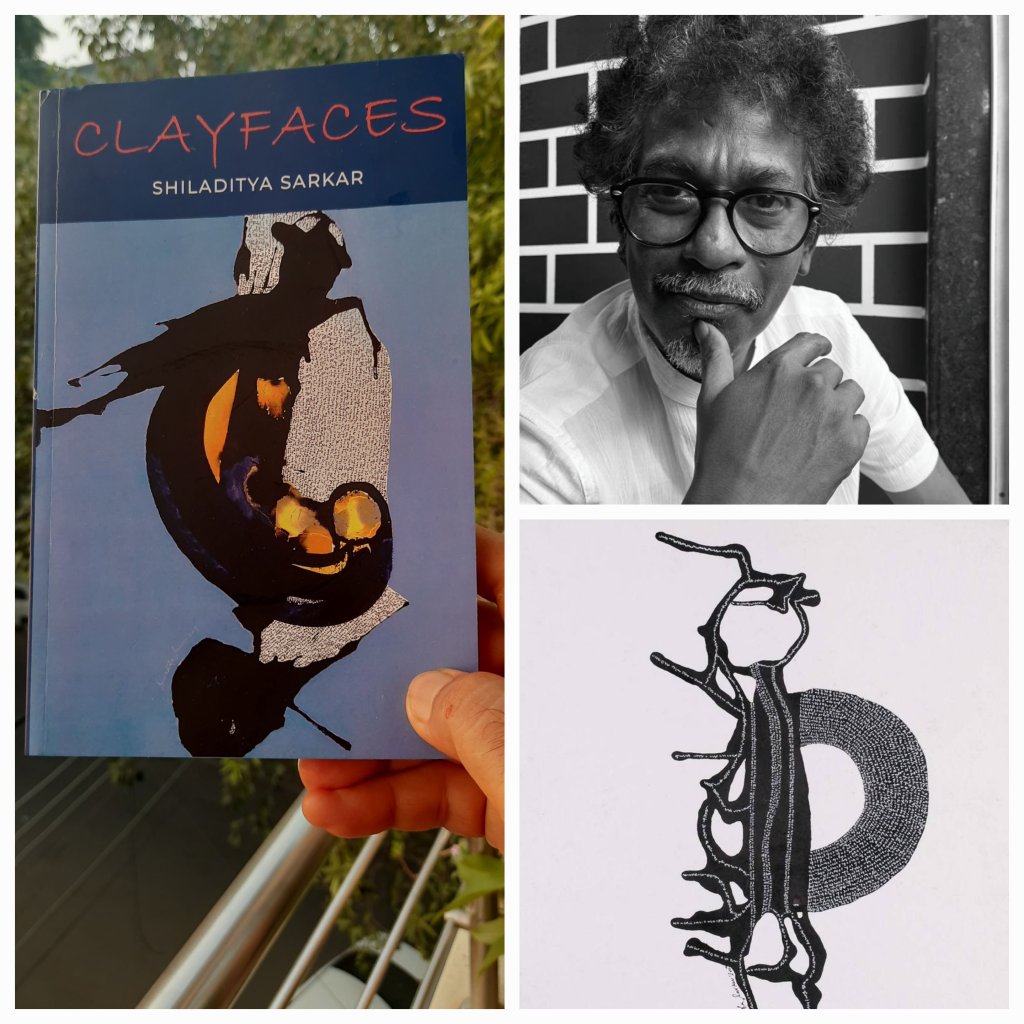
The character building in the book is very impressive and nuanced. The author, Shiladitya Sarkar, uses various techniques to portray the complex personalities and motivations of the two brothers, Khudu and Nayan, as well as the other characters in the book. Some of these techniques are:
Flashbacks: The author uses flashbacks to show the past events that shaped the brothers’ relationship and their choices. For example, the flashbacks reveal how Khudu and Nayan lost their parents in a fire, how they were separated and sent to different orphanages, and how they reunited after many years.
Journals: The author uses Khudu’s journals as a device to reveal his inner thoughts and feelings, as well as his plans to ruin his brother’s reputation. The journals also show Khudu’s bitterness, jealousy, and insecurity towards Nayan, as well as his own struggles with his identity and appearance.
Dialogue: The author uses dialogue to show the contrast and conflict between the brothers, as well as their interactions with other characters. The dialogue also reveals the different perspectives and opinions of the characters on various topics, such as literature, art, politics, and culture.
Symbolism: The author uses symbolism to convey the themes and messages of the book. For example, the title of the book, Clayfaces, refers to the idea that the characters are like clay, molded by their circumstances and choices, and that they can change their faces depending on the situation. Another example is the female trapezist, who represents the balance and harmony that the brothers lack in their lives.
Clayfaces is a well-written and engaging novel, but it is not without its flaws. Some possible areas of improvement are:
Pacing: The novel sometimes feels too slow or too fast, depending on the scene. For example, the flashbacks could have been shorter and more focused, while the climax could have been more detailed and suspenseful.
Characterization: The novel relies heavily on the contrast and conflict between the two brothers, Khudu and Nayan, but some of the other characters are not as well-developed or memorable. For example, Brinda and Rupam, the biographers, could have had more depth and personality, rather than being mere tools for the plot.
Originality: The novel borrows some elements and themes from other works of literature, such as Shakespeare’s King Lear, Dostoyevsky’s The Brothers Karamazov, and Rushdie’s The Moor’s Last Sigh. While this is not necessarily a bad thing, the novel could have been more original and creative in its own right, rather than relying on references and allusions.
Clayfaces is published by Blue Pencil, a leading independent publishing house in India, founded in 2019. Blue Pencil specializes in fiction, non-fiction, poetry, and art books, and has won several awards and accolades for its quality and diversity of publications. You can find more information about Blue Pencil and its books on their website.
You can buy the book here.

 Poetry Hub
Hello. Thanks for visiting. I’d love to hear your thoughts! What resonated with you in this piece? Drop a comment below and let’s start a conversation.