Navigating Controversy in Literature: Exploring the Impact of Challenging Narratives
In the realm of literature, the power to evoke strong emotions and stimulate profound discussions often lies in works that traverse the boundaries of societal norms. While celebrated for their capacity to shed light on complex issues, novels have the potential to generate controversy that ignites debates about morality, freedom of expression, and societal values. This article delves into the intricate dance between acclaimed literary works and the controversies that swirl around them, examining how novels such as “Satanic Verses,” “American Psycho,” and others have left a negative impact on the literary arena. From religious sensitivities to explicit content and societal critiques, these works have sparked discussions that extend far beyond their pages, challenging readers to confront discomfort, question established norms, and ultimately, ponder the enduring impact of literature on our perceptions and society at large.
Here are some successful yet controversial books by renowned authors:
1. “Lolita” by Vladimir Nabokov – Controversial due to its explicit themes involving pedophilia:
“Lolita,” written by Vladimir Nabokov, is a novel that has sparked intense controversies since its publication in 1955. The narrative, told from the perspective of Humbert Humbert, an articulate and unreliable narrator, revolves around his obsession with a twelve-year-old girl named Dolores Haze, whom he nicknames Lolita. The controversy arises from the explicit and provocative nature of the subject matter, addressing themes of pedophilia and the moral boundaries of literature. Critics argue that Nabokov’s eloquent prose and intricate narrative structure are an attempt to intellectualize and aestheticize an inherently disturbing topic. The book has faced censorship and legal challenges in various countries due to its explicit content, raising questions about artistic freedom versus societal norms. Some readers condemn it for what they perceive as the romanticizing of a predatory relationship, while others argue that Nabokov uses the novel as a vehicle to critique societal attitudes and challenge readers to confront uncomfortable truths. The controversy surrounding “Lolita” persists, reflecting the ongoing debate about the role of literature in addressing taboo subjects and the fine line between artistic expression and ethical considerations.
2. “Brave New World” by Aldous Huxley – Criticized for its portrayal of a dystopian society and its exploration of moral decay:
Aldous Huxley’s “Brave New World” has been a source of controversy and intellectual discourse since its publication in 1932. The novel presents a dystopian future where a technologically advanced and highly controlled society prioritizes stability and happiness over individuality and personal freedom. Critics and readers alike have engaged in debates regarding the ethical implications of the world depicted in the book. Some argue that Huxley’s vision is eerily prescient, offering a cautionary tale about the dehumanizing effects of technological and societal advancements. The use of reproductive technology, conditioning, and the suppression of emotions and critical thinking have been focal points of criticism, sparking discussions about the balance between societal order and individual autonomy. Others, however, view “Brave New World” as an insightful critique of the dangers of sacrificing individuality for the sake of societal harmony. The novel’s exploration of pleasure-seeking, consumerism, and the consequences of a society driven by instant gratification continues to resonate, fueling ongoing conversations about the trade-offs between freedom and security in the face of technological progress.
3. “Fahrenheit 451” by Ray Bradbury – Controversial for its censorship theme and the burning of books:
Ray Bradbury’s “Fahrenheit 451” has been a provocative and controversial work since its publication in 1953. The novel explores a dystopian society where books are banned, and “firemen” burn any that are found. The controversy surrounding the book often revolves around its themes of censorship, intellectual freedom, and the impact of technology on society. Bradbury’s portrayal of a society that suppresses dissenting ideas and critical thinking has sparked discussions about the dangers of censorship and the role of literature in preserving individuality. The book also raises concerns about the potential dehumanizing effects of mass media and technology, predicting a future where people are more interested in mindless entertainment than in engaging with meaningful ideas. Overall, the enduring controversy surrounding the novel stems from its ability to stimulate conversations about the fragility of intellectual freedom and the consequences of a society that values conformity over independent thought.
4. “The Catcher in the Rye” by J.D. Salinger – Criticized for glorifying teenage angst and rebellion:
J.D. Salinger’s “The Catcher in the Rye” has been both celebrated and criticized since its publication in 1951. The novel’s central character, Holden Caulfield, a disenchanted and rebellious teenager, has been both a relatable figure for some readers and a source of concern for others. The controversy often revolves around the novel’s explicit language, themes of alienation, and Holden’s cynical view of society. Some educators and parents have criticized the book for its perceived unsuitability for younger readers due to its profanity and Holden’s rebellious behavior. However, supporters of the novel argue that it offers an authentic portrayal of the struggles teenagers face while navigating the challenges of adolescence. Additionally, “The Catcher in the Rye” is praised for its exploration of the human condition, capturing the universal experience of questioning societal norms and searching for one’s identity. The controversy surrounding the book persists, with ongoing debates about whether its themes and language make it a valuable exploration of teenage angst or a potentially negative influence on young readers.
5. “The Bell Jar” by Sylvia Plath – Debated for its graphic portrayal of mental illness and suicide:
Sylvia Plath’s “The Bell Jar” has been the subject of both acclaim and controversy since its publication in 1963. The novel, often considered semi-autobiographical, delves into the mental health struggles of its protagonist, Esther Greenwood, as she grapples with societal expectations, gender roles, and the pressure to conform. The controversy surrounding the book often centers on its portrayal of mental illness, with some critics expressing concern about its potentially triggering content. However, supporters argue that “The Bell Jar” provides a poignant and raw exploration of mental health, shedding light on the stigma and challenges faced by individuals dealing with mental illness, particularly women in the mid-20th century. The novel has been both celebrated for its literary merit and criticized for its potentially distressing themes, sparking ongoing conversations about the responsibility of literature to address difficult topics and the role of mental health narratives in shaping public perception. Overall, “The Bell Jar” remains a powerful and controversial work that continues to resonate with readers and provoke discussions about mental health, societal expectations, and the portrayal of women in literature.
6. “On the Road” by Jack Kerouac – Praised for capturing the spirit of the Beat Generation but also criticized for promoting drug use and hedonistic lifestyles:
Jack Kerouac’s “On the Road” has been a celebrated and controversial work since its release in 1957. The novel, considered a defining work of the Beat Generation, chronicles the cross-country journeys of Sal Paradise and Dean Moriarty as they explore the American landscape in search of self-discovery and liberation. The controversy surrounding the book often revolves around its exploration of hedonism, rebellion against societal norms, and the questioning of traditional values. Some critics view the novel as a celebration of freedom and a critique of conformity, while others express concern about its depiction of drug use, promiscuity, and the rejection of conventional lifestyles. “On the Road” has been both praised for its influence on American literature and criticized for its perceived glorification of a bohemian and often reckless lifestyle. The novel’s impact on countercultural movements and its portrayal of the restless spirit of the Beat Generation continue to generate discussions about the boundaries of literary expression and the societal implications of embracing nonconformity.
7. “Fear and Loathing in Las Vegas” by Hunter S. Thompson – Controversial for its depiction of drugs, violence, and debauchery in American culture:
Hunter S. Thompson’s “Fear and Loathing in Las Vegas” has been a highly controversial and polarizing work since its publication in 1971. The novel, based on Thompson’s own experiences, follows the drug-fueled journey of journalist Raoul Duke and his attorney Dr. Gonzo as they embark on a chaotic road trip to Las Vegas. The controversy surrounding the book is closely tied to its unabashed exploration of drug use, hedonism, and a general disregard for societal norms. Critics often point to the novel’s explicit and chaotic depiction of drug culture as a source of concern, while others view it as a satirical commentary on the excesses of American society during the 1960s. Thompson’s unique writing style, known as Gonzo journalism, further adds to the novel’s divisiveness, as it blurs the line between fact and fiction. “Fear and Loathing in Las Vegas” has been both lauded for its cultural impact and criticized for its potentially glamorized portrayal of drug abuse. The novel’s enduring controversy raises questions about the responsibilities of literature in depicting challenging subject matter and the fine line between critique and celebration of countercultural movements.
8. “Twilight” by Stephenie Meyer – Initially dismissed by critics, but gained immense popularity, leading to debates about its portrayal of romantic relationships and gender roles:
Stephenie Meyer’s “Twilight” series has generated significant controversy and debate since its release, particularly due to its impact on popular culture and its portrayal of relationships. The series, centered around the romance between a human, Bella Swan, and a vampire, Edward Cullen, has been both praised for its engaging storytelling and criticized for various reasons. One major point of contention is the representation of Bella and Edward’s relationship dynamics, with some critics arguing that it promotes unhealthy relationship standards, such as possessiveness and obsession.
Additionally, the portrayal of vampires in “Twilight” as attractive, immortal beings has sparked discussions about the romanticization of supernatural creatures and its potential influence on readers’ perceptions of relationships. Critics have also raised concerns about the novel’s perceived lack of strong female characters and its reinforcement of traditional gender roles.
On the positive side, supporters appreciate the series for its role in popularizing young adult fiction and its ability to captivate a wide audience. The controversy surrounding “Twilight” reflects broader discussions about the impact of literature on societal attitudes and the responsibility of authors to consider the implications of their portrayals, especially in works aimed at a young and impressionable audience.
9. “In Cold Blood” by Truman Capote – Criticized for being too sensationalist and exploitative of real-life tragedy:
Truman Capote’s “In Cold Blood” has been the subject of both acclaim and controversy since its publication in 1966. The book, often categorized as a non-fiction novel, meticulously recounts the brutal murder of the Clutter family in Holcomb, Kansas, and the subsequent investigation and trial of their killers, Richard ‘Dick’ Hickock and Perry Smith. The controversy surrounding the book primarily revolves around Capote’s approach to the material and the ethical considerations in presenting a real-life crime in a narrative form.
Critics have debated the extent to which Capote blurred the lines between fact and fiction, utilizing novelistic techniques and constructing dialogue and inner thoughts for the characters. Some argue that this approach enhances the narrative’s emotional impact and engages readers, while others express concerns about the potential distortion of truth in the pursuit of a gripping story.
Furthermore, there has been criticism regarding the impact of the book on the privacy and emotions of the victims’ surviving family members and the ethical implications of profiting from a heinous crime. Despite the controversy, “In Cold Blood” is often praised for its groundbreaking narrative style and its influence on the true crime genre. The ongoing discussions surrounding the book highlight the delicate balance between journalistic integrity, artistic expression, and the responsibility an author bears when dealing with real-life tragedies.
10. “Portnoy’s Complaint” by Philip Roth – Controversial due to its explicit content and frank discussions of sex and relationships:
Philip Roth’s “Portnoy’s Complaint” stirred both acclaim and controversy upon its release in 1969. The novel is a first-person narrative by Alexander Portnoy, a young Jewish man who undergoes psychoanalysis and divulges his intimate thoughts and experiences. The controversy surrounding the book is centered on its explicit and candid portrayal of sexuality, particularly Portnoy’s discussions about his relationships, desires, and neuroses.
Critics have engaged in debates about whether the explicit content serves a literary purpose, exploring the boundaries of personal and societal taboos, or if it crosses into gratuitous territory. The novel’s frank discussions about sexuality and the protagonist’s struggles with identity have sparked conversations about the representation of Jewish identity and the broader exploration of cultural and familial expectations.
On the positive side, “Portnoy’s Complaint” has been lauded for its boldness, humor, and its ability to capture the zeitgeist of the 1960s. Roth’s writing style and his willingness to address topics considered taboo at the time contributed to the novel’s impact and its place in American literature.
The controversy surrounding “Portnoy’s Complaint” reflects the ongoing discussions about the role of literature in addressing societal norms, pushing boundaries, and the fine line between artistic expression and potential discomfort for readers.
11. “Candide” by Voltaire – Initially banned due to its satirical criticism of religion, politics, and optimism:
Voltaire’s “Candide,” published in 1759, has been both celebrated for its satirical brilliance and controversial for its critique of societal institutions, religious dogma, and philosophical optimism. The novella follows the adventures of the optimistic young man Candide as he navigates a world filled with suffering, hypocrisy, and absurdity.
The controversy surrounding “Candide” largely stems from its bold critique of established institutions, including religious authorities and governments. Voltaire’s biting satire, often targeting organized religion and the philosophical optimism of Leibniz, sparked debates about the limits of free expression and the power dynamics between the ruling class and the individual.
The novella’s explicit and irreverent content, along with its challenge to prevailing ideologies, led to censorship in various regions. Critics at the time questioned whether the work was undermining societal values and promoting skepticism. However, supporters of “Candide” have praised its wit, humor, and its timeless relevance in questioning blind optimism and exposing the harsh realities of the world.
The controversy surrounding “Candide” has evolved over the centuries, and the novella remains a thought-provoking work that continues to inspire discussions about the role of satire, freedom of expression, and the power of literature to challenge prevailing norms.
12. “Anna Karenina” by Leo Tolstoy – Condemned for its immoral depiction of adultery and its impact on Russian society:
Leo Tolstoy’s “Anna Karenina,” published in 1877, is a classic novel that has garnered acclaim for its exploration of complex characters and societal norms. However, it has also been the subject of controversy due to its portrayal of the consequences of adultery and societal judgment.
The controversy surrounding “Anna Karenina” revolves around the character of Anna, who enters into an extramarital affair and faces societal condemnation. Critics and readers have debated whether Tolstoy’s depiction of Anna’s struggles and her tragic fate is a moral condemnation of infidelity or a sympathetic portrayal of a woman constrained by societal expectations.
Furthermore, the novel has been criticized for its reflection of the gender norms and expectations prevalent in 19th-century Russian society. Anna’s ultimate fate, marked by isolation and despair, has sparked discussions about the consequences of women deviating from societal norms and the limited choices available to them.
On the other hand, supporters of “Anna Karenina” appreciate its rich character development, intricate plotting, and its nuanced exploration of love and morality. The controversy surrounding the novel reflects broader discussions about societal expectations, morality in literature, and the role of fiction in challenging or reinforcing cultural norms.
13. “1984” by George Orwell – Widely criticized for its portrayal of a totalitarian state and government surveillance:
George Orwell’s “1984,” published in 1949, is a dystopian classic that has been both praised for its foresight and criticized for its grim portrayal of a totalitarian society. The controversy surrounding the novel largely centers on its depiction of surveillance, government control, and the erosion of individual freedoms.
Critics and readers have raised concerns about the novel’s bleak vision of the future, where the government, embodied by the Party led by Big Brother, exercises total control over citizens’ thoughts and actions. The pervasive surveillance, censorship, and manipulation of historical truth depicted in “1984” have led to discussions about the potential dangers of unchecked governmental power and the infringement on personal liberties.
The novel’s exploration of propaganda and the manipulation of language, as seen in the concept of Newspeak, has sparked debates about the role of information and language in shaping public perception. Orwell’s portrayal of a society where dissent is crushed and independent thought is suppressed has resonated as a cautionary tale against authoritarianism.
While some critics argue that the novel’s stark depiction is overly pessimistic, others view it as a powerful warning against the dangers of totalitarianism and a call to vigilance in safeguarding individual freedoms. The ongoing controversy surrounding “1984” highlights its enduring relevance and its impact on discussions about government surveillance, propaganda, and the preservation of democratic values.
14. “The Color Purple” by Alice Walker – Controversial due to its explicit language, violence, and treatment of sensitive topics like incest and homosexuality:
Alice Walker’s “The Color Purple,” published in 1982, has been both celebrated for its powerful portrayal of African American women’s experiences and criticized for its explicit content and themes. The controversy surrounding the novel largely revolves around its depiction of racism, sexism, and sexual abuse.
Critics have applauded Walker’s unflinching exploration of the harsh realities faced by African American women in the early 20th century South, addressing issues of systemic racism and gender-based violence. However, the novel has also faced criticism for its explicit language and depictions of sexual abuse, leading to challenges and bans in certain educational settings.
The novel’s exploration of Celie’s journey toward self-discovery and empowerment has sparked discussions about resilience, sisterhood, and the power of storytelling to confront societal injustices. On the other hand, some critics argue that the explicit content may be inappropriate for certain readers, particularly in educational contexts.
Despite the controversy, “The Color Purple” has received numerous accolades for its literary merit, including the Pulitzer Prize for Fiction and the National Book Award. The ongoing discussions surrounding the novel reflect the broader conversations about the portrayal of trauma, race, and gender in literature, as well as the balance between artistic expression and potential discomfort for readers.
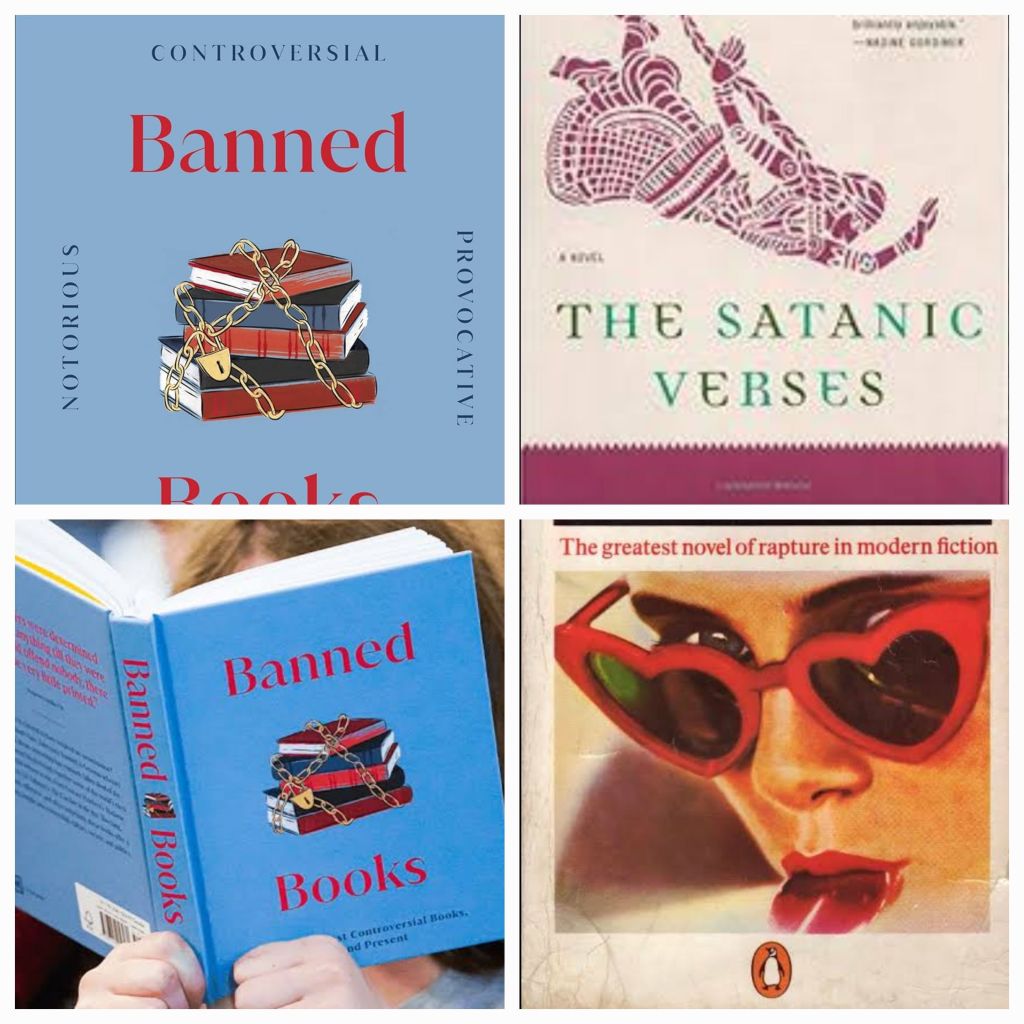
15. “Satanic Verses” by Salman Rushdie – Led to protests and death threats because of perceived blasphemy against Islam:
Salman Rushdie’s “The Satanic Verses,” published in 1988, has been one of the most controversial and polarizing works of modern literature. The controversy surrounding the novel primarily stems from its exploration of religious themes, particularly its fictionalized account of the life of the Prophet Muhammad and the Quranic verses known as the “Satanic Verses.”
The book faced severe backlash from many in the Muslim world who considered it blasphemous and offensive to Islam. Ayatollah Ruhollah Khomeini, then the Supreme Leader of Iran, issued a fatwa (religious decree) calling for Rushdie’s death, leading to years of living in hiding for the author. The controversy ignited debates about the limits of free speech, the intersection of artistic expression and religious sensitivities, and the responsibilities of authors in handling religious themes.
While defenders of “The Satanic Verses” argue for the importance of artistic freedom and the novel’s broader exploration of identity, migration, and religious faith, critics argue that the book’s content was deliberately provocative and disrespectful to Islamic beliefs. The affair surrounding the novel marked a significant moment in discussions about freedom of expression, religious sensitivity, and the potential consequences an author might face for challenging religious norms.
16. “American Psycho” by Bret Easton Ellis – Criticized for its excessive violence and depiction of sociopathic behavior:
Bret Easton Ellis’s “American Psycho,” published in 1991, has been both praised for its satirical critique of 1980s yuppie culture and criticized for its explicit violence and disturbing content. The controversy surrounding the novel mainly centers on its graphic depictions of violence, particularly the protagonist Patrick Bateman’s acts of extreme brutality.
The novel follows Bateman, a wealthy and shallow investment banker, as he engages in a hedonistic and violent lifestyle. Critics have expressed concerns about the explicit and gratuitous nature of the violence portrayed in the book, with some arguing that it sensationalizes brutality and may be deeply disturbing to readers.
Conversely, defenders of “American Psycho” argue that Ellis’s novel serves as a satirical commentary on consumerism, excess, and the moral emptiness of the yuppie culture of the 1980s. The controversial nature of the novel has led to debates about the role of literature in confronting uncomfortable truths, the line between critique and glorification, and the responsibility of authors when dealing with potentially distressing subject matter.
The controversy surrounding “American Psycho” has contributed to its lasting impact on discussions about literature, censorship, and the portrayal of violence in art. The novel’s exploration of societal values and the consequences of unchecked materialism continues to spark conversations about the role of literature in challenging societal norms.
17. “Beloved” by Toni Morrison – Criticized for its violent and disturbing portrayal of slavery and its aftermath:
In the realm of literature, few works have left as indelible a mark as Toni Morrison’s “Beloved.” This novel, a haunting exploration of slavery’s legacy, has been both celebrated for its profound narrative and subjected to controversy for its unflinching portrayal of the brutality and trauma of the past. As we reflect on the impact of “Beloved,” it becomes evident that the controversies surrounding Morrison’s masterpiece are not merely reactions to discomfort but rather invitations to confront the painful history of our collective past. The novel’s ability to resonate deeply, beyond its pages, underscores the transformative potential of literature in challenging societal norms, fostering empathy, and encouraging an ongoing dialogue about the enduring scars of history. As we navigate the intricacies of “Beloved,” we find that its controversial nature serves as a testament to the enduring power of storytelling and its capacity to illuminate the darkest corners of our shared humanity.
As we navigate the dynamic interplay between literature and controversy, it becomes evident that the power of challenging narratives lies not only in their ability to provoke discomfort but also in their capacity to push society towards introspection and growth. These controversial works, from “Lolita” to “Satanic Verses” to “American Psycho,” serve as touchstones for discussions about the boundaries of artistic expression, the responsibilities of authors, and the societal consequences of confronting uncomfortable truths. In closing, it is through the lens of controversy that literature finds its place as a catalyst for change, challenging us to question, evolve, and, ultimately, appreciate the intricate dance between provocative narratives and the ever-shifting landscapes of our collective consciousness.
This post is part of the Bookish League blog hop hosted by Bohemian Bibliophile
I’m participating in Blogchatter’s #TBRChallenge


 Poetry Hub
Hello. Thanks for visiting. I’d love to hear your thoughts! What resonated with you in this piece? Drop a comment below and let’s start a conversation.