Google has been planning to shift some of its Pixel production from China to India since 2023, as part of its strategy to reduce its dependence on China and tap into the growing demand for smartphones in India. Google aims to ship 10 million Pixel phones in 2024, with India being one of its key markets. Google has also announced that it will start manufacturing the flagship Pixel 8 series in India in the second quarter of 2024, with the Pixel 8 Pro being the first model to be produced in the southern part of India.
Google’s Pixel phones are known for their excellent cameras, software updates, and 5G connectivity. They offer a range of options for different budgets and preferences, from the affordable Pixel 6a and Pixel 7a to the premium Pixel 7 Pro and Pixel 8 Pro. You can check out the Google Pixel 5G phone prices in India online, as well as their reviews, specifications, and features. Google’s 5G phones are compatible with the 5G network in India, which is expected to be rolled out by 2024. With Google’s 5G phones, you can enjoy faster data speeds, smoother streaming, and enhanced gaming experiences.
The Pixel 8 Pro is Google’s latest flagship phone, powered by the Google Tensor G3 chip and running on Android 14. Some of the features of the Pixel 8 Pro are:
- A 6.7-inch Super Actua display with 120Hz refresh rate and 1600 nits brightness.
- A triple rear camera system with a 50 MP main camera, a 48 MP telephoto camera with 5x optical zoom, and a 48 MP ultrawide camera with Macro Focus.
- A 10.5 MP front-facing camera with autofocus and wide-angle lens.
- A 5050 mAh battery with 30W wired and 23W wireless charging, as well as reverse wireless charging.
- A temperature sensor that can measure the temperature of objects and people.
- A fingerprint scanner under the display, an IP68 water and dust resistance rating, and Ultra Wideband (UWB) support.
- Pro Controls for the camera app, which allow you to adjust settings like shutter speed, ISO, and 50 MP photos.
- Best Take, a feature that uses AI to create the best possible photo from a series of shots.
The Pixel 8 Pro comes in three colors: Porcelain, Bay, and Obsidian. It has four storage options: 128 GB, 256 GB, 512 GB, and 1 TB. The price of the Pixel 8 Pro starts from $999 in the US.
The Google Tensor G3 is a new processor designed by Google that’s currently exclusive to the Google Pixel 8 and Google Pixel 8 Pro. Google claims the Tensor G3 has the biggest machine learning model yet, and is 10x more complex than that of the Tensor G2 found on the Pixel 7 series. The Tensor G3 features nine CPU cores arranged in an unconventional setup. There are four Cortex-A510s, four Cortex-A715s, and a larger Cortex-X3, with the latter two boasting higher frequencies compared to the Tensor G2. Notably, the Tensor G3 is built on Samsung’s advanced 4-nanometer (4nm) fabrication process, an improvement over the 5nm process used for the Tensor G2. This transition to smaller transistors enables enhanced power efficiency and smoother electrical signal transmission across the board, thanks to the increased density of transistors on the same surface area.
The Tensor G3 chip enables the Pixel 8 and Pixel 8 Pro to deliver spectacular AI experiences right on the device, such as Pro Controls for the camera app, Best Take, a feature that uses AI to create the best possible photo from a series of shots, and on-device generative AI. The Tensor G3 chip also improves the performance and battery life of the Pixel 8 and Pixel 8 Pro compared to previous generations.
The Tensor G3 and the Snapdragon 8 Gen1 are both powerful processor chips designed for smartphones, but they have some differences and advantages. Here are some of the main differences and advantages of each chip:
- The Tensor G3 has 9 cores compared to the Snapdragon 8 Gen1’s 8 cores, which means it can handle more tasks simultaneously.
- The Tensor G3 supports 25% higher memory bandwidth (64 against 51.2 GB/s), which means it can transfer more data between the CPU and the RAM faster.
- The Tensor G3 was announced 1 year and 5 months later than the Snapdragon 8 Gen1, which means it has more time to improve and optimize its performance and efficiency.
According to some benchmarks, the Tensor G3 and the Snapdragon 8 Gen1 have similar CPU and GPU performance, but the Tensor G3 has a higher GPU frequency (~31%) and better AI capabilities.
The Tensor G3 is Google’s latest custom silicon chip for smartphones, and it powers the Google Pixel 8 and Google Pixel 8 Pro, which were launched in October 2023. The Tensor G3 is Google’s fastest, most efficient, and most secure chip yet, and it enables the Pixel 8 and Pixel 8 Pro to deliver spectacular AI experiences right on the device. Some of the features of the Tensor G3 are:
- The configuration includes a high-performance Arm Cortex-X3 CPU core running at 2.91GHz, accompanied by four Cortex-A715 cores operating at 2.37GHz, and four smaller Cortex-A510 cores running at 1.7GHz.
- A third-gen Tensor Processing Unit that brings the latest in Google AI research directly to the phones.
- A higher GPU frequency (~31%) and better AI capabilities than the previous generation Tensor G2.
Since Google has extended its hardware portfolio this year, the Tensor G3 will likely come to more devices in the Pixel lineup in the future.
The price of Pixel 8 in India starts from ₹ 75,999 for the 128 GB storage variant. The Pixel 8 is available in three colors: Hazel, Rose, and Obsidian. It also has a 256 GB storage option, which costs ₹ 79,999. You can buy the Pixel 8 online from Flipkart or other e-commerce platforms, or from offline stores near you.
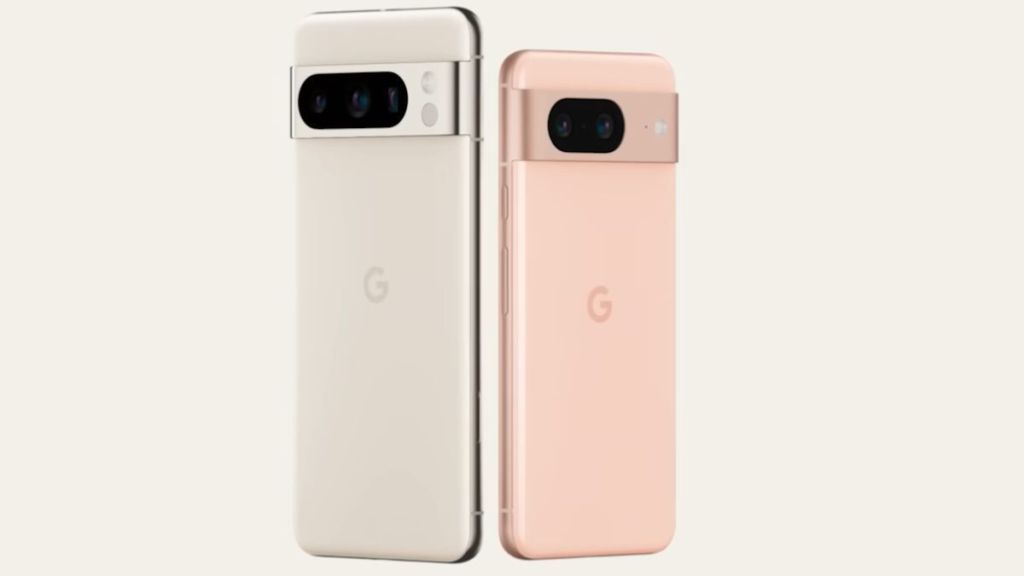
The Pixel 8 is Google’s latest smartphone, powered by the Google Tensor G3 chip and running on Android 14. It has a 6.2-inch Super Actua display, a 50 MP + 12 MP dual rear camera, a 10.5 MP front camera, a 4575 mAh battery, and a temperature sensor. It also supports 5G connectivity, wireless charging, and IP68 water and dust resistance.
#MadeInIndia #PixelSeries #SmartphoneTech #GoogleHardware #GooglePixel8

 Poetry Hub
Hello. Thanks for visiting. I’d love to hear your thoughts! What resonated with you in this piece? Drop a comment below and let’s start a conversation.