Indian classical music is a rich tapestry of melodies, rhythms, and emotions that has evolved over thousands of years. Rooted in ancient scriptures and traditions, this musical form transcends boundaries and offers a window into the cultural heritage of India. In this extensive exploration, we delve into the nuances of Indian classical music, tracing its origins, understanding its structure, and appreciating its enduring influence on global music.
Origins and Evolution:
The origins of Indian classical music can be traced back to the Vedas, the ancient scriptures of Hinduism, where references to music and its therapeutic effects are abundant. Over centuries, the art form evolved through interactions with diverse cultures, including Persian, Arabic, and Central Asian influences. It flourished under the patronage of kings and emperors, with different regions developing distinct styles and traditions.
Structure and Elements:
Indian classical music is characterized by its intricate structure and improvisational nature. It is based on a set of ragas (melodic frameworks) and talas (rhythmic cycles), which serve as the foundation for improvisation and creativity. Ragas are classified into two main categories: Hindustani and Carnatic, each with its own repertoire of melodies and performance practices. Talas, on the other hand, provide the rhythmic structure and are composed of beats arranged in specific patterns.
Performance and Instruments:
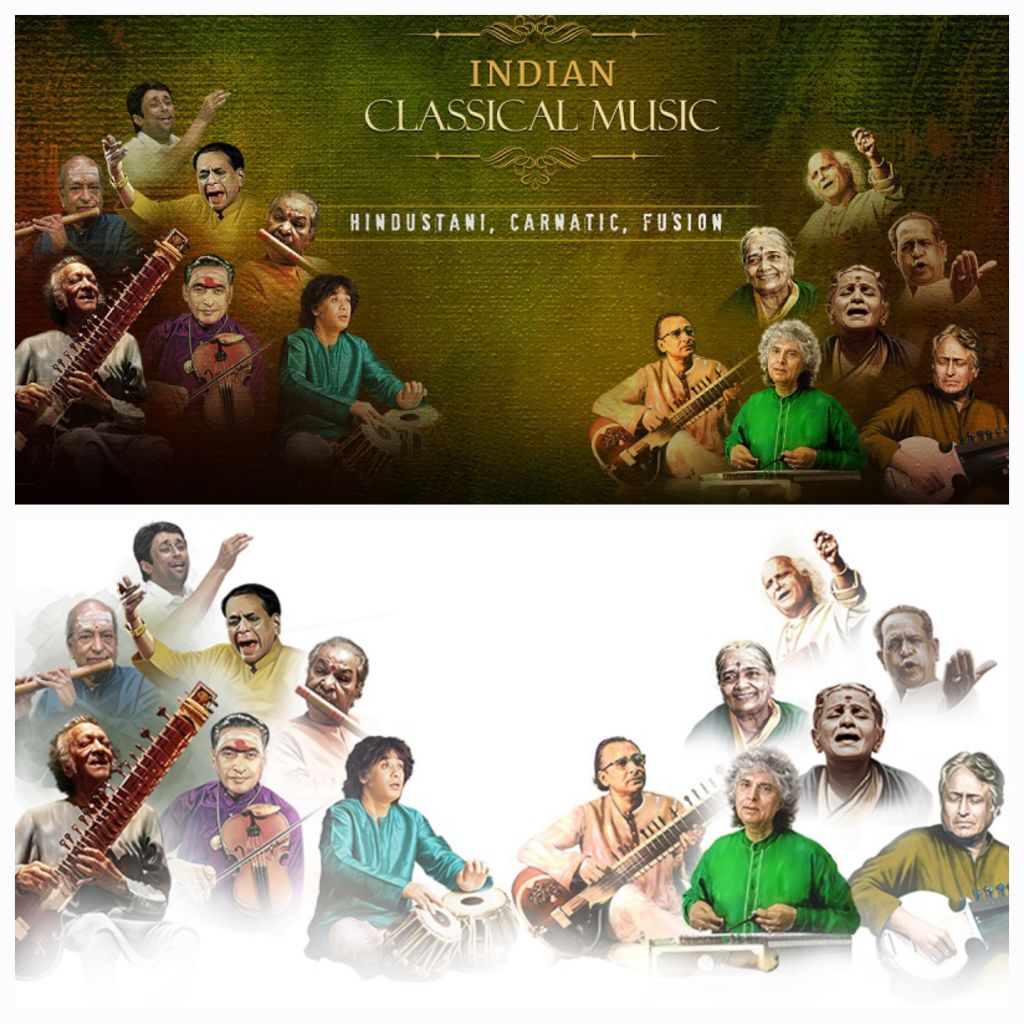
A typical Indian classical music performance, known as a concert or recital, often features a soloist accompanied by a tabla player (for rhythm) and a harmonium player (for drone). The soloist explores various ragas and talas through improvisation, showcasing their virtuosity and creativity. Instruments such as the sitar, sarod, flute, and violin are commonly used in Hindustani classical music, while the veena, mridangam, ghatam, and violin are prominent in Carnatic classical music.
Regional Variations:
Indian classical music exhibits remarkable diversity, with each region contributing its own unique style and flavor. In North India, Hindustani classical music thrives, characterized by its emotive melodies and elaborate ornamentation. In South India, Carnatic classical music reigns supreme, known for its intricate compositions and rhythmic precision. Beyond these main traditions, several regional styles and folk traditions add further layers of complexity and richness to the musical landscape.
Impact and Influence:
The influence of Indian classical music extends far beyond its cultural boundaries, inspiring artists and musicians around the world. From the fusion experiments of Ravi Shankar and Zakir Hussain to the collaborations between John McLaughlin and L. Shankar, Indian classical music has left an indelible mark on genres such as jazz, rock, and world music. Its timeless melodies and profound spiritual essence continue to resonate with audiences across generations.
Preservation and Revival:
In recent years, efforts have been made to preserve and revive the tradition of Indian classical music, both within India and abroad. Institutions such as music academies, cultural organizations, and universities play a crucial role in training the next generation of musicians and scholars. Furthermore, digital platforms and online resources have made Indian classical music more accessible to a global audience, ensuring its continued relevance in the modern era.
Indian classical music, with its rich heritage and diverse traditions, boasts numerous landmarks that have shaped and defined the genre over the centuries. Here are some of the top landmarks in Indian classical music:
1. Sangeet Ratnakara:
– Written by the 13th-century musicologist Sarangadeva, the Sangeet Ratnakara is a comprehensive treatise on Indian classical music. It covers various aspects of music theory, including raga, tala, and musical instruments, and remains a foundational text for both Hindustani and Carnatic music.
2. Tansen:
– Tansen, born in the 16th century during the reign of Emperor Akbar, is perhaps the most legendary figure in Indian classical music. He was one of the Navaratnas (nine jewels) of Akbar’s court and is credited with popularizing and codifying many ragas. His compositions and musical innovations continue to inspire musicians to this day.
3. Purandara Dasa:
– Purandara Dasa, known as the “Father of Carnatic Music,” lived during the late 15th and early 16th centuries. He is credited with systematizing the teaching of Carnatic music through his compositions known as “Padas” and “Kritis.” His contributions laid the foundation for the modern Carnatic music repertoire.
4. Ravi Shankar:
– Pandit Ravi Shankar, renowned as a sitar virtuoso and composer, played a crucial role in introducing and popularizing Indian classical music in the Western world throughout the 20th century. He collaborated with musicians such as George Harrison of The Beatles and introduced Indian classical music to a global audience through his performances and recordings.
5. Bhimsen Joshi:
– Pandit Bhimsen Joshi was a renowned Hindustani classical vocalist known for his powerful voice, emotive renditions, and mastery of ragas. He received numerous awards, including the Bharat Ratna, India’s highest civilian honor, and left a lasting legacy through his recordings and performances.
6. M. S. Subbulakshmi:
– M. S. Subbulakshmi, often referred to as “MS,” was a legendary Carnatic vocalist whose contributions to Indian classical music are unparalleled. She was the first Indian musician to be awarded the Ramon Magsaysay Award and the Bharat Ratna. Her rendition of devotional songs and classical compositions continues to captivate audiences worldwide.
7. Allauddin Khan:
– Ustad Allauddin Khan was a highly influential musician and teacher who significantly contributed to Hindustani classical music. He was a multi-instrumentalist, composer, and founder of the Maihar Gharana, which produced illustrious disciples such as Ravi Shankar, Ali Akbar Khan, and Annapurna Devi.
These landmarks represent just a fraction of the rich tapestry of Indian classical music, which continues to evolve and thrive, thanks to the contributions of countless musicians, composers, and scholars throughout history.
Conclusion:
Indian classical music stands as a testament to the enduring power of creativity, tradition, and innovation. Through its intricate melodies, mesmerizing rhythms, and profound spiritual depth, it continues to captivate hearts and minds around the world. As we embark on this journey through the rich tapestry of Indian classical music, let us embrace its beauty, celebrate its diversity, and honor its legacy for generations to come.
#IndianClassicalMusic #MusicTraditions #HindustaniMusic #CarnaticMusic #RaviShankar #BhimsenJoshi #MSSubbulakshmi #AllauddinKhan #MusicLandmarks #MusicalHeritage

 Poetry Hub
Hello. Thanks for visiting. I’d love to hear your thoughts! What resonated with you in this piece? Drop a comment below and let’s start a conversation.