In the echoes of time, his voice resounds,
Jyotiba Phule, where justice abounds.
Born in April's embrace, a beacon bright,
Guiding us through darkness with relentless light.

On this day we remember, with hearts sincere,
A champion of justice, forever near.
In the annals of history, his legacy gleams,
A tireless fighter for dreams and dreams.

With words as weapons, he waged his fight,
Against caste and oppression, with all his might.
In fields of education, he planted seeds,
Of knowledge and empowerment, for all who heeds.

Through storms of adversity, he forged his way,
With courage unyielding, come what may.
In the tapestry of time, his spirit soars,
A symbol of hope, forevermore.

So let us pause, on this sacred day,
To honor his memory, in every way.
For Jyotiba Phule, in our hearts, lives on,
In the quest for justice, until the dawn.
Jyotirao Govindrao Phule, commonly known as Jyotiba Phule, was a prominent social reformer, thinker, and activist who played a significant role in the movement for social justice and equality in 19th-century India. His ideas and activism focused on challenging caste-based discrimination, promoting education for all, and advocating for the rights of marginalized communities, particularly the Dalits and women. This article will delve into the life, contributions, and legacy of Jyotiba Phule, highlighting his pioneering efforts in the field of social reform and his enduring impact on Indian society.
One incident from Jyotiba Phule’s youth that is often cited to highlight his early sense of social justice and empathy occurred when he was a teenager working in his father’s farm. According to accounts, Phule witnessed a ritualistic procession passing by his family’s fields. In this procession, a pregnant woman from the Mang caste, considered untouchable by upper-caste Hindus, was being physically abused by the participants.
Moved by the injustice and cruelty of the incident, young Phule intervened to stop the abuse and offered assistance to the woman. This act of compassion and defiance against caste-based discrimination foreshadowed Phule’s later activism and commitment to social reform. It also demonstrated his early recognition of the inherent dignity and equality of all human beings, regardless of caste or social status. This incident left a lasting impression on Phule and contributed to shaping his lifelong dedication to challenging oppressive social structures and advocating for the rights of marginalized communities.
Early Life and Education:
Jyotiba Phule was born on April 11, 1827, in Pune, Maharashtra, into a family belonging to the Mali caste, traditionally occupied in agricultural activities. Despite facing economic challenges and social discrimination due to his lower caste status, Phule displayed a keen interest in learning from a young age. However, access to formal education was limited for individuals from marginalized communities during that time.
Phule’s thirst for knowledge led him to seek education through alternative means, including studying at home and learning from local Christian missionaries. He acquired proficiency in English, Marathi, and Sanskrit languages, which later enabled him to engage with a wider audience and disseminate his ideas effectively.
Jyotiba Phule, despite facing significant barriers to formal education, was fortunate to have encountered several influential figures who played a crucial role in shaping his intellectual and social outlook. One of his early mentors was a Christian missionary named Rev. Dass, who ran a local school in Pune that admitted children from different castes, including those from marginalized communities like Phule’s.
Under Rev. Dass’s guidance, Phule began to learn English, which opened up new avenues of knowledge and ideas to him. He also developed a critical perspective on the prevailing social hierarchies and religious practices, as Rev. Dass encouraged his students to question traditional beliefs and customs.
Another influential figure in Phule’s life was his wife, Savitribai Phule, whom he married in 1840. Savitribai, who was also from the Mali community, shared Phule’s commitment to social reform and became his partner in his endeavors. Despite facing immense societal pressure and ostracism, Savitribai supported Phule in his educational pursuits and actively participated in his social reform initiatives, particularly in the field of women’s education.
Additionally, Phule was deeply influenced by the works of Thomas Paine, the English-American philosopher and political activist known for his advocacy of democracy and human rights. Phule admired Paine’s ideas on liberty, equality, and justice, which resonated with his own beliefs about the need for social equality and empowerment of marginalized communities.
Overall, Phule’s encounters with these prominent figures, along with his own observations and experiences, played a significant role in shaping his worldview and inspiring his lifelong commitment to social justice and reform.
Social Reform and Activism:
Inspired by the ideals of equality and social justice, Jyotiba Phule dedicated his life to challenging the oppressive caste system and advocating for the rights of the oppressed. One of his seminal works was the establishment of the Satyashodhak Samaj (Society of Truth Seekers) in 1873, a socio-religious organization aimed at promoting rational thinking, social equality, and human rights.
The Satyashodhak Samaj, founded by Jyotiba Phule in 1873, played a significant role in the socio-religious landscape of Maharashtra, particularly in the late 19th and early 20th centuries. The organization was dedicated to promoting rational thinking, social equality, and human rights, and it attracted members from diverse backgrounds who shared Phule’s vision of a more just and equitable society.
In the long term, the Satyashodhak Samaj continued to advocate for social reform and empowerment, challenging traditional hierarchies and oppressive practices prevalent in Indian society. The organization actively campaigned against caste discrimination, untouchability, and other forms of social injustice, and it played a crucial role in raising awareness about the rights and dignity of marginalized communities.
While the Satyashodhak Samaj faced opposition and hostility from conservative elements within society, it also garnered widespread support and recognition for its efforts to promote social reform and progressive ideals. The organization’s emphasis on education, critical thinking, and collective action inspired generations of activists and reformers to work towards a more egalitarian and inclusive society.
Although the Satyashodhak Samaj underwent various challenges and transformations over the years, its legacy endured through the contributions of its members and the impact of its advocacy efforts. Today, the organization continues to be remembered as a pioneering force in the fight against social injustice and a symbol of the ongoing struggle for equality and human rights in India.
Phule’s advocacy extended to various spheres, including education, women’s rights, and caste reform. He believed that education was the key to liberation and empowerment, particularly for marginalized communities. In 1848, he opened the first school for girls from all castes in Pune, breaking societal norms and challenging traditional gender roles. Phule also emphasized the importance of educating Dalits and lower-caste individuals, advocating for free and compulsory education for all children.
Jyotiba Phule’s initiative to open the first school for girls from all castes in Pune in 1848 was met with both admiration and opposition from various quarters of society. On one hand, there were individuals who applauded Phule’s progressive stance on education and gender equality, recognizing the importance of providing educational opportunities to girls, particularly from marginalized communities.
However, Phule also faced significant resistance and criticism from conservative elements within society who were opposed to the idea of educating girls, especially those from lower castes. Traditional norms and patriarchal attitudes prevailed during that time, and the notion of girls receiving formal education was considered unconventional and even threatening to established power structures.
Moreover, Phule’s advocacy for the education of Dalits and lower-caste individuals challenged deeply entrenched social hierarchies and caste-based discrimination. This stance was met with hostility and resistance from upper-caste communities who sought to maintain their privileged position in society.
Despite the opposition, Phule remained steadfast in his commitment to education as a tool for social reform and empowerment. His efforts to promote free and compulsory education for all children, regardless of caste or gender, laid the foundation for future movements advocating for universal access to education in India.
Over time, Phule’s ideas gained traction and contributed to a gradual shift in societal attitudes towards education and gender equality. His pioneering work in the field of education continues to inspire efforts to promote inclusive and equitable education systems in India and beyond.
Contribution to Literature and Thought:
Jyotiba Phule was not only a social reformer but also a prolific writer and thinker who articulated his ideas through his literary works. His writings, including books, pamphlets, and speeches, addressed issues such as caste discrimination, women’s rights, and the exploitation of the lower classes. Phule’s most notable works include “Gulamgiri” (Slavery), “Shetkaryacha Asud” (Cultivator’s Whipcord), and “Sarvajanik Satya Dharma Pustak” (Public Book of Truthful Religion).
In his writings, Phule criticized the hierarchical caste system and Brahmanical domination, advocating for the upliftment of the oppressed and marginalized sections of society. He challenged orthodox Hindu beliefs and rituals, advocating for a rational and humane interpretation of religion that prioritized social equality and justice.
Jyotiba Phule’s notable works, including “Gulamgiri” (Slavery), “Shetkaryacha Asud” (Cultivator’s Whipcord), and “Sarvajanik Satya Dharma Pustak” (Public Book of Truthful Religion), are seminal contributions to the socio-political discourse of 19th-century India. Each of these works addresses pressing issues such as caste discrimination, women’s rights, and the exploitation of marginalized communities, reflecting Phule’s commitment to social reform and justice.
1. “Gulamgiri” (Slavery):
“Gulamgiri” is perhaps Jyotiba Phule’s most influential work, published in 1873. In this book, Phule vehemently criticizes the institution of caste-based slavery prevalent in Indian society. He exposes the oppressive nature of the caste system, which relegated certain communities, particularly Dalits, to a state of perpetual servitude and exploitation. Through powerful arguments and poignant anecdotes, Phule challenges the legitimacy of caste hierarchy and advocates for the liberation and upliftment of the oppressed classes. “Gulamgiri” is a scathing indictment of social injustice and a call to action for dismantling oppressive structures.
2. “Shetkaryacha Asud” (Cultivator’s Whipcord):
Published in 1881, “Shetkaryacha Asud” delves into the plight of agricultural laborers and peasants in colonial India. Phule highlights the exploitation faced by farmers at the hands of landlords and moneylenders, who subjected them to exorbitant debts and oppressive working conditions. Through this work, Phule exposes the economic exploitation inherent in the agrarian system and calls for land reforms and equitable distribution of resources. “Shetkaryacha Asud” serves as a rallying cry for agrarian reform and the empowerment of rural communities.
3. “Sarvajanik Satya Dharma Pustak” (Public Book of Truthful Religion):
“Sarvajanik Satya Dharma Pustak” is a pioneering text in the realm of religious and social philosophy. Published in 1871, this work challenges the orthodoxies of Hinduism and critiques the religious dogmas that perpetuate caste-based discrimination and social inequality. Phule argues for a rational and egalitarian interpretation of religion, emphasizing the principles of justice, compassion, and universal brotherhood. Through “Sarvajanik Satya Dharma Pustak,” Phule advocates for a reformist approach to religion that prioritizes social harmony and human dignity over divisive notions of purity and hierarchy.
#JyotibaPhule #SocialJustice #IndianHistory #CasteEquality #WomensRights #SatyashodhakSamaj
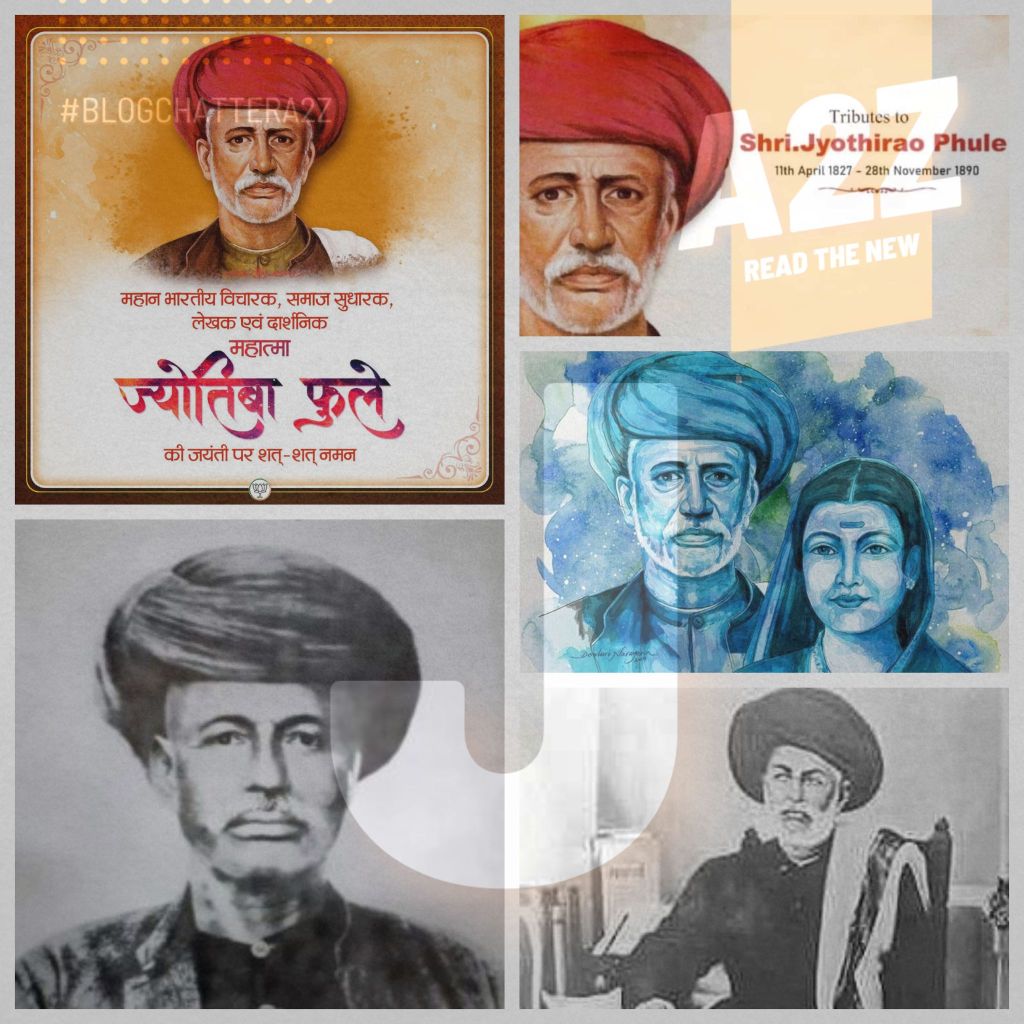
Overall, Jyotiba Phule’s notable works represent a courageous and visionary attempt to confront the injustices of his time and envision a more just and equitable society. His writings continue to inspire generations of social reformers and activists in their ongoing struggle for equality and justice.
Legacy and Impact:
Jyotiba Phule’s contributions to the Indian social reform movement were groundbreaking and far-reaching, laying the foundation for future generations of activists and reformers. His emphasis on education as a tool for social transformation inspired the establishment of numerous schools and educational institutions catering to marginalized communities across India.
Phule’s advocacy for women’s rights and gender equality also left a lasting impact, paving the way for the women’s empowerment movement in India. His progressive views on caste, gender, and religion continue to resonate with social justice movements in contemporary India, inspiring ongoing efforts to combat discrimination and oppression.
In recognition of his pioneering efforts, Jyotiba Phule is revered as one of the greatest social reformers in Indian history. His legacy serves as a beacon of hope and inspiration for all those committed to building a more just, inclusive, and equitable society.
Jyotiba Phule’s contributions to social reform and advocacy for the rights of marginalized communities have been widely recognized and celebrated in India and beyond. His legacy continues to inspire individuals and movements dedicated to social justice and equality. Some of the recognitions, tributes, and dedications in his honor include:
1. Statues and Memorials: Numerous statues and memorials have been erected in honor of Jyotiba Phule across India, particularly in Maharashtra, where he is revered as a prominent figure in the state’s history. These statues serve as reminders of his enduring legacy and the ideals he stood for.
2. Institutions and Organizations: Several educational institutions, research centers, and organizations have been named after Jyotiba Phule to commemorate his contributions to education and social reform. These institutions aim to uphold his principles of inclusivity, equality, and access to education for all.
3. Commemorative Events and Celebrations: Anniversaries of Jyotiba Phule’s birth and important milestones in his life are commemorated through various events, seminars, and cultural programs organized by government bodies, educational institutions, and civil society organizations. These events celebrate his legacy and provide a platform for dialogue on issues related to social justice and equality.
4. Literary Tributes: Writers, poets, and intellectuals have paid tribute to Jyotiba Phule through their literary works, including poems, essays, and biographies that highlight his life, struggles, and contributions to society. These literary tributes help keep his memory alive and inspire future generations to continue his work.
5. National Recognition: Jyotiba Phule’s contributions to social reform have been acknowledged at the national level in India. He is remembered as a key figure in the country’s history of social justice movements, and his ideas continue to influence public discourse on issues of caste, gender, and social inequality.
Overall, Jyotiba Phule’s legacy is honored through various forms of recognition, tributes, and dedications that highlight his enduring impact on Indian society and his enduring relevance in the ongoing struggle for social justice and equality.
Conclusion:
Jyotiba Phule’s life and work exemplify the power of courage, compassion, and conviction in the pursuit of social justice and equality. His tireless efforts to challenge oppressive systems and uplift the marginalized continue to inspire individuals and movements dedicated to creating a more equitable world. As we reflect on his legacy, let us reaffirm our commitment to carrying forward his vision of a society based on principles of justice, dignity, and respect for all.
I am participating in #BlogchatterA2Z


 Poetry Hub
Hello. Thanks for visiting. I’d love to hear your thoughts! What resonated with you in this piece? Drop a comment below and let’s start a conversation.