Thadri Festival: A Symbol of Unique Tradition and Faith in the Sindhi Community
In India, religious festivals and traditions are a vital part of the identity and life of various communities and cultures. Every religion and community has its own special festivals that not only represent their religious beliefs but also serve to preserve social unity, communal harmony, and cultural heritage. One such unique festival is the ‘Thadri Festival’ of the Sindhi community, which is celebrated with distinctive traditions and deep-rooted faith.
The Significance of the Thadri Festival
The word ‘Thadri’ in the Sindhi language means ‘cold’ or ‘coolness.’ This festival is celebrated on the seventh day after Raksha Bandhan, and on this day, no cooking is done in Sindhi households. The Thadri Festival is dedicated to the worship of Sheetla Mata, the goddess believed to bring coolness and cure heat-related diseases. During this festival, families come together to worship Sheetla Mata, praying for relief from illnesses and physical ailments.
Worshipping Sheetla Mata is the most important aspect of this festival. It is believed that those who regularly worship Sheetla Mata are protected by her divine grace. For families with members suffering from any kind of heat-related diseases, this festival holds special significance. Worshipping Sheetla Mata is believed to bring peace and prosperity to the family, and protect them from all kinds of diseases and misfortunes.
The History and Religious Faith of the Thadri Festival
This festival is rooted in ancient traditions and religious beliefs that are thousands of years old. The discovery of a statue of Sheetla Devi during the excavation of Mohenjo-daro, an ancient Indus Valley civilization site, further enhances the historical and religious importance of this festival. Since the discovery of this statue, worshipping Sheetla Mata and celebrating the Thadri Festival has become a widespread tradition. The main purpose of this festival is to seek relief from natural and heat-related diseases by worshipping Sheetla Mata.
Traditions and Rituals of the Thadri Festival
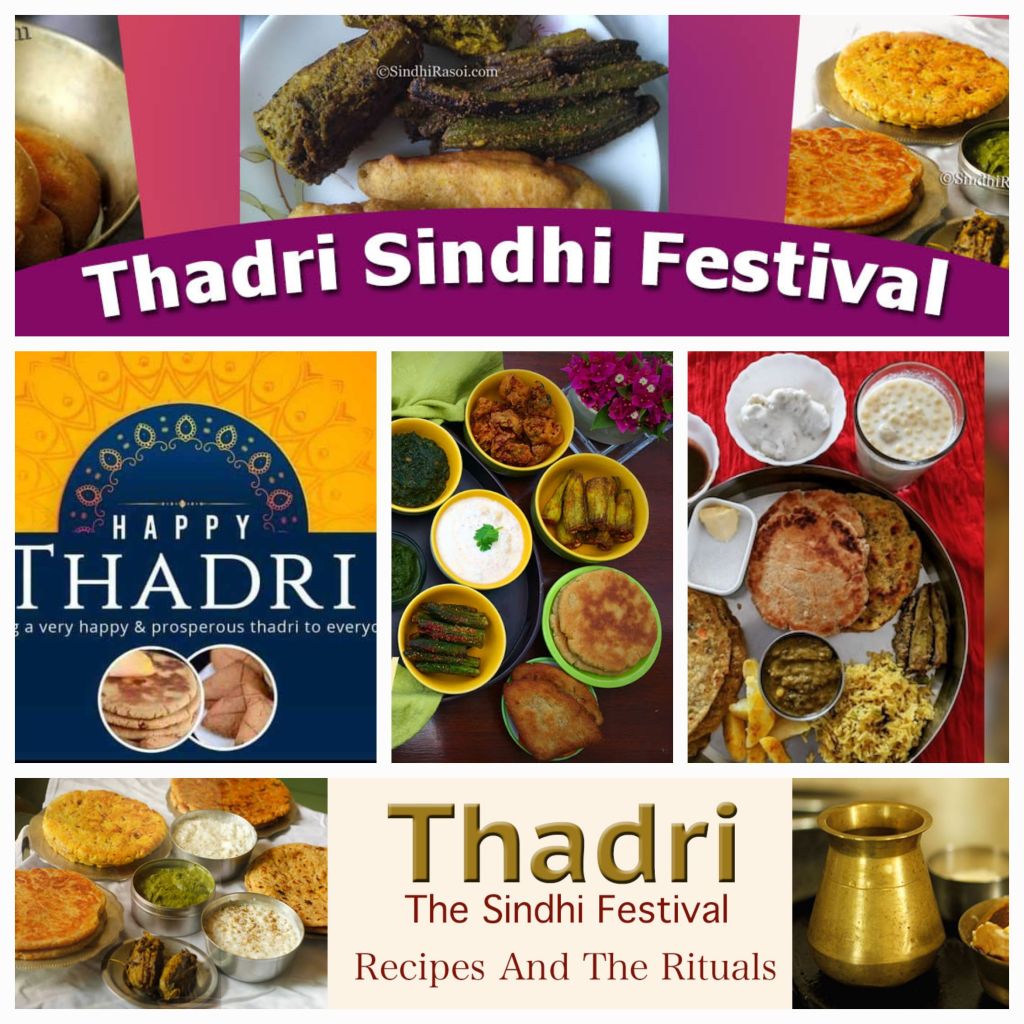
On the day before Thadri, that is, on 24th August, each Sindhi family prepares special dishes. These include kooper, lachho, kokhi, and various fried vegetables like okra, bitter gourd, potatoes, raita, dahi-vada, and butter. These dishes are prepared with special methods. For example, kooper is made by adding clarified butter to wheat flour and kneading it with sugar syrup, while lachho is prepared by adding clarified butter, ground cardamom, and powdered sugar to flour. These are then shaped and fried as desired.
Before going to bed, water is sprinkled on the stove, and a prayer is offered to cool it down. The next day, 25th August, no cooking is done, and only the cold food prepared the previous day is consumed. Before eating, all family members gather at a nearby river, canal, well, or water body to perform the worship of Sheetla Mata. Due to urbanization and modernity, these worship rituals have now shifted to homes where water sources are available. Special emphasis is given to including young children in this worship, where prayers are offered to Sheetla Mata for their health and well-being.
Superstitions and Misconceptions Associated with the Thadri Festival
Like many ancient festivals, the Thadri Festival also has certain superstitions and misconceptions associated with it. In ancient times, when society was steeped in superstition, natural events were often seen as divine wrath. For instance, sea storms were considered the anger of the water gods, and droughts were seen as the displeasure of Indra, the god of rain. Similarly, diseases like smallpox were also associated with divine wrath, and to appease the goddess, people would worship her and celebrate the Thadri Festival by eating cold food.
Social and Familial Importance of the Thadri Festival
On the day of the Thadri Festival, elder family members give gifts to the younger ones, known as ‘Kharchi.’ Sisters and daughters are specially invited to their maternal homes to participate in the festival. Additionally, gifts of food and fruits are sent to the daughter’s in-laws by her brother or younger family members, a tradition known as ‘Thadri Ka Dinno.’ Thus, the Thadri Festival is not only a symbol of religious faith but also serves as a means to strengthen familial and social bonds.
Modern Relevance of the Thadri Festival
In today’s world, with the advancement of science, diseases like smallpox are prevented with childhood vaccinations. Despite this, the Thadri Festival remains one of the major festivals of the Sindhi community, celebrated in traditional ways even today. This festival is a unique blend of social unity and religious faith.
Even though traditions and religious beliefs may change over time, their essence and spirit remain intact. The Thadri Festival is a living example of this. This festival continues to play a significant role in preserving the religious beliefs, familial values, and cultural heritage of the Sindhi community.
Conclusion
The Thadri Festival celebrated by the Sindhi community is not just a symbol of their religious faith and traditions, but also an expression of their cultural heritage and social unity. Through this festival, the community stays connected to its roots and passes on its cultural values and traditions to future generations. The Thadri Festival also teaches us that no matter how much modernity and progress we achieve, our traditions and beliefs serve to connect us to our roots and remind us of our cultural identity.
Jai Shri Jhulelal, Jai Mata Hinglaj, Jai Sheetla Mata – with these religious chants, the Sindhi community keeps its faith and traditions alive. The Thadri Festival is not just a religious ritual but also a symbol of the social structure and cultural heritage that has kept this community united for centuries.
#ThadriFestival #SindhiCulture #SheetlaMata #IndianTraditions #CulturalHeritage #SindhiTraditions #ReligiousFestivals #TraditionalRituals #SindhiCommunity #FestivalsOfIndia

 Poetry Hub
Hello. Thanks for visiting. I’d love to hear your thoughts! What resonated with you in this piece? Drop a comment below and let’s start a conversation.