La Niña is a climate phenomenon that is part of the larger El Niño-Southern Oscillation (ENSO) cycle, which refers to the periodic fluctuations in sea surface temperatures and atmospheric conditions over the equatorial Pacific Ocean. La Niña is the opposite phase of El Niño and typically occurs every few years.
Key Characteristics of La Niña:
Cooler Sea Surface Temperatures:
- During La Niña, sea surface temperatures in the central and eastern equatorial Pacific Ocean drop significantly below average.
Stronger Trade Winds:
- During La Niña, the trade winds blowing from east to west across the Pacific intensify. These winds push the cooler water from the depths of the ocean to the surface, reinforcing the cooling effect.
Changes in Weather Patterns:
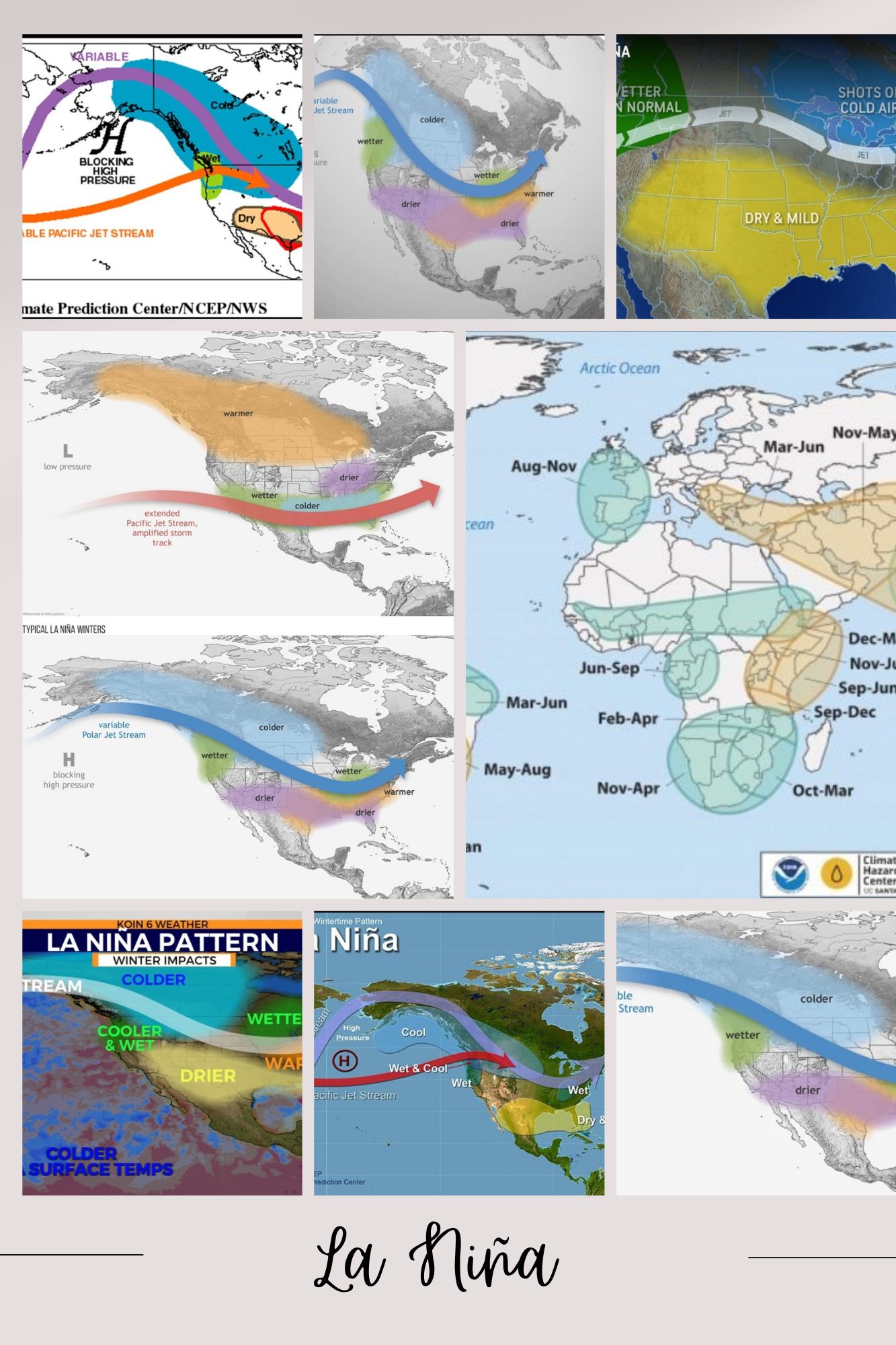
- La Niña alters global weather patterns. For instance, it typically brings wetter conditions to Southeast Asia, Australia, and parts of Africa, while parts of the United States (like the Pacific Northwest) experience colder and wetter winters.
- Conversely, it can cause drier conditions in the southwestern United States, southern South America, and eastern Africa.
Impact of La Niña:
Global Weather Extremes:
- La Niña can lead to more extreme weather events, such as increased tropical cyclones in the Atlantic, heavy rainfall and flooding in some regions, and droughts in others.
Agriculture:
- The shifts in weather patterns can have significant impacts on agriculture, potentially leading to crop failures in some regions due to drought or flooding in others.
Fisheries:
- The cooler waters associated with La Niña can benefit some marine ecosystems, particularly in the Pacific, by bringing nutrient-rich water to the surface, which supports fish populations.
Climate Effects:
- La Niña can have a cooling effect on global temperatures, as the cooler Pacific waters tend to lower the average global temperature. However, the effect is relatively small compared to the broader warming trend driven by climate change.
Humanitarian Impact:
- The extreme weather conditions brought on by La Niña can exacerbate humanitarian crises, particularly in vulnerable regions prone to flooding, drought, or severe storms.
Duration and Frequency:
- La Niña events usually last around 9 to 12 months, though they can extend for up to two years.
Understanding La Niña is crucial for predicting and preparing for its wide-ranging impacts on global weather, agriculture, and even economies.
La Niña is a complex climate phenomenon driven by interactions between the ocean and the atmosphere in the equatorial Pacific region. The scientific reasons behind La Niña involve several key processes:
Scientific Reasons Behind La Niña:
Cooling of Sea Surface Temperatures:
- La Niña begins with a significant cooling of sea surface temperatures (SSTs) in the central and eastern equatorial Pacific Ocean. This cooling is typically 0.5°C or more below the long-term average.
- The cooling is driven by stronger-than-normal trade winds that push the warm surface waters towards the western Pacific, allowing colder water from deeper ocean layers (upwelling) to rise to the surface in the eastern Pacific.
Strengthening of the Walker Circulation:
- The Walker Circulation is a large-scale atmospheric circulation pattern that involves the movement of air across the equatorial Pacific.
- The Walker Circulation strengthens during La Niña. The trade winds strengthen, leading to increased upwelling of cold water in the eastern Pacific and a build-up of warm water in the western Pacific.
- This intensification leads to more pronounced pressure differences between the western and eastern Pacific, reinforcing the La Niña conditions.
Changes in Atmospheric Pressure:
- La Niña is associated with higher-than-normal pressure over the central and eastern Pacific and lower-than-normal pressure over the western Pacific and Southeast Asia.
- These pressure differences create a feedback loop that maintains the strong trade winds and the cooler SSTs.
Ocean-Atmosphere Feedback:
- La Niña is sustained by a positive feedback loop between the ocean and atmosphere. The cooler SSTs enhance the strength of the trade winds, which in turn maintain the upwelling of cold water, further cooling the SSTs.
- This feedback loop continues until it is disrupted by changes in global atmospheric patterns or by the transition to the neutral phase or El Niño.
Researches Conducted Over the Years:
Early Research and Discovery:
- The study of La Niña, like its counterpart El Niño, has its roots in early 20th-century meteorology and oceanography. Gilbert Walker, a British scientist, made pioneering contributions in the 1920s by identifying the Southern Oscillation, a key component of ENSO (El Niño-Southern Oscillation) that underpins both El Niño and La Niña.
- Research into La Niña gained momentum in the latter half of the 20th century, particularly as scientists began to understand its global climate impacts.
ENSO Monitoring and Prediction:
- Over the decades, significant advancements have been made in monitoring and predicting ENSO events, including La Niña. The development of sophisticated ocean buoys, satellites, and climate models has allowed for more accurate monitoring of sea surface temperatures, trade winds, and atmospheric pressures.
- The establishment of the Tropical Ocean-Global Atmosphere (TOGA) program in the 1980s played a crucial role in improving the understanding and forecasting of ENSO, including La Niña events.
Climate Models and Simulation Studies:
- Modern climate models, such as those developed by the National Oceanic and Atmospheric Administration (NOAA), NASA, and the European Centre for Medium-Range Weather Forecasts (ECMWF), simulate the interactions between the ocean and atmosphere, providing insights into the dynamics of La Niña.
- Research has focused on understanding the factors that trigger La Niña, the variability of its intensity and duration, and its influence on global weather patterns.
- Studies using these models have explored the impact of climate change on La Niña frequency and intensity, with some suggesting that global warming may influence the characteristics of future La Niña events.
Paleoclimate Research:
- Paleoclimate studies, which involve analyzing ice cores, tree rings, and ocean sediments, have provided insights into the history of ENSO events, including La Niña, over thousands of years.
- This research has helped scientists understand how La Niña has varied in intensity and frequency in the past and how it might behave in a changing climate.
Impact Studies:
- Numerous studies have been conducted on the impacts of La Niña on agriculture, water resources, and public health. These studies often focus on specific regions, such as Southeast Asia, Australia, and India, where La Niña’s influence is particularly strong.
- Research has also examined the economic impacts of La Niña, particularly in terms of disaster management and agricultural losses.
Conclusion:
La Niña is a well-studied phenomenon, but research continues to evolve as scientists seek to better understand its intricacies and predict its impacts in the context of a changing climate. The combination of observational data, advanced climate models, and historical records has greatly enhanced our understanding of La Niña and its far-reaching effects.
La Niña has significant impacts on India’s climate and weather patterns, particularly influencing the monsoon season, temperature fluctuations, and the occurrence of extreme weather events. Here’s how La Niña typically affects India:
1. Monsoon Season:
- Enhanced Monsoon Rainfall: During La Niña years, India often experiences a stronger southwest monsoon. The cooling of the equatorial Pacific waters strengthens the trade winds, which in turn boosts the monsoon circulation over India. This usually leads to above-average rainfall across most parts of the country.
- Extended Monsoon: The monsoon season may also extend longer than usual during La Niña years, sometimes stretching into October.
2. Regional Rainfall Variations:
- Northern and Central India: Regions like central India, the northern plains, and the Himalayan foothills tend to receive more rainfall during La Niña. This can result in heavy downpours, leading to flooding in some areas.
- Southern India: La Niña may also bring heavier-than-usual rainfall to southern states during the northeast monsoon, particularly in Tamil Nadu, Andhra Pradesh, and Kerala.
- Drought Relief: In regions that typically experience drought, like parts of the Deccan Plateau and western India, La Niña can bring much-needed rainfall, alleviating drought conditions.
3. Impact on Agriculture:
- Beneficial for Kharif Crops: The enhanced monsoon generally benefits Kharif crops such as rice, sugarcane, and cotton, which rely on abundant water. Farmers in rain-fed agricultural regions particularly benefit from the increased rainfall.
- Flood Risks: However, excessive rainfall can also lead to flooding, which can damage crops, displace communities, and create logistical challenges in the transportation of agricultural products.
4. Winter Season:
- Colder Winters: La Niña can lead to cooler-than-normal winter temperatures in northern India. The enhanced cold can affect the Rabi crop season, impacting crops like wheat and mustard if temperatures drop excessively.
- Extended Winter Season: The winter season might also last longer during La Niña years, with cold spells persisting into March.
5. Extreme Weather Events:
- Increased Cyclone Activity: La Niña is often associated with an increase in cyclone activity in the Bay of Bengal and the Arabian Sea during the post-monsoon period. These cyclones can bring heavy rainfall and strong winds, causing damage to coastal regions and affecting agriculture, infrastructure, and livelihoods.
- Flooding: The heavier monsoon rains can result in widespread flooding, particularly in riverine and low-lying areas. Flooding during La Niña years has historically affected states like Assam, Bihar, and Uttar Pradesh, leading to significant economic losses and displacement of populations.
6. Health Impacts:
- Vector-Borne Diseases: The increased rainfall and flooding during La Niña can lead to the proliferation of mosquitoes, increasing the risk of vector-borne diseases such as malaria, dengue, and chikungunya.
- Water-Borne Diseases: Flooding can also result in contamination of water sources, leading to outbreaks of water-borne diseases like cholera, dysentery, and typhoid.
7. Water Resources and Hydroelectric Power:
- Positive Impact on Reservoirs: The above-average rainfall can help in replenishing reservoirs, groundwater, and other water resources, which is beneficial for drinking water supplies, irrigation, and hydroelectric power generation.
- Risk of Dam Overflow: On the flip side, excessive rainfall can lead to the overflowing of dams and reservoirs, necessitating controlled releases that may contribute to downstream flooding.
8. Economic Implications:
- Agricultural Output: While La Niña can boost agricultural production due to good rainfall, the risk of floods and crop damage can offset these gains in some regions.
- Disaster Management Costs: The increased frequency of extreme weather events during La Niña years can lead to higher disaster management and relief costs for the government.
9. Energy Demand:
- Increased Heating Demand: The colder winter temperatures may lead to higher energy demand for heating in northern India, which can strain energy resources and impact energy prices.
Overall, while La Niña generally brings beneficial monsoon rains to India, it also poses challenges in the form of extreme weather events, cold waves, and potential flooding, all of which have considerably significant implications for agriculture, infrastructure, and public health.

La Niña probabilities in 2024? Its impacts, if it happens in 2024?
La Niña conditions are expected to develop in 2024, with significant implications for global weather patterns. Current forecasts indicate a 70% probability of La Niña emerging between August and October 2024, with a 79% chance of it persisting through the winter months of November to January. This transition follows the recent end of a strong El Niño phase, which typically precedes La Niña events.
Impacts of La Niña in 2024
The impacts of La Niña can vary widely depending on its intensity and duration, but several key effects are anticipated:
- Hurricane Activity: La Niña is associated with increased hurricane activity in the Atlantic. As a result, the 2024 Atlantic hurricane season is expected to be particularly active, with forecasts suggesting up to 25 named storms. This is partly due to La Niña’s influence on atmospheric conditions that favor storm development.
- Winter Weather Patterns: The winter of 2024-2025 may see warmer and drier conditions in the southern United States, while the Northern Plains could experience colder temperatures. The Pacific Northwest is likely to receive above-average precipitation.
- Global Climate Effects: La Niña typically leads to cooler temperatures in the central and eastern Pacific, which can influence global weather patterns. Regions such as northern South America, Central America, and parts of the Caribbean may experience increased rainfall, while areas like southern Brazil and the southern United States could face drier conditions, potentially leading to droughts.
- Agricultural Impacts: The changes in precipitation patterns due to La Niña can significantly affect agriculture, particularly in regions sensitive to moisture variations. For example, increased rainfall in some areas could benefit crops, while drought in others could harm agricultural productivity.
- Long-term Climate Considerations: Despite La Niña’s cooling effects, ongoing global warming trends may modulate these impacts, leading to complex interactions between La Niña and climate change. Projections suggest that the global mean temperature will continue to rise even during La Niña years, with the potential for record-breaking temperatures in the coming years.
In summary, the development of La Niña in 2024 is likely to have substantial effects on weather patterns across the globe, particularly in terms of hurricane activity and winter weather variability in the United States.
#LaNiña #ClimateChange #GlobalWeather #IndianMonsoon #2024Forecast #ENSO #AgricultureImpact #ExtremeWeather #ClimateScience #WeatherForecast #AgricultureIndia #Flooding cyclones #WinterSeason

Leave a Reply