
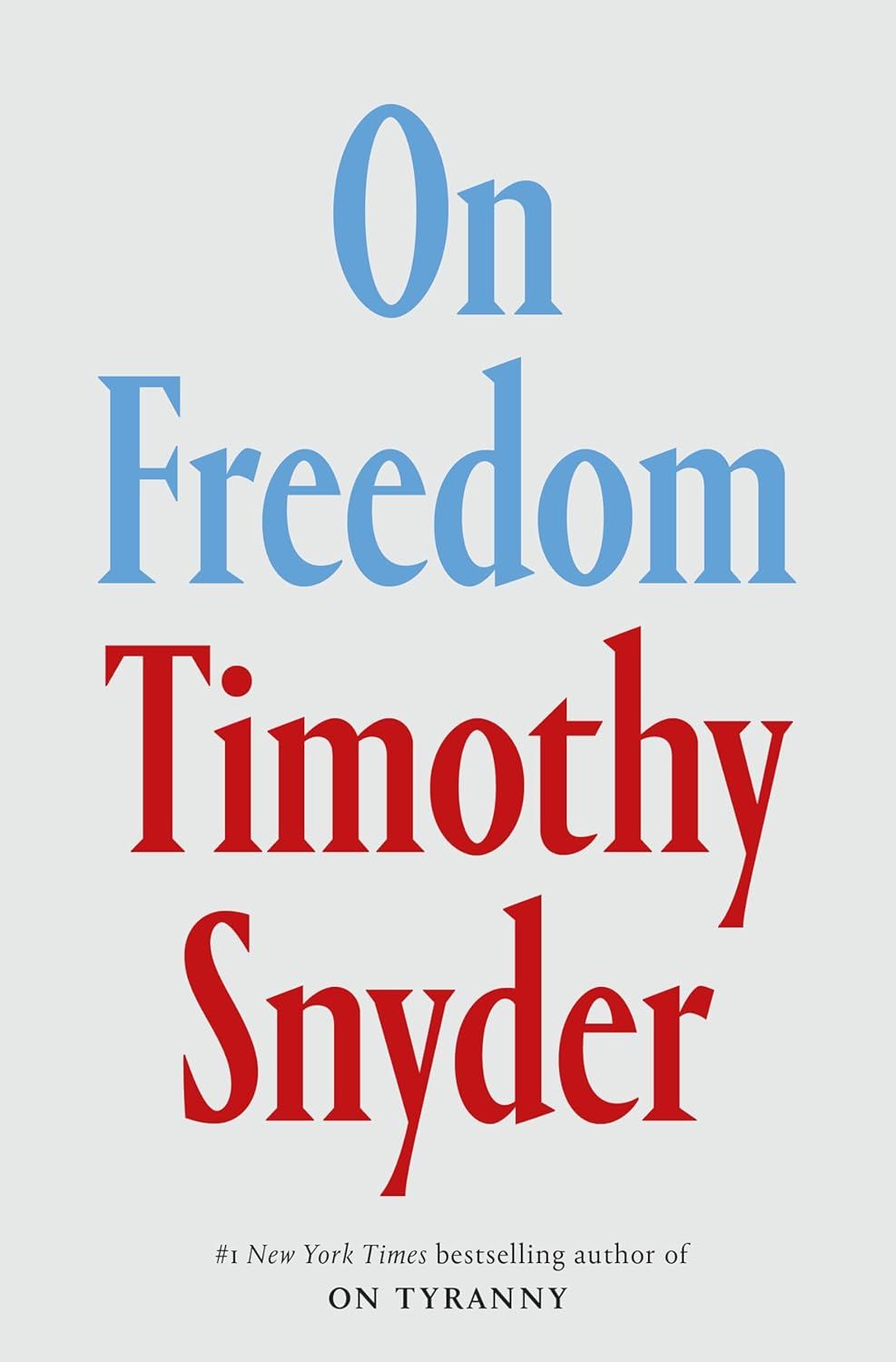
Review of On Freedom by Timothy Snyder: A Timely Exploration of Liberty and Democracy
On Freedom by Timothy Snyder delves into one of the most pressing issues of our time—freedom. Known for his works on history and politics, including On Tyranny and The Road to Unfreedom, Snyder shifts his focus in On Freedom to explore the concept of liberty and its complex intersections with history, philosophy, and modern society. In this ambitious work, Snyder provides a nuanced exploration of what freedom means, how it has been understood in different eras, and why it is constantly under threat.
Overview of Themes
The central theme of On Freedom is the very nature of liberty in contemporary society. Snyder addresses a range of philosophical questions about freedom, such as whether true freedom is possible in the face of systemic constraints like inequality, economic disparity, and authoritarianism. He highlights how liberty is often manipulated by political regimes and institutions to serve the interests of the powerful while ordinary citizens suffer the consequences.
At its heart, Snyder’s analysis argues that freedom is not a static state, but a constant negotiation. He examines how historical moments of both liberty and oppression have shaped the contemporary landscape, drawing attention to the persistent threats to democracy, particularly in the form of rising populism and authoritarianism around the globe.
Historical Context and Modern Parallels
One of Snyder’s strengths as a historian is his ability to weave historical analysis into present-day concerns. In On Freedom, he pulls from numerous historical examples, ranging from the aftermath of the Enlightenment to the rise of totalitarianism in the 20th century. He draws parallels between past political movements and today’s political climate, where democratic norms seem increasingly fragile in the face of disinformation, manipulation, and growing political polarization.
For instance, Snyder points to historical figures such as Thomas Jefferson, John Locke, and Immanuel Kant to illustrate various interpretations of freedom. From the Enlightenment’s emphasis on personal liberty and individual rights to Marx’s critiques of capitalism as a force that restricts freedom, Snyder highlights how the definition of freedom has always been subject to political, economic, and social forces.
By referencing current events such as the rise of far-right movements, anti-immigration policies, and growing surveillance states, Snyder shows how the freedoms many in the Western world take for granted are under constant threat. He argues that to defend these liberties, citizens must be aware of how vulnerable democracy is and take an active role in preserving it.
The Nature of Freedom: Individual and Collective
One of the key arguments in On Freedom is that true liberty is both an individual and collective concept. Snyder contends that while personal freedoms—such as freedom of speech, freedom of movement, and freedom from oppression—are essential, collective freedom, meaning the societal ability to choose a path forward democratically, is equally crucial.
Snyder critiques the popular understanding of freedom as merely “freedom from,” pointing out that liberty is not just about escaping the shackles of tyranny or oppression, but also about creating the conditions for a society where everyone can flourish. This view challenges the neoliberal focus on individualism that has shaped much of modern Western politics. In contrast, Snyder advocates for a more holistic approach to freedom, one that involves social justice, economic equity, and the well-being of all citizens.
Freedom and Responsibility
A unique aspect of Snyder’s analysis is his emphasis on responsibility as a necessary counterpart to freedom. He argues that real freedom cannot exist in isolation from responsibility, particularly in democratic societies. According to Snyder, citizens must take responsibility not only for their own actions but also for the structures and systems that govern them.
He discusses the role of education, civic participation, and the free press in maintaining freedom, pointing out that without informed and engaged citizens, democracy cannot function properly. Freedom, in Snyder’s view, is not a passive state but something that must be actively maintained and defended.
Freedom Under Threat: Disinformation and Surveillance
Sundial also touches upon the significant threats that disinformation and surveillance pose to modern-day freedom. Snyder argues that the proliferation of disinformation, particularly in the digital age, is one of the most dangerous challenges to freedom. He highlights the ways in which political actors manipulate information to undermine trust in democratic institutions, sow discord, and foster authoritarianism.
Surveillance, particularly in the digital world, is another key focus of Snyder’s analysis. He explores how governments and corporations alike track and control individuals’ actions in the name of security and convenience, eroding privacy and the autonomy of citizens. This, in turn, limits freedom by creating a culture of fear and self-censorship. Snyder warns that without vigilance, the erosion of privacy and unchecked power over information can lead to a complete collapse of personal and collective freedoms.
Snyder’s Call to Action
On Freedom is not only a critique of modern threats to liberty, but it is also a call to action. Snyder stresses that freedom is not inevitable, and it requires constant effort to sustain. He urges citizens to become active participants in their political systems, to challenge authoritarian tendencies, and to protect democratic institutions. The book’s tone is both cautionary and hopeful, recognizing the dangers that exist but also emphasizing that there is still time to safeguard liberty.
Snyder’s analysis is a timely reminder that freedom is a fragile and precious concept. In a world where democratic institutions are under assault, and where disinformation and authoritarianism are on the rise, On Freedom is a vital read for anyone interested in preserving and expanding the scope of liberty for future generations.
Conclusion
In On Freedom, Timothy Snyder provides an intellectually rich and deeply thought-provoking exploration of one of the most critical concepts in human history. Drawing on a wealth of historical and philosophical knowledge, Snyder illustrates how freedom is constantly under threat, yet how it remains an essential goal worth fighting for. His emphasis on the role of individual responsibility in maintaining democracy and freedom is a powerful reminder of the active role citizens must play in shaping the future.
This book is not only a powerful work of historical and political analysis but also a call to action in a time of global uncertainty. For anyone concerned with the future of democracy, individual rights, and societal freedom, On Freedom is an essential read.
#OnFreedom #TimothySnyder #Democracy #Liberty #PoliticalFreedom #Disinformation #Surveillance #Authoritarianism #Philosophy #BookReview
I’m participating in the #TBRChallenge by Blogchatter

 Poetry Hub
Hello. Thanks for visiting. I’d love to hear your thoughts! What resonated with you in this piece? Drop a comment below and let’s start a conversation.