“Nehru to the Nineties: The Changing Office of Prime Minister in India,” edited by James Manor, is a profound exploration of the evolution of India’s prime ministerial office, tracing its trajectory from the nation’s first Prime Minister, Jawaharlal Nehru, through to the political dynamics of the 1990s. The collection of essays within the book, contributed by prominent scholars and political analysts, offers an in-depth and nuanced understanding of the shifts in the roles, responsibilities, and powers of successive prime ministers, while also dissecting the broader socio-political contexts that shaped those changes.
Structure and Scope
The book is divided into various sections, each dealing with a distinct era or theme related to the Indian prime ministership. Beginning with the Nehruvian period, the book takes the reader on a political journey through the leadership of Lal Bahadur Shastri, Indira Gandhi, Rajiv Gandhi, and others, right up to the period marked by the coalition governments of the late 20th century. Each section addresses not just the personal style of governance of the prime ministers but also examines the broader institutional and political frameworks within which they operated.
Nehruvian Legacy and Democratic Foundations
The book opens with a comprehensive examination of Jawaharlal Nehru’s tenure, which laid the foundation for India’s democratic institutions. Nehru’s role as a visionary, intellectual leader, and a proponent of secularism and democracy is discussed at length. The essays underscore how Nehru’s belief in democratic centralism shaped the prime ministerial office into a position of immense power, but one that was simultaneously restrained by constitutional norms. His leadership style, marked by an emphasis on cabinet discussions and collective decision-making, is contrasted with his successors, setting up a powerful analytical framework for the reader.
One of the most fascinating aspects of this section is the exploration of Nehru’s relationship with India’s nascent political institutions. The authors argue that Nehru’s immense personal stature helped him define the role of the prime minister not just as a political leader but as a moral compass for the nation. Yet, the essays do not shy away from critiquing Nehru, especially when it comes to his handling of the Sino-Indian war and his reluctance to encourage internal party democracy within the Congress Party. The tension between Nehru’s vision of a democratic India and his occasional autocratic tendencies is explored in depth.
Post-Nehru Leadership: Shastri and the Rise of Indira Gandhi
Lal Bahadur Shastri’s brief tenure is often overshadowed by the towering legacy of Nehru and the turbulent times that followed under Indira Gandhi, but the book gives Shastri his due. It highlights his efforts to bring the country together during difficult times, especially during the Indo-Pak war of 1965. However, it is Indira Gandhi’s rise to power that forms the focal point of the next section of the book. The transformation of the prime ministerial office during her rule is one of the most significant developments discussed in this book.
Indira Gandhi’s tenure marks a clear departure from Nehru’s governance style. Her concentration of power and her strategy of sidelining the cabinet and parliamentary processes in favor of a more centralized and authoritarian approach are meticulously analyzed. This shift is encapsulated in her declaration of the Emergency in 1975, which, as the book highlights, was a watershed moment in Indian democracy. The authors critically analyze how Indira’s leadership style fostered a culture of sycophancy within the Congress party and weakened institutional checks and balances, which had lasting implications for the prime ministerial office.
What makes this section particularly compelling is the balance it strikes between understanding Indira Gandhi’s policies from a historical perspective and critiquing the long-term impact of her authoritarian tendencies. The book doesn’t simply vilify her; instead, it provides a comprehensive view of the socio-political conditions that influenced her decisions, especially her battles with the judiciary and regional leaders, while also acknowledging her achievements, particularly in the domain of economic and foreign policies.
Rajiv Gandhi and the Shift Towards Technocracy
The discussion on Rajiv Gandhi is perhaps one of the most fascinating aspects of the book, as it marks a period of transition for the prime ministerial office. Rajiv Gandhi, with his modernizing zeal and technocratic approach, is portrayed as a leader who aimed to break free from the old guard of the Congress party. The book examines his efforts to introduce technology-driven reforms and his push towards a more youth-centric political culture.
However, the essays are critical of Rajiv’s lack of political experience, which often led to his inability to navigate the complex web of Indian politics. The Bofors scandal, which marred his tenure, is discussed in detail, with the authors pointing out how the controversy damaged both his image and the credibility of the prime minister’s office. Yet, the book also emphasizes his contribution to India’s long-term technological development and the liberalization process that would later take full shape in the 1990s.
Coalition Politics and the Decline of Prime Ministerial Authority
The final sections of the book deal with the prime ministers who had to operate within the constraints of coalition politics, particularly after the Congress lost its dominant position in the late 1980s. This period saw the rise of regional parties and the decline of the single-party dominance that had characterized much of India’s post-independence history. Prime ministers like V.P. Singh, Chandrashekhar, and P.V. Narasimha Rao had to navigate the complex dynamics of coalition governments, often leading to a reduction in the powers of the prime ministerial office.
This section offers a fascinating look at how the fragmentation of the Indian political landscape led to a new kind of governance. The authors highlight the challenges of leading a coalition government, where the prime minister often had to act as a consensus-builder rather than a decision-maker. The economic liberalization of 1991, spearheaded by Narasimha Rao, is treated as a pivotal moment in India’s economic history, but the book also underscores how it was achieved despite the political weakness of the prime minister at the time.
Analytical Depth and Scholarly Insight
What stands out about “Nehru to the Nineties” is its analytical depth. The contributors bring a wealth of scholarly insight to the subject, combining historical analysis with political theory. The evolution of the prime minister’s office is not viewed in isolation but is instead situated within the larger framework of India’s democratic and institutional development. The book explores how the prime minister’s role has been shaped by changing electoral patterns, the rise of regionalism, and the shifting balance of power between the executive, legislature, and judiciary.
Conclusion: A Comprehensive Study of Indian Leadership
In conclusion, “Nehru to the Nineties” is an invaluable resource for anyone seeking to understand the changing nature of India’s prime ministerial office. It is a detailed, well-researched, and thoughtfully curated collection of essays that provides both historical context and critical analysis. By tracing the office from Nehru’s time to the coalition era of the 1990s, the book offers a comprehensive overview of how India’s political leadership has evolved in response to both internal and external pressures.
What makes the book particularly compelling is its balanced approach. While it acknowledges the achievements of various prime ministers, it does not shy away from critiquing their failures, making it a fair and objective account of the changing dynamics of political power in India. For readers interested in Indian political history, governance, or leadership studies, “Nehru to the Nineties” is an essential read that will leave them with a deeper understanding of the complexities of prime ministerial leadership in the world’s largest democracy.
In “Nehru to the Nineties,” the authors offer a critical examination of some negative aspects of Nehru’s leadership and the political dynasty that followed. Here are the key criticisms highlighted in the book:
Nehru’s Autocratic Tendencies
While Nehru is widely acknowledged for his democratic vision, the book points out instances where his leadership veered towards autocratic decision-making. For example, his handling of dissent within the Congress Party is critiqued, as Nehru often sidelined opposition voices to maintain control. His reluctance to foster internal democracy within the party contributed to a concentration of power at the top, weakening democratic practices within the party.
Handling of the Sino-Indian War
One of the most prominent failures discussed is Nehru’s mismanagement of foreign policy during the Sino-Indian War of 1962. His idealistic approach to international relations, particularly his belief in peaceful coexistence, led to a lack of military preparedness. The defeat in the war exposed significant gaps in his leadership, leading to a national crisis that tarnished his legacy.
The Rise of Dynastic Politics
The book offers a critical view of how Nehru’s tenure paved the way for the rise of dynastic politics in India. It is argued that Nehru’s grooming of his daughter, Indira Gandhi, for political leadership set a precedent for familial succession within the Congress Party. This dynastic trend, as discussed in the book, contributed to the weakening of democratic institutions by prioritizing family lineage over merit.
Indira Gandhi’s Authoritarianism
Building on Nehru’s centralization of power, the book delves into how Indira Gandhi took these tendencies further, concentrating authority in the prime ministerial office while weakening institutional checks. Her declaration of the Emergency in 1975 is highlighted as a major erosion of democracy, during which civil liberties were suspended, and political opponents were jailed. This period of authoritarian rule is portrayed as a direct consequence of the political culture Nehru had inadvertently fostered.
Legacy of Sycophancy in the Congress Party
The authors also criticize the culture of sycophancy that grew under Nehru’s leadership and deepened under Indira Gandhi. Nehru’s immense personal stature discouraged criticism, leading to a lack of internal debate and accountability within the Congress Party. This trend became even more pronounced during Indira’s tenure, resulting in a system where loyalty to the family overshadowed competence and policy debate.
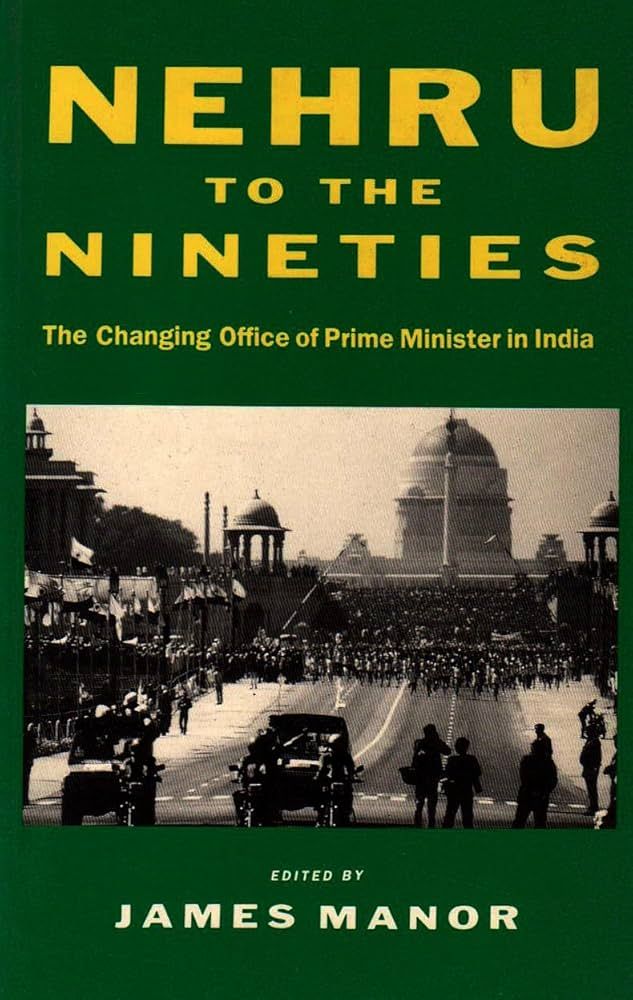
In summary, the book critiques Nehru for inadvertently setting the stage for dynastic politics and the weakening of internal democracy, while also examining his foreign policy failures and occasional autocratic tendencies. The legacy of these issues, according to the authors, continued under the Nehru-Gandhi dynasty, particularly during Indira Gandhi’s authoritarian rule.
#NehruToTheNineties #IndianPrimeMinisters #PoliticalLeadership #IndianDemocracy #IndiraGandhi #RajivGandhi #CoalitionPolitics #PoliticalHistory #BookReview #IndianPolitics
I’m participating in the #TBRChallenge by Blogchatter

 Poetry Hub
Hello. Thanks for visiting. I’d love to hear your thoughts! What resonated with you in this piece? Drop a comment below and let’s start a conversation.