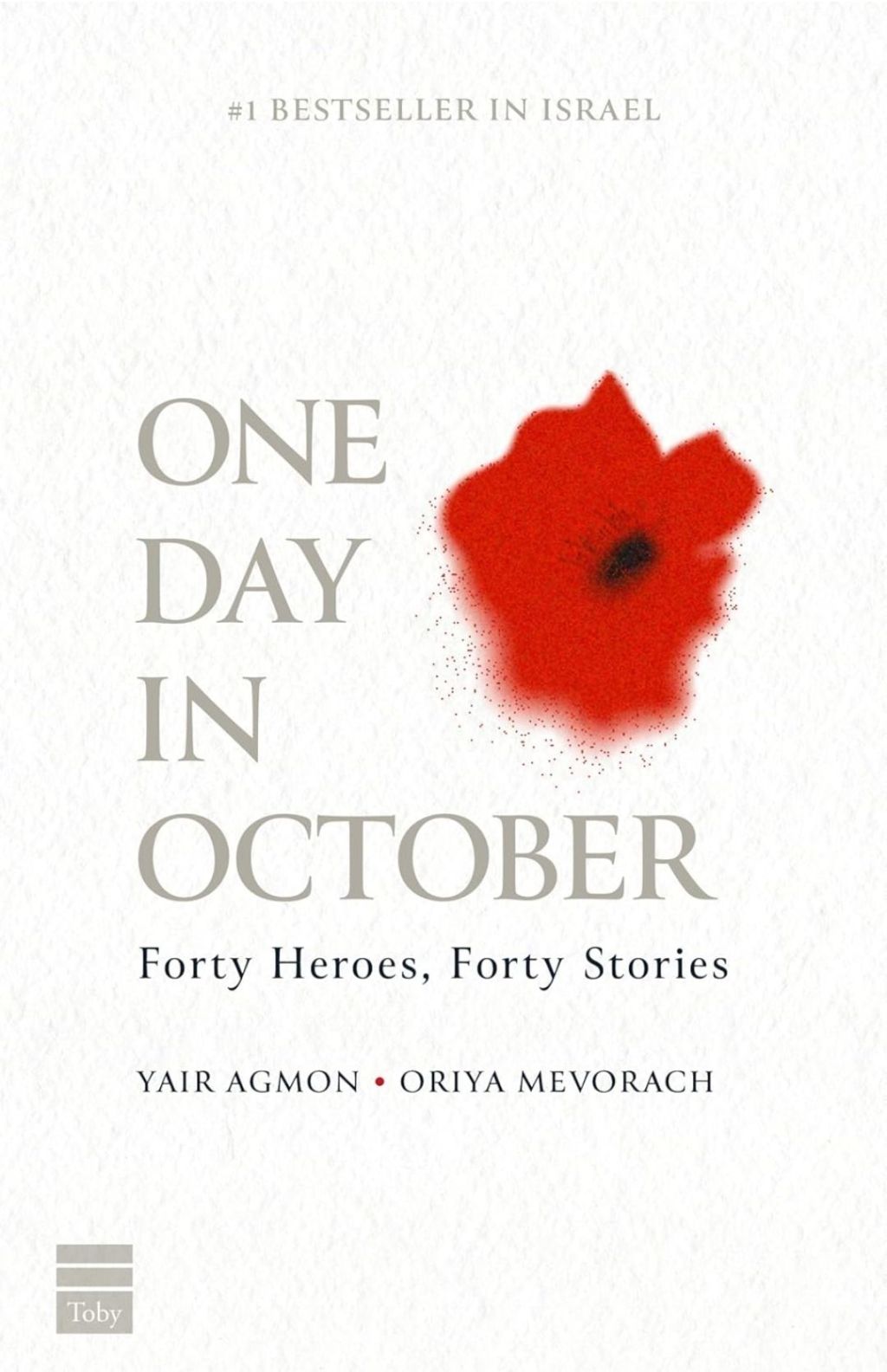
Book Review: “One Day in October: Forty Heroes, Forty Stories” by Yair Agmon and Oriya Mevorach
“One Day in October: Forty Heroes, Forty Stories” by Yair Agmon and Oriya Mevorach is a profound and emotionally evocative work that pays tribute to the courage, sacrifice, and humanity of forty Israeli soldiers who fought during the Yom Kippur War in 1973. The book is an extraordinary collection of personal stories, each focusing on an individual hero, providing readers with an intimate look into the lives of those who stood on the frontlines of one of the most significant and tumultuous moments in Israel’s modern history.
A Historical Context: The Yom Kippur War
Before diving into the personal narratives of the soldiers, it’s essential to understand the backdrop against which these stories unfold. The Yom Kippur War, also known as the October War, took place from October 6 to October 25, 1973. It began when a coalition of Arab states, led by Egypt and Syria, launched a surprise attack on Israel on Yom Kippur, the holiest day in the Jewish calendar. The war initially caught the Israeli military off-guard, leading to significant losses before the tide eventually turned in Israel’s favor.
The war not only left an indelible mark on Israeli society but also profoundly impacted the soldiers who fought in it. Many of these men and women were young, some of them reservists called up with little time to prepare, and all of them were thrust into an existential battle for the survival of their homeland.
A Heartfelt Tribute to the Human Spirit
At the heart of “One Day in October” is the celebration of the human spirit, its resilience, and its ability to confront adversity with strength and dignity. The book is structured in a way that allows each hero to stand out as an individual, yet together, they form a collective narrative of courage and brotherhood. Agmon and Mevorach meticulously weave together these stories, using a mixture of personal accounts, letters, interviews, and historical records. What emerges is a powerful tapestry of human experience—of love, fear, camaraderie, and, above all, sacrifice.
The stories are not told in a strictly chronological order, which gives the book an organic feel, as if we are walking through a memorial, pausing to reflect on the life of each hero as we encounter them. Each chapter presents a different soldier, offering a unique glimpse into their world before, during, and sometimes after the war. This non-linear approach reinforces the idea that these heroes’ lives cannot be defined solely by their role in the war but must be understood in the broader context of their humanity.
Personal Sacrifice and the Cost of War
One of the most striking aspects of “One Day in October” is its unflinching portrayal of the personal sacrifices made by the soldiers. Many of the stories delve into the psychological and emotional toll that the war took on these men and their families. Some of the soldiers described in the book did not survive the war, leaving behind grieving parents, spouses, and children. Others returned home, but the war had changed them in ways that they—and those who loved them—could never have anticipated.
The authors do a masterful job of conveying the profound sense of duty and loyalty that motivated these soldiers, even as they faced overwhelming odds. The war may have lasted only a few weeks, but its impact on the soldiers lasted a lifetime. Many of the narratives touch on themes of trauma and loss, but there is also a deep sense of pride in having fought for something greater than themselves—the survival of their nation.
A Deep Connection to Family and Legacy
Family plays a central role in many of the stories told in “One Day in October.” The book frequently reflects on the relationships between the soldiers and their parents, siblings, and children. These familial ties add an additional layer of poignancy to the stories, as the reader is reminded that each soldier was someone’s son, brother, or father. Many of the soldiers left behind letters or mementos, which their families now treasure as their final connection to the loved one they lost.
The book also touches on the broader theme of legacy, particularly in the way these soldiers are remembered by future generations. In Israel, the memory of the Yom Kippur War and the soldiers who fought in it is a central part of the national consciousness. By telling these stories, Agmon and Mevorach ensure that the legacy of these forty heroes will endure, not only as part of Israel’s history but also in the hearts of all who read the book.
Writing Style and Narrative Choices
The writing style of Agmon and Mevorach is both lyrical and precise. There is a certain poetic quality to the way they describe the lives of the soldiers, particularly in the way they capture the small, intimate details that make each hero feel real and relatable. The authors clearly have a deep respect for their subjects, and this respect is evident in the care they take to tell each story with honesty and compassion.
The decision to focus on personal stories, rather than on the broader political or military context of the war, allows the book to have a deep emotional impact. While the Yom Kippur War is well-documented from a historical perspective, “One Day in October” offers something different—a chance to understand the war through the eyes of the individuals who experienced it firsthand. This approach makes the book accessible to readers who may not be familiar with the specifics of the war, while still offering a meaningful and deeply moving experience to those who are.
Themes of Heroism and Humanity
At its core, “One Day in October” is about heroism—not just the kind of heroism that is celebrated on the battlefield, but the quieter, everyday heroism that comes from being a good person, a loving family member, and a loyal friend. The soldiers in this book are not portrayed as larger-than-life figures, but as real people who found themselves in extraordinary circumstances and rose to the occasion.
The book also explores the complexity of heroism, acknowledging that even heroes are not without their flaws. Some of the soldiers struggled with fear, doubt, and moral ambiguity during the war, but this only serves to make their stories more relatable and human. In many ways, the book is a meditation on what it means to be a hero in the modern world, where the lines between good and evil are not always as clear-cut as they may seem.
A Universal Message
While “One Day in October” is deeply rooted in the specific history and culture of Israel, its message is universal. At its heart, this is a book about the human experience—about love, loss, sacrifice, and the ways in which we confront the challenges that life throws at us. The soldiers in this book may have fought in a war that took place half a century ago, but their stories resonate with readers today, reminding us of the enduring power of the human spirit.

Conclusion
“One Day in October: Forty Heroes, Forty Stories” is a remarkable book that honors the lives and legacies of the soldiers who fought in the Yom Kippur War. Yair Agmon and Oriya Mevorach have crafted a powerful tribute to these forty heroes, offering readers a chance to reflect on the meaning of courage, sacrifice, and the lasting impact of war. The book is both a moving memorial to those who gave their lives and a celebration of the enduring strength of the human spirit. It is a must-read for anyone interested in Israeli history, military history, or simply the complexities of the human condition.
#OneDayInOctober #YomKippurWar #WarHeroes #BookReview #IsraeliHistory #MilitaryHistory #HeroicStories #YairAgmon #OriyaMevorach #TributeToHeroes
I’m participating in the #TBRChallenge by Blogchatter

 Poetry Hub
Hello. Thanks for visiting. I’d love to hear your thoughts! What resonated with you in this piece? Drop a comment below and let’s start a conversation.