The Real Power in Media Today: Writers and Creators, Not Corporate Executives
For decades, media moguls, executive editors, and TV anchors sat atop the industry, shaping public opinion and defining cultural conversations. The names of these media power brokers—executives at CNN, Fox, Hearst, and The New York Times—became synonymous with influence. They directed the flow of information, decided what stories were told, and wielded incredible authority in shaping national and international discourse.
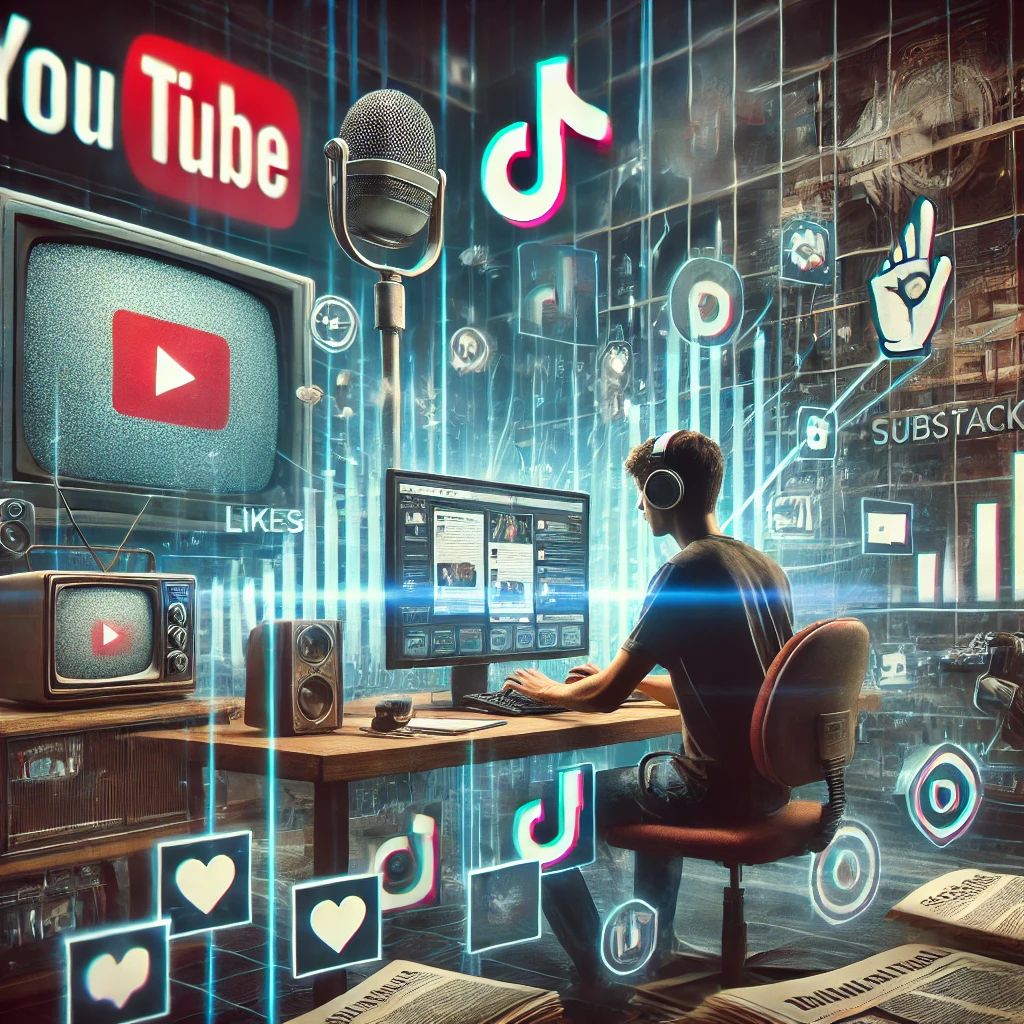
If you noticed in recent years, there has been a seismic shift in this regard. The real power in media no longer rests with these mahogany-desked executives or aging anchors, but with the writers and creators who have direct, unmediated relationships with their audiences. These creators have not only revolutionized the way media is consumed but have also dramatically altered the way culture is shaped. The stars of new media—whether YouTubers, independent journalists, podcasters, or TikTok influencers—are the ones driving cultural change, wielding far more influence than traditional media outlets that, with few exceptions, are struggling to maintain relevance.
The Decline of Traditional Media Power
For most of the 20th century, the media was centralized. Newspapers like The New York Times and The Washington Post had large circulations, and the evening news on ABC, CBS, and NBC were essential viewing. These outlets acted as gatekeepers, deciding which stories were important and how they should be framed. Media consumers were passive recipients, absorbing the information passed down from the powers that be.
The individuals who controlled these institutions wielded enormous influence. Executive editors decided what was newsworthy, and TV anchors became trusted household names, guiding the public’s perception of world events. People like Walter Cronkite, Dan Rather, and Barbara Walters shaped not only the way Americans saw the world but how they understood themselves within it.
However, the rise of the internet, followed by the explosion of social media platforms, has completely upended this model. Audiences are no longer passive; they are active participants in the media they consume. They no longer rely on a handful of media outlets to tell them what is important. Instead, they seek out creators, writers, and influencers who speak directly to their interests, values, and experiences.
As a result, traditional media outlets have seen a dramatic decline in both viewership and credibility. Newspapers have struggled to maintain circulation in the face of digital competition, with many shuttering entirely. Television news is watched primarily by older generations, with younger viewers increasingly turning to social media and online platforms for their news and entertainment.
The power brokers who once dominated media are now overseeing a series of properties with dwindling reach and a limited ability to shape public opinion. As audiences fragment across digital platforms, the influence of traditional media has become increasingly diluted.
The Rise of the Writer and Creator
In the vacuum left by the decline of traditional media, a new kind of power has emerged: the writer, the content creator, and the independent journalist. These individuals have direct lines to their audiences, bypassing the gatekeepers of traditional media entirely. They don’t need to go through executive editors or corporate executives to get their work published. Instead, they can create content, distribute it through social media, newsletters, or independent platforms, and build loyal followings without the backing of legacy media institutions.
Writers and creators now have more control over their content and the way they engage with their audiences. Social media platforms, YouTube, and podcasts provide accessible and low-cost ways to publish and promote content. The immediacy and intimacy of these platforms have made audiences feel more connected to the creators they follow. Whether it’s a writer sending out a newsletter on Substack or a TikTok influencer making short, engaging videos, creators now have the ability to reach millions of people without any intermediaries.
This direct connection has enormous implications for the way culture is shaped. When creators have a personal rapport with their audience, their influence is far greater than that of a faceless news anchor or corporate media outlet. Audiences feel that they know these creators, that they share values, and that the content they consume speaks directly to their experiences and concerns.
For example, YouTubers like Philip DeFranco, who discusses news and politics in an informal yet informed way, has amassed millions of subscribers who trust his take on current events far more than they do the traditional news media. Independent journalists like Glenn Greenwald and Matt Taibbi have built enormous followings on platforms like Substack, where they can speak freely without the constraints of traditional media. Influencers on platforms like TikTok and Instagram have the ability to shape cultural trends in real-time, often reaching more people in a single post than a newspaper article or TV broadcast would over its entire lifecycle.
Shaping Minds, Shifting Culture
The key to this shift in power is not just the size of the audiences that creators command, but the impact they have on those audiences. Traditional media outlets often have to cater to broad, general audiences, which means their content can feel impersonal and distant. Writers and creators, on the other hand, are able to speak to niche audiences with laser-focused precision.
This ability to target specific communities has allowed creators to shape culture in a way that traditional media never could. Whether it’s a YouTube creator sparking a new fashion trend, a podcast host driving political conversations, or an Instagram influencer shaping beauty standards, creators have become the architects of modern culture.
For example, creators on TikTok have played an enormous role in driving musical trends. Songs that become popular on the platform often end up dominating mainstream charts. Similarly, TikTok creators have launched viral trends that influence everything from fashion to activism. The platform has also become a powerful tool for political engagement, with creators using their influence to mobilize young voters, raise awareness about social justice issues, and challenge traditional political narratives.
On platforms like YouTube and Instagram, creators have transformed industries like beauty and fashion. Influencers like James Charles and Emma Chamberlain have built empires by creating content that resonates with their audience, while simultaneously setting new trends and shaping consumer behavior. Brands are now more likely to partner with these influencers than with traditional celebrities because they understand that the bond between creators and their audiences is far more intimate and impactful.
Independent journalists have also harnessed this power to shift public discourse. As trust in traditional media declines, more people are turning to journalists who operate outside of mainstream outlets. These journalists are able to cover stories and perspectives that are often overlooked or ignored by corporate media. Their independence allows them to be more transparent and accountable to their audiences, which in turn builds greater trust and loyalty.
The result is a media landscape that is far more democratic and diverse than ever before. No longer is media power concentrated in the hands of a few executives or editors. Instead, it is dispersed across a vast network of creators and writers who bring a wide range of perspectives and experiences to the table.
The Limitations of Traditional Media
As creators continue to rise in influence, traditional media outlets have struggled to adapt. One of the biggest challenges they face is the sheer scale and speed of digital media. While newspapers and television stations are slow-moving institutions that require significant time and resources to produce content, creators can generate and distribute content almost instantaneously.
The need for traditional media to rely on advertising revenue has also hampered its ability to compete with new media. Many outlets have turned to clickbait headlines and sensationalism in an attempt to drive traffic, but this has only eroded trust among readers and viewers.
Moreover, traditional media has often struggled to speak to younger generations. News anchors and print publications are not reaching Millennials and Gen Z the way that TikTok creators or YouTubers are. Traditional outlets that once held sway over public opinion are increasingly seen as out-of-touch with the concerns of younger, more diverse audiences. As a result, they are losing relevance and influence in the cultural conversation.
What Does the Future Hold?
The rise of writers and creators as the new power brokers in media signals a fundamental shift in how information is produced and consumed. While traditional media outlets will continue to exist, their influence is waning. The future of media belongs to those who can build authentic, direct relationships with their audiences and adapt to the fast-paced, ever-changing digital landscape.
Creators have shown that they have the ability to shape minds and shift culture in ways that traditional media can no longer do. As more people seek out content that speaks directly to their experiences and values, the power of writers, influencers, and independent journalists will only continue to grow.
Ultimately, the real power in media today is no longer held by executives sitting behind mahogany desks or TV anchors with worn soles. It lies with the creators who have a direct line to their audiences—and they are the ones shaping the future of media.
Conclusion: A Democratic Media Landscape
The media world is undergoing one of the most profound transformations in its history. The gatekeepers of traditional media have lost their monopoly on influence, and in their place, a new class of creators and writers has emerged, fundamentally reshaping how information is shared and culture is created.
As this shift continues, we are likely to see a more democratic, diverse media landscape—one where power is dispersed across many voices, and audiences have greater control over what content they engage with. For those who can navigate this new media environment, the opportunities are endless.
The days of media titans dictating the conversation are over. The future belongs to the creators.
#MediaEvolution #ContentCreators #DigitalInfluence #IndependentJournalism #CulturalShift #NewMedia #TraditionalMedia #SocialMediaInfluence #MediaPower #DigitalAge

 Poetry Hub
Hello. Thanks for visiting. I’d love to hear your thoughts! What resonated with you in this piece? Drop a comment below and let’s start a conversation.