When the World Turns Chaotic: The Solace of Books and Art
The world unfurls itself in a cacophony of chaos: headlines scream, screens blink with alerts, and the hum of unease hums incessantly. You step outside, or perhaps you don’t, but the sense is the same—something is unraveling. Directions shift unpleasantly, like a compass needle magnetized by doom. What do you do?
I ask myself this question more often than I care to admit. When the weight of the world’s trajectory presses too heavily on my chest, I retreat—not in fear, but in defiance. Books. Art. These are not mere distractions; they are acts of reclamation, spaces where the soul can breathe when the atmosphere feels stifling.
Books as Portals and Anchors
Books are like doors and anchors simultaneously. You open one, and it’s as if you’ve been invited into a house not your own, but familiar enough to feel like home. The smells of ink and paper, the quiet hum of a narrative unfolding—it pulls you in. This is not escapism. It is survival.
A book whispers, “Stay a while.” It doesn’t demand; it beckons. You sit with it, patient and unhurried, because you know that haste will do it a disservice. And in doing so, something extraordinary happens. Your mind, frazzled and fragmented by the world’s noise, begins to find rhythm. You immerse yourself in a character’s thoughts and, paradoxically, rediscover your own.
Consider the experience of reading One Hundred Years of Solitude or The Bell Jar. These are not easy reads—they are hard, yes, but they are pleasurable in their hardness. They force you to think, to feel, to confront both the beauty and ugliness of existence. You cannot skim them; they demand focus, and in that focus, they hold you steady.
Art as a Dialogue of Stillness
But books are not alone in this. Art—whether it be painting, music, theater, or dance—has this magical quality of anchoring you in a moment while simultaneously transporting you elsewhere. A Rothko canvas doesn’t shout; it meditates. You stand before it, and time folds in on itself. You are both here and nowhere.
There’s a peculiar kind of steadiness art provides. It asks you to meet it halfway, to surrender to its rhythm. It’s not always comfortable—some works are confrontational, jarring even—but the engagement it requires is pure and unhurried. You cannot scroll past it or click away. You have to stay.
The French composer Erik Satie once wrote music so minimal and repetitive that it felt like a meditation. Play Gymnopédies and let the notes seep into your bones. It’s as if time itself sighs and stretches out, inviting you to inhabit it fully. The experience, like reading, is both hard and pleasurable.
The Mind in Dialogue with Itself
Art, in its many forms, does something to the mind that nothing else can. It creates a dialogue—not just between you and the work, but within yourself. Reading Virginia Woolf, for example, is like holding hands with your own thoughts, even the ones you didn’t know you had. The rhythm of her prose, the ebb and flow of her sentences—they mirror the way your mind meanders when given the chance.
And that is what is so precious about these experiences. They are unhurried. In a world obsessed with speed—fast news, quick results, instant gratification—art and books remind us of the value of slowness. They remind us that not everything worth doing can be done quickly, that depth requires time.
Your Turn
Have you felt this? I’d wager you have. That moment when you sit with a book, and it feels like the world fades away—not because it has disappeared, but because your focus has sharpened to a point where the noise no longer penetrates. Or when you stand in front of a painting and feel a stillness descend, as if the art itself is breathing with you.
If you haven’t, I urge you to try. Turn to books when the world grows unbearable. Turn to art when the direction seems too unpleasant to navigate. Not because they will give you answers, but because they will give you steadiness.
Steadiness as Resistance
In many ways, this can be termed ss an act of rebellion. Sitting with a book or a piece of art and offering it your undivided attention in a world that demands your fragmented focus is a quiet act of defiance. It’s a way of declaring, “I refuse to be rushed,” and reclaiming your mind from the forces intent on pulling it apart.
Art and books are not just pastimes; they are sanctuaries, battlegrounds, and mirrors. They challenge you, comfort you, and, above all, hold you steady when the world seems determined to shake you loose.
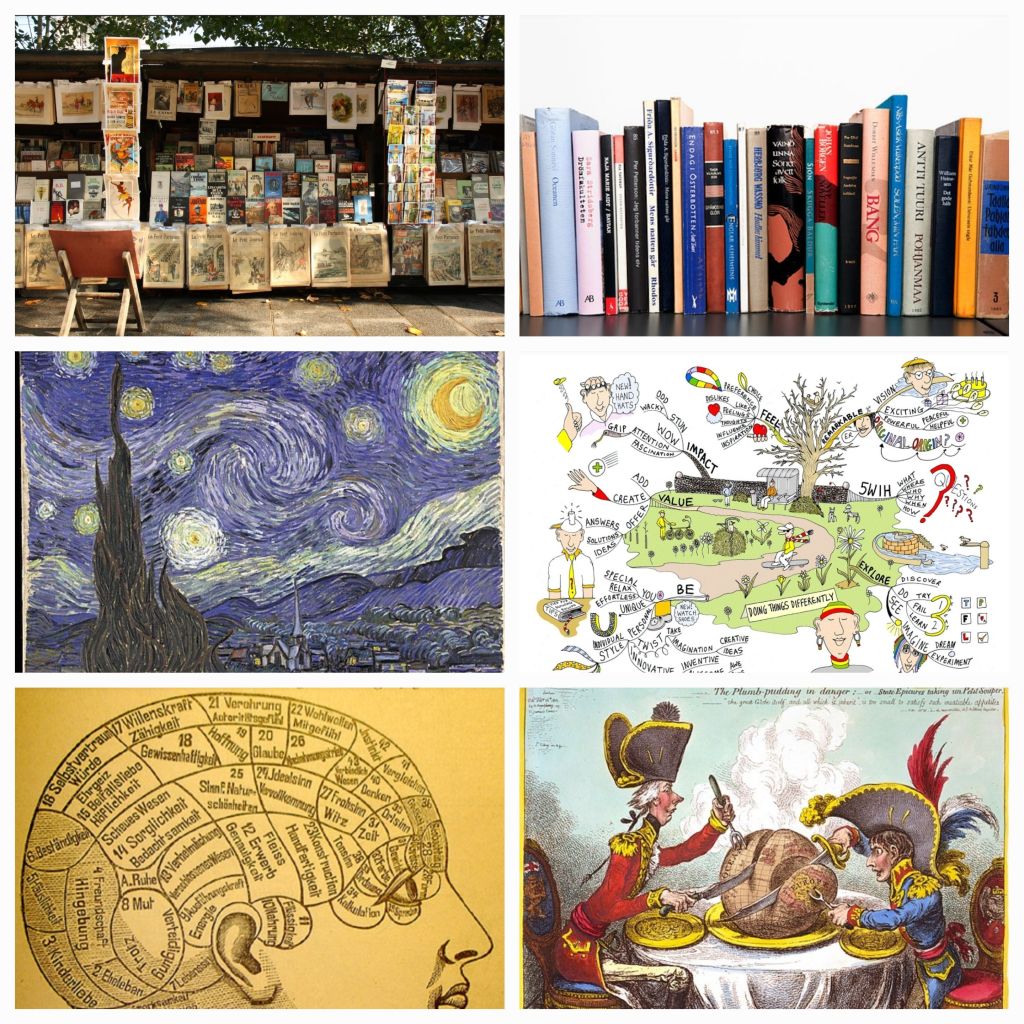
The Author, The Reader, The Artist, The Viewer
It’s a strange and beautiful thing, this relationship. I write these words now, knowing that someone—a stranger, perhaps you—might read them one day. In that moment, we will be connected. You will sit with these words, and for a brief moment, the chaos of the world will recede.
Art has this power. It pulls us into focus, into dialogue, and keeps us there, patient and unhurried, for as long as it takes. And when we emerge—because we always do—we are steadier.
So let the world develop in unpleasant directions if it must. Turn to books. Turn to art. Let them hold you. Let them steady you. And then, perhaps, you will be ready to face the world again.
#BooksAndArt #Mindfulness #MentalWellness #LiteraryEscape #ArtTherapy #FocusAndCalm #SlowLiving #ChaosToCalm

 Poetry Hub
Hello. Thanks for visiting. I’d love to hear your thoughts! What resonated with you in this piece? Drop a comment below and let’s start a conversation.