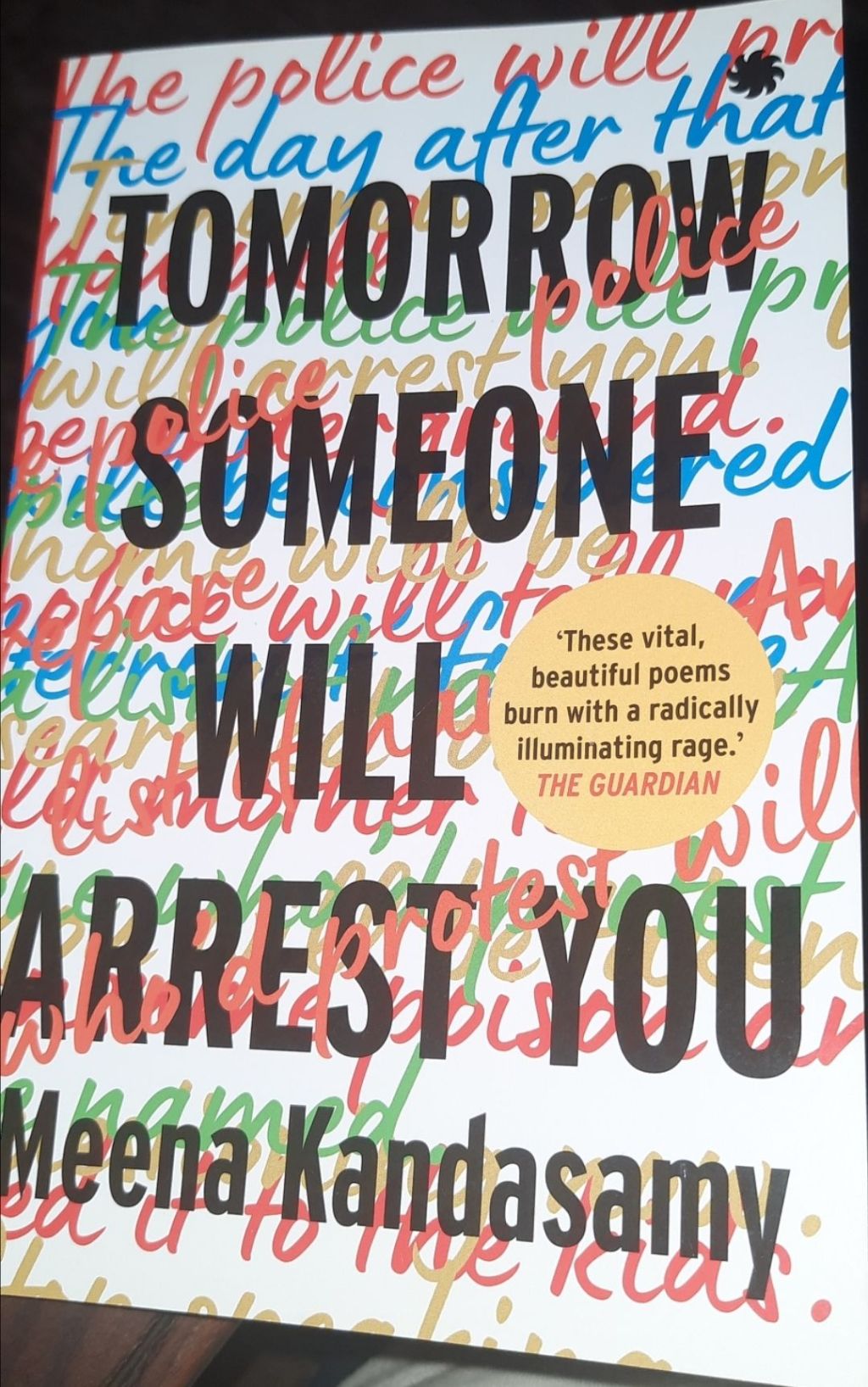
A Critical Review: Tomorrow Someone Will Arrest You by Meena Kandasamy
As I turned the last page of Meena Kandasamy’s Tomorrow Someone Will Arrest You, I was left not with the exhilaration of having read something transformative but with an overwhelming sense of dissatisfaction. It wasn’t the subject matter that failed; it was the execution. For a book that purports to be a manifesto of resistance, it felt more like an overzealous cacophony—a relentless barrage of disjointed thoughts that never quite coalesced into something meaningful. Let me tell you why this book failed to resonate with me and why I don’t recommend it to anyone seeking a coherent, impactful experience.
A Narrative That Alienates
The book’s fragmented structure was not its strength but its undoing. Yes, it’s clear that Kandasamy intended to reflect the chaos and disarray of systemic oppression through her narrative choices. But what you’re left with is a collection of jarring, loosely connected pieces that struggle to form a cohesive whole. The lack of linearity isn’t challenging in an intellectually stimulating way; it’s frustrating. You’re constantly pulled out of the flow, flipping back and forth, trying to make sense of a puzzle that, frankly, doesn’t seem worth solving.
Instead of drawing me into the stories of those she seeks to represent, the erratic style kept me at arm’s length. It’s hard to invest emotionally in characters or ideas when they’re presented in such a scattered, haphazard manner. You’ll find yourself asking: is this deliberate art, or is it a failure to edit?
Overbearing Themes That Preach, Not Engage
One of the book’s most glaring weaknesses is how it handles its themes. Surveillance, oppression, identity—these are profound and important topics, but Kandasamy’s approach feels more like a lecture than an exploration. There’s no room for you, the reader, to think or reflect; every idea is hammered home with such force that it becomes tedious. You are not invited to engage with the material; you are bludgeoned with it.
The problem isn’t that Kandasamy is angry—anger can be a powerful tool in literature. It’s that her anger is so overwhelming, so omnipresent, that it drowns out everything else. The subtlety, the nuance, the space for complexity—they’re all sacrificed on the altar of her indignation. You’re left with a one-note symphony, deafening and monotonous.
Poetry That Fails to Move
The poetry scattered throughout the book is another sore point. Poetry, when done well, can distill complex emotions into powerful, resonant truths. Here, it feels more like filler—a string of clichéd metaphors and overwrought imagery that adds little to the narrative. Lines that should linger in your mind instead make you roll your eyes. For instance, the judiciary being described as “a graveyard of hope” is neither original nor impactful; it’s a platitude masquerading as profundity.
You’ll find yourself skimming these sections, hoping for something better on the next page, only to be met with more of the same. If poetry is meant to evoke, to make you feel, then Kandasamy’s attempts fail spectacularly.
Language That Alienates
Much has been said about Kandasamy’s bold use of language, but boldness alone does not make for good writing. Her prose is unrelenting, abrasive, and often feels performative. Yes, she wields language like a weapon, but it’s a blunt instrument, swinging wildly without precision or purpose. Her use of profanity feels more like an attempt to shock than a meaningful stylistic choice. Instead of enhancing the narrative, it becomes a distraction, pulling you out of the story.
Even when she softens her tone, the writing feels forced. The quieter moments—which should serve as a counterpoint to the book’s unyielding rage—lack authenticity. You don’t feel moved; you feel manipulated.
Who Is This Book For?
As I read, I couldn’t help but wonder: who is the intended audience for this book? It’s too alienating for the casual reader, too heavy-handed for those seeking intellectual engagement, and too scattered for anyone looking for a compelling narrative. It’s a book that seems to exist more to make a statement about the author’s defiance than to truly connect with its readers.
If you’re looking for literature that tackles oppression, resistance, and identity with grace and power, there are far better options. Writers like Arundhati Roy or even George Orwell manage to convey these themes without alienating their audience.
Final Thoughts
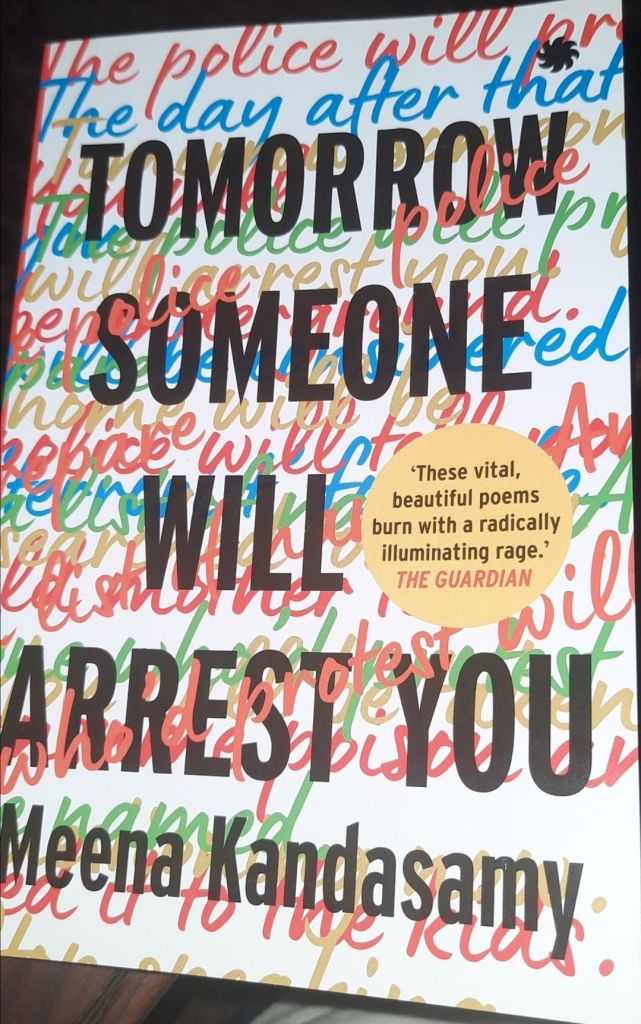
Tomorrow Someone Will Arrest You is a book that tries too hard to be radical and ends up being tiresome. It mistakes anger for depth, shock value for substance, and disarray for innovation. While I appreciate what Kandasamy is attempting to do—to give voice to the voiceless, to challenge oppressive systems—the execution leaves much to be desired.
This is not a book I can recommend. It’s a slog, a disappointment, and ultimately, a missed opportunity. Save your time and your money for something more worthwhile.
#BookReview #MeenaKandasamy #LiteraryCriticism #FailedNarrative #BooksToAvoid #TomorrowSomeoneWillArrestYou #PoetryCritique #UnrecommendedReads #HonestReviews #BookCommunity
I’m participating in the #TBRChallenge by Blogchatter

 Poetry Hub
Hello. Thanks for visiting. I’d love to hear your thoughts! What resonated with you in this piece? Drop a comment below and let’s start a conversation.