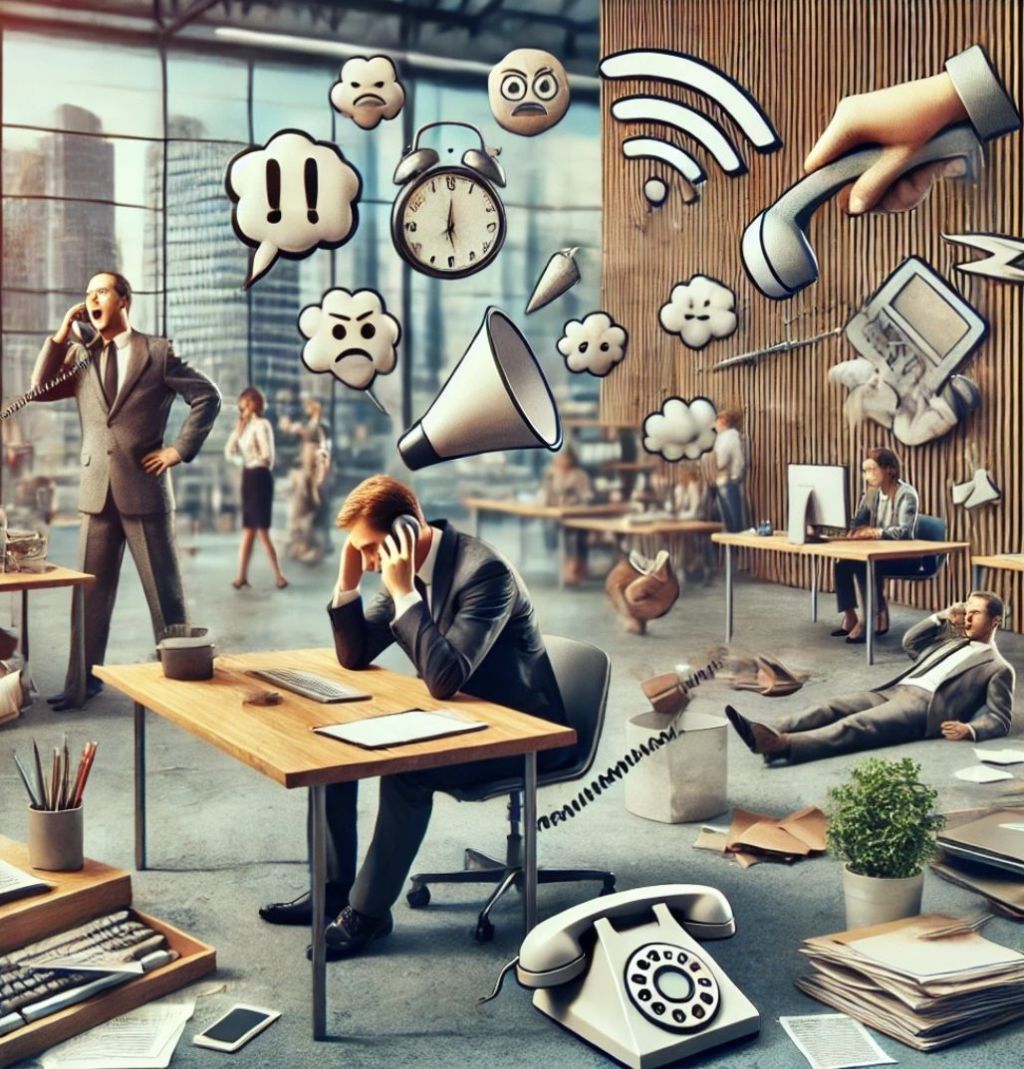
Name your top three pet peeves.
The Top Three Pet Peeves: An Exploration of the Tiny Frictions That Shape Us
Isn’t it curious how the smallest things can sometimes evoke the strongest reactions? That fleeting moment when someone interrupts your flow, the uncomfortable silence hanging in the air because someone didn’t acknowledge your presence, or the endless drone of the world around you that builds up a slow, quiet pressure in your mind. Pet peeves—the trivial, almost absurd irritations we face every day.
But hold on, let’s pause for a second. I want to take you on a journey through the tangled web of these peculiar annoyances, to see what lies beneath the surface.
Have you ever asked yourself: Why do these things bother you so much?
Let’s dig deeper. Not just into the things that drive us crazy, but into what they reveal about us, about the society we live in, and how these tiny annoyances shape our perception of the world. After all, pet peeves are more than just fleeting irritations; they are reflections of the world we inhabit.
1. The Infinite Sound of Typing—An Office’s Subtle Torture
Can you hear it? Tap, tap, tap. Each keystroke seems harmless in isolation, right? But put them together, and they become an incessant, mechanical rhythm—almost like the ticking of a clock counting down to something you don’t quite understand.
Picture this: You’re in a shared office space, or maybe at a coffee shop, and you’ve found a quiet spot to work. The world feels still for a second, as if the moment is yours to shape. And then, suddenly—clack. Clack-clack-clack.
It’s not the sound of your typing. It’s someone else’s.
It starts innocently enough. A few keystrokes, maybe just enough to blend into the ambient noise. But over time, it grows louder, more insistent. I find myself counting the taps. My mind starts to race, thinking, “If I could just concentrate, I could focus… but this noise! It’s everywhere.”
Do you know what I mean? That creeping feeling where the tap-tap of the keyboard starts to affect your every thought? It’s a familiar dance between mind and noise—your thoughts moving like streams in one direction, but the tap-tap keeps steering them off course. It’s like the office is a factory, and the typing is the machinery that keeps you trapped in an endless cycle of productivity, devoid of thought, devoid of true engagement.
But here’s the thing. What’s the point of all that typing? It’s not a message for you. It’s not an invitation to join in. It’s just the noise of someone else’s life, another person lost in their own task. And in that moment, you feel strangely alienated. The repetitive typing is a reminder that we often live next to each other, yet not with each other. This irritation might be small, but it speaks volumes.
How do you feel about it? Is it just me, or does the sound of typing sometimes drown out your own thoughts?
2. The Silent Ghosts of Public Spaces—The Non-Acknowledgement
Picture this: You’re walking down the street, maybe on your way to the coffee shop, lost in your own thoughts. You pass people—dozens, maybe hundreds—on their way to somewhere else. But not one of them acknowledges you. No nod, no smile, not even a glance. You are, for all intents and purposes, a ghost in their world.
It’s subtle, isn’t it? But there’s a sting. You know how it feels when someone walks by and pretends not to see you. It’s as though you have ceased to exist for them in that moment.
Have you ever wondered—why is that? The world we live in seems to value solitude and individualism over connection and recognition. We’re busy, we’re moving, and we’re all in a rush, aren’t we? But still… how hard is it to acknowledge another human being?
I’m not talking about striking up a conversation, just a simple, “I see you. You are here with me in this moment.” A smile, a glance, a shared understanding that, yes, you too exist in this world, moving through time and space.
And yet, despite all the conveniences of modern society, we often forget how important that simple recognition is. Think about it: In many ways, we’re becoming invisible to each other. We’re so focused on our screens, on our own thoughts, on our own little world, that we forget to engage with the world around us.
It’s not just me who feels this way. A survey might show that loneliness and social isolation are on the rise, even as cities get bigger and more connected. Perhaps these moments of non-recognition are the subtle cracks in our social fabric. And here’s the most interesting part—is this disconnection a symptom of something larger?
When people don’t acknowledge your existence in a public space, it’s a reflection of the fast-paced, isolated culture we are all trapped in. But here’s the kicker—when you do acknowledge someone, it feels so good. Doesn’t it? That brief, human connection. A shared moment of reality.
What’s your take on this? Are you guilty of the silent pass-by too? Or are you one of the rare few who break the cycle and make eye contact, even if it’s just for a second?
3. The Overuse of “Literally”—Where Words Lose Their Power
Okay, here’s one that really gets under my skin. The overuse of the word “literally.” You know what I’m talking about, don’t you? That moment when someone says, “I literally died laughing,” or, “I literally ran a marathon,” and you know—they didn’t actually die from laughter, and they probably didn’t run a marathon either. They might’ve jogged for a mile, or laughed hard enough to snort, but that’s about it.
Can we talk about how this word has been hijacked by hyperbole? It’s like a verbal tick, a way to exaggerate the importance of every little thing, as if we’ve collectively agreed that nothing can be meaningful unless it’s intensified by the word “literally.” It’s an epidemic, really. I can’t even scroll through my social media feed without encountering it multiple times. “Literally” has become so overused that its original meaning is slipping away, like sand running through your fingers.
And here’s what bothers me: When every moment is literal, nothing is. When “literally” is tossed around without care, it devalues language itself. Words are meant to carry meaning, to be precise. But when we apply “literally” to every situation, language becomes a plaything, a tool that we no longer use with intention or care.
When did we stop using words for their true weight? Why do we need to exaggerate everything to feel validated? And here’s the big question—when did “literally” become a part of the new vocabulary of hyperbole, even in mundane moments?
I can’t help but wonder—are we losing the ability to speak with precision? Do we even care anymore?
—

The Revealing Nature of Pet Peeves
As we’ve walked through these pet peeves—my top three, anyway—it’s become clear that these little irritations aren’t just about noise, silence, or language. They are a mirror, reflecting the larger issues at play in our society. They speak to our disconnection, our obsession with productivity, and our tendency to overstate, to exaggerate, to make everything “bigger” than it really is.
But let’s be real: these peeves are more than just annoyances. They reveal something essential about us as human beings. They show our frustrations with the modern world, our discontent with the way things are evolving, our search for meaning in the noise. In the end, perhaps our pet peeves are more than just annoyances—they’re small rebellions against a world that is constantly shifting, a world that sometimes feels less human, less real.
So, I’ll ask you now—what about you? What are your top pet peeves? Do they reveal something about your deeper frustrations with the world? Or maybe they are a reflection of how you see the world itself?
Let’s talk about it. Because, sometimes, understanding the things that bother us can help us understand the world a little better.
#PetPeeves #Irritations #HumanBehavior #OfficeDistractions #SocialConnection #Mindfulness #EverydayFrustrations #LanguageEvolution #CommunicationMatters #ModernSociety #SocialInteractions #MindfulLiving #Exaggeration #Hyperbole #PublicSpaces

 Poetry Hub
Hello. Thanks for visiting. I’d love to hear your thoughts! What resonated with you in this piece? Drop a comment below and let’s start a conversation.