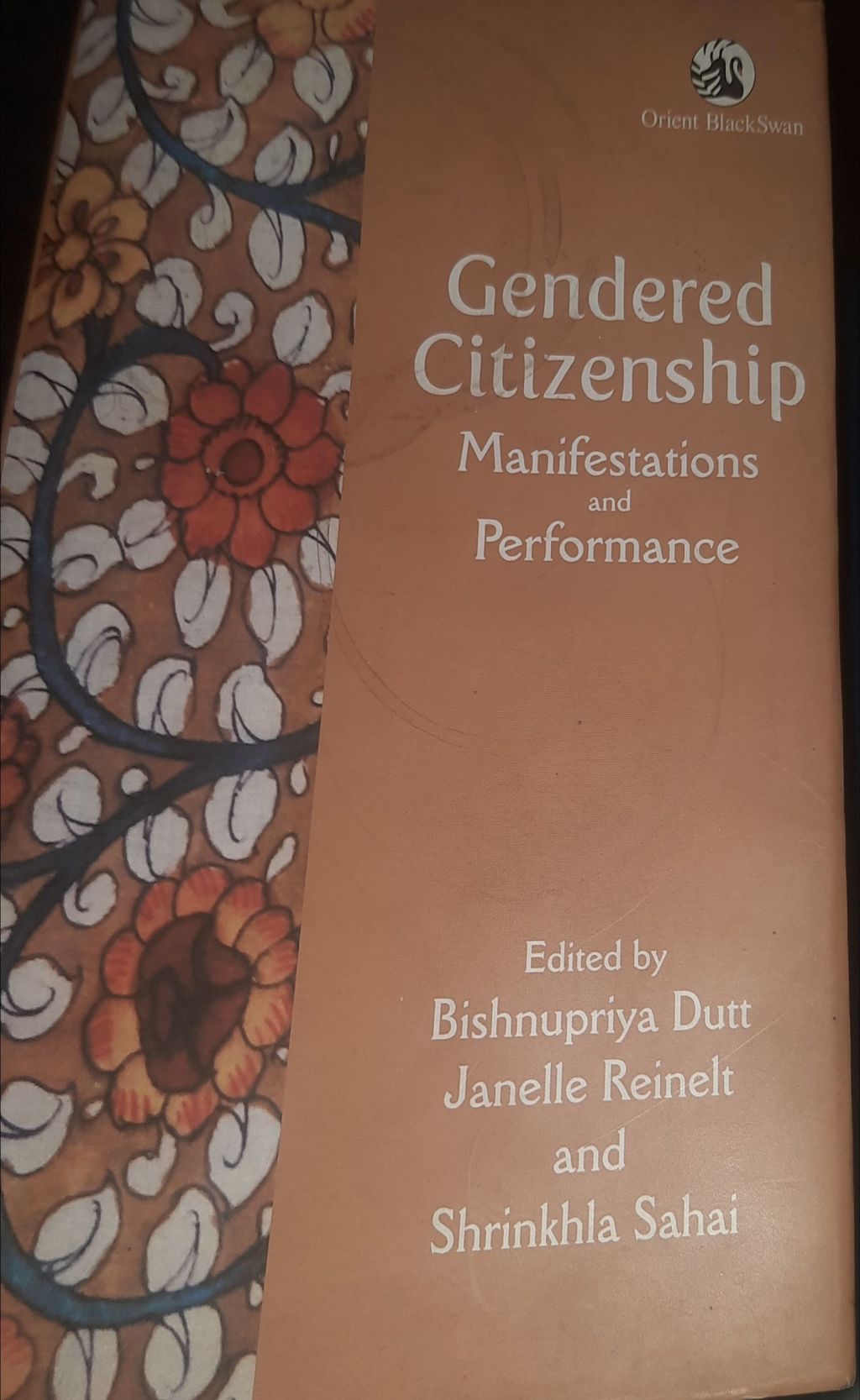
When I read Gendered Citizenship: Manifestations and Performance, edited by Bishnupriya Dutt, Janelle Reinelt, and Shrinkhla Sahai, I found myself drawn into its intricate exploration of citizenship as it intertwines with performance, gender, and identity. This anthology, consisting of sixteen essays, is the result of a two-year international collaboration that strives to create a comparative perspective on how performance embodies key political and social themes. With its global scope and profound depth, the book raises questions that linger long after turning the final page.
Key Themes and Contributions
- Gendered Citizenship: One of the most compelling aspects of the book is its examination of citizenship through a gendered lens. How does one “perform” citizenship? What does it mean to be recognized as a citizen not just legally but culturally and socially? These questions underpin many of the essays, which span geographies like India, Europe, and the Americas. The nuanced discussions on how legal frameworks, socio-cultural norms, and performative acts construct and reinforce gendered identities made me reconsider the ways citizenship is experienced differently by individuals across genders. The idea of performance as a lens to view citizenship intrigued me. Do we unconsciously perform our roles as citizens, shaped by the cultural and political expectations imposed upon us? How do these performances change when gender intersects with other identities such as class, race, or sexuality? The essays pushed me to interrogate these intersections and consider the unspoken rules that govern who belongs and who is excluded.
- Violence Against Women: Several essays tackle the harrowing realities of gender-based violence. One that particularly stayed with me examined how performance can serve as a medium to support survivors of human trafficking. It was heart-wrenching to read about the layers of trauma these women endure and inspiring to see how creative expression can aid in their healing and reclamation of agency. Yet, it also made me question: is performance enough? Can it truly address systemic issues or is it merely a Band-Aid on a much larger wound? These essays opened my eyes to the potential and limitations of performative interventions in addressing deep-seated social issues.
- Everyday Socialization: The anthology also delves into the subtler, everyday enactments of citizenship. In a globalized world, how do daily interactions reinforce or challenge gender norms? One essay described the seemingly mundane acts of socialization—greeting neighbors, participating in local festivals, or even the way people dress—as powerful performances of citizenship. This resonated with me deeply. How often do we reflect on the small acts that define our identities and roles in society? And how much of this is dictated by societal expectations rather than personal choice?
- Interdisciplinary Approaches: The book’s multidisciplinary nature is one of its greatest strengths. Politics, media, history, and performance studies come together to create a rich tapestry of insights. This diversity allowed me to see connections I hadn’t considered before. For example, how does a political protest function as a theatrical performance? What role does media play in shaping the “script” of citizenship? These interdisciplinary approaches not only enriched the discussion but also emphasized the complexity of the issues at hand.
Notable Essays
Several essays stood out to me for their thought-provoking content and depth of analysis.
- Shirin M. Rai’s “The Dilemmas of Performative Citizenship”: This essay delves into the contradictions and challenges of performative citizenship. Rai raises critical questions: Can acts of performance genuinely bring about political change? Or are they symbolic gestures that risk losing their potency in the face of systemic barriers? Her insights on gendered performances and their political implications made me reflect on the efficacy and limitations of performative acts.
- Anupama Roy’s “Making Citizenship Familiar: ‘Truth’ Tales and the Partition Archive(s)”: This essay explores the role of storytelling and archival practices in shaping notions of citizenship, particularly in the context of the Partition of India. The emotional weight of the narratives and the way they challenge official histories struck a chord with me. How much of our understanding of citizenship is shaped by the stories we inherit? And whose stories are left out?
- “Spaces of Appearance, Politics of Exposure: Queer Publics, Sexual Justice and Activism in Eastern Europe and India,” co-written by Ameet Parameswaran and Milija Gluhovic: This essay examines the intersections of queer identity, activism, and citizenship. The discussion on the politics of visibility—how appearing in public spaces as queer can be both an act of resistance and a risk—was particularly poignant. It made me question: What does safety look like for marginalized communities, and how does it impact their ability to claim citizenship?
Lingering Questions and Reflections
As I moved through the book, I found myself grappling with larger questions. How does the concept of citizenship evolve in a rapidly changing world? In an era of globalization, digital interconnectedness, and increasing migration, what does it mean to belong to a nation-state? The essays collectively suggest that citizenship is far more than a legal status; it is a constantly negotiated performance, shaped by cultural, political, and social forces.
The anthology also left me pondering the role of art and performance in driving social change. Can a play or a public performance shift societal perceptions in a meaningful way? Or is its impact limited to the audience it directly reaches? These questions don’t have easy answers, but the book’s interdisciplinary approach provides a foundation for exploring them further.

Final Thoughts
Reading Gendered Citizenship: Manifestations and Performance was not just an academic exercise for me; it was an intellectual and emotional journey. The essays challenged my assumptions, broadened my perspective, and inspired me to think critically about the world around me. It’s a book that refuses to offer simplistic answers, instead inviting readers to sit with the complexity of its themes.
For anyone interested in the intersections of gender, performance, and politics, this anthology is an essential read. Its global scope, interdisciplinary approach, and nuanced analysis make it a significant contribution to gender studies and beyond. Personally, it left me with a deeper understanding of the ways citizenship is performed, contested, and reimagined—and the crucial role we all play in shaping these narratives.
#GenderStudies #Citizenship #Performance #Intersectionality #Feminism #QueerIdentity #SocialJustice #GlobalNarratives #PartitionStories #Interdisciplinary
I’m participating in the #TBRChallenge by Blogchatter

 Poetry Hub
Hello. Thanks for visiting. I’d love to hear your thoughts! What resonated with you in this piece? Drop a comment below and let’s start a conversation.