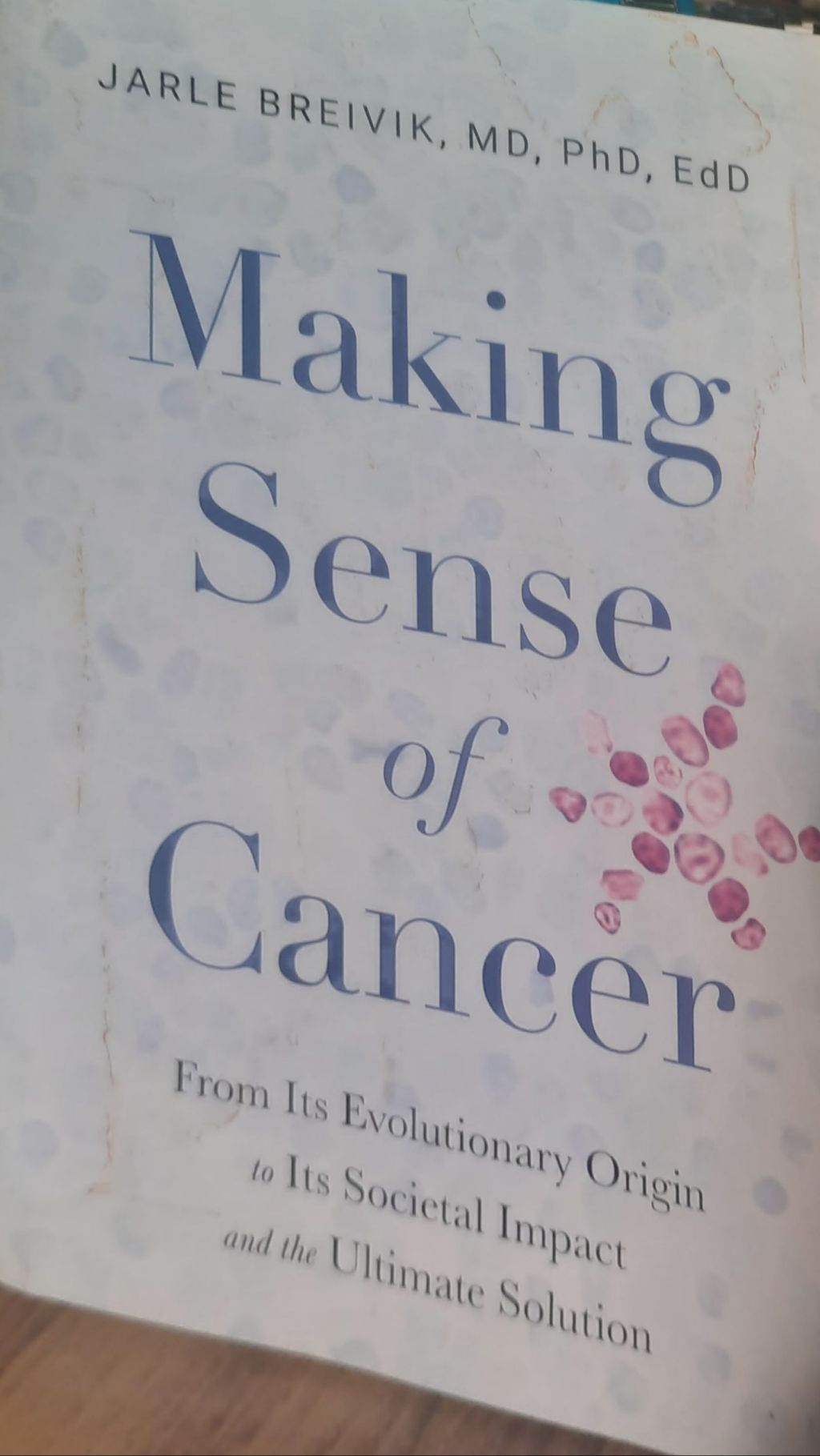
I recently had the profound experience of reading “Making Sense of Cancer: From Its Evolutionary Origin to Its Societal Impact and the Ultimate Solution” by Jarle Breivik, and I must say, it was a transformative journey. The book—a masterful blend of science, philosophy, and societal critique—captivated me from the first page. Dr. Breivik, a professor of medicine at the University of Oslo, takes the reader on a deep dive into one of humanity’s most enigmatic and feared conditions: cancer. What sets this book apart is not just its content but the avant-garde approach Breivik employs in unraveling the complexities of this disease.
Immersing in the Evolutionary Origins
From the outset, Breivik challenges conventional perceptions of cancer. He posits that cancer is not a modern anomaly but a natural consequence of the evolutionary process. As I delved into his explanation of how cancer cells are essentially our own cells that have mutated and evolved to survive, I found myself marveling at the ingenuity of life—even in its most destructive forms. Breivik’s argument is backed by meticulous research, but it’s his ability to communicate these ideas with clarity and passion that truly impressed me.
His discussions on genetic mutations and natural selection were enlightening. Cancer, he explains, is the price we pay for being multicellular organisms. The very mechanisms that allow our cells to grow, repair, and reproduce are the same mechanisms that, when dysregulated, lead to cancer. This evolutionary perspective provided me with a new lens through which to view the disease, not as an external invader but as a part of our biological heritage.
Exploring Societal Impact
The book’s exploration of cancer’s societal impact struck a deeply emotional chord. Breivik does not shy away from addressing the financial, emotional, and social toll the disease takes on individuals and families. As someone who has witnessed the ripple effects of a cancer diagnosis within my own circle, I found his insights both validating and sobering. The discussion on how societal structures—from healthcare systems to cultural attitudes—shape our collective response to cancer was particularly compelling.
Breivik’s critique of the “battle” metaphor often used in cancer discourse resonated with me. He argues that framing cancer as an enemy to be defeated creates unrealistic expectations and places undue pressure on patients. This perspective challenged my own preconceptions and made me question how we, as a society, talk about and deal with this pervasive disease.
Confronting the Ultimate Solution
One of the most thought-provoking sections of the book deals with the question of whether we can, or should, aim to eradicate cancer entirely. Breivik suggests that the complete elimination of cancer would require a fundamental change in human biology—an idea that raises profound ethical and philosophical questions. As I pondered his arguments, I found myself torn between the desire for a world free of cancer and the recognition that such a world might come at a cost we are not prepared to pay.
The book does not offer easy answers, and that’s precisely its strength. Instead, it invites readers to engage with these complex issues, encouraging a nuanced understanding of what it means to live in a world where cancer exists. Breivik’s call for a more compassionate and holistic approach to cancer treatment and prevention left me both inspired and hopeful.
A Blend of Science and Philosophy
What makes “Making Sense of Cancer” truly stand out is its seamless integration of scientific rigor and philosophical inquiry. Breivik’s explanations of biological mechanisms are thorough yet accessible, making the book suitable for both medical professionals and lay readers. At the same time, his philosophical reflections on aging, death, and the human condition add a layer of depth that elevates the book beyond a mere scientific treatise.
I was particularly moved by his discussion of aging and cancer as integral parts of the human experience. Breivik challenges the conventional view of death as an enemy to be vanquished, suggesting instead that it is a natural and necessary part of life. This perspective, while initially unsettling, ultimately felt liberating. It reminded me of the importance of embracing life’s impermanence and finding meaning in the present moment.
Personal Reflections
Reading this book was not just an intellectual exercise but an emotional journey. Breivik’s writing has a way of drawing you in, making you reflect on your own experiences and beliefs. I found myself revisiting memories of loved ones affected by cancer, reevaluating my own attitudes toward health and mortality, and considering how I can contribute to a more compassionate and informed society.
The book also prompted me to think about the broader implications of our quest to conquer cancer. Are we willing to accept the trade-offs that come with technological and biological interventions? How do we balance the pursuit of progress with the need to preserve our humanity? These are questions that lingered long after I turned the final page.
Final Thoughts
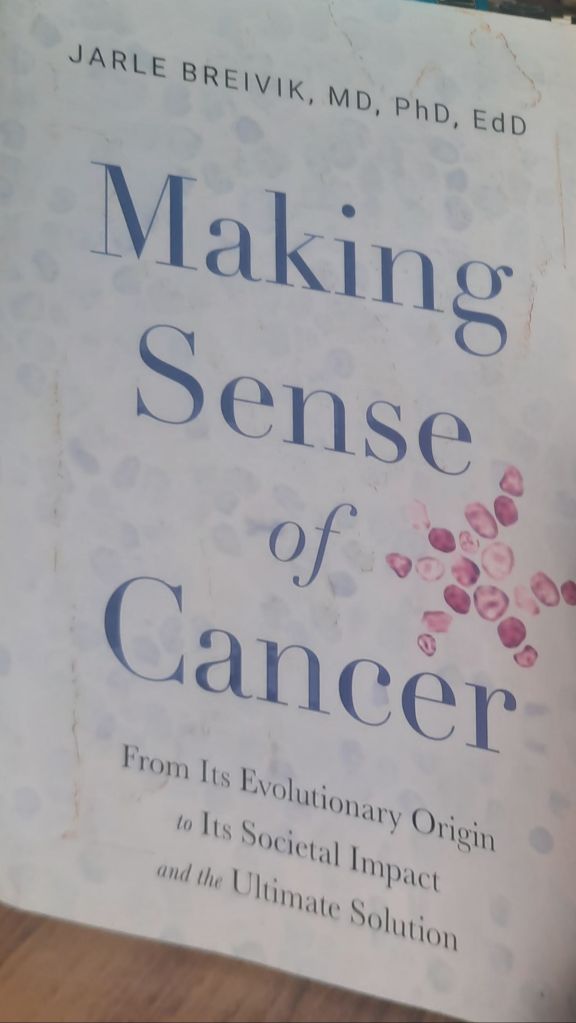
“Making Sense of Cancer” is more than a book; it is a conversation—one that challenges, enlightens, and inspires. Jarle Breivik has crafted a work that is as thought-provoking as it is compassionate, as informative as it is reflective. It is a must-read for anyone seeking to understand not only the science of cancer but also its broader implications for society and the human experience.
As I closed the book, I felt a profound sense of gratitude—for the knowledge it imparted, the questions it raised, and the perspective it offered. Breivik has not only made sense of cancer but has also helped me make a bit more sense of life itself. This is a book I will return to, reflect upon, and recommend to others, confident that it will leave a lasting impact on all who read it.
#MakingSenseOfCancer #JarleBreivik #CancerEvolution #CancerPhilosophy #SocietalImpactOfCancer #CancerAwareness #MedicalBooks #CancerResearch #PhilosophyAndMedicine #MedicalEthics #GeneticMutations #HealthDiscourse
I’m participating in the #TBRChallenge by Blogchatter

 Poetry Hub
Hello. Thanks for visiting. I’d love to hear your thoughts! What resonated with you in this piece? Drop a comment below and let’s start a conversation.