“Kafkaesque Journeys: Through the Labyrinths of Franz Kafka’s Mind”
I sit in a dimly lit room, surrounded by piles of books—each a portal to Franz Kafka’s unnerving, claustrophobic worlds. His name looms large, an adjective now: Kafkaesque. But what does it truly mean? I wonder aloud to no one in particular, inviting you, dear reader, into the labyrinth with me. As we open the creaking door to his works, we find not a writer but a mirror reflecting the absurdity of existence, a surrealist painting of the human condition where every brushstroke mocks our attempts to find meaning.
—
“The Metamorphosis”: When Humanity Slips Away
Gregor Samsa awakens into insecthood. And you? Perhaps you’ve had days where you felt the weight of being “other,” your humanity eroded by routine or societal expectations. In The Metamorphosis, Kafka doesn’t merely strip Gregor of his human form—he strips him of human worth, reducing him to a creature reviled even by his family.
I read this story in the stillness of a Sunday afternoon, yet I felt the suffocating buzz of Gregor’s world, the stench of decay, the shattering realization that love and utility are so often intertwined. You think your family loves you unconditionally? Kafka’s whisper, laced with irony, tells you to think again.
—
Bureaucracy as the Villain: “The Trial”
Kafka’s Josef K., much like you and me, believes in his own innocence. Arrested without reason, prosecuted without clarity, he embodies every individual crushed under the weight of faceless systems. I’ve walked through government offices, papers in hand, hoping for mercy or even acknowledgment, only to be met with the cold indifference of Kafka’s gatekeepers.
In The Trial, the system is omnipotent yet elusive—a monolith with no discernible head or heart. Kafka’s prose becomes a wailing siren, a dirge for the human spirit attempting to navigate this bureaucratic abyss. How many of us have stood in those endless queues, staring into the void, hoping for salvation and finding only despair?
—
Searching for Meaning: “The Castle”
K., the protagonist of The Castle, is every one of us chasing purpose, validation, or belonging. Kafka’s village is shrouded in mist, the castle perched above like an unapproachable deity. I’ve felt that fog in my own life—haven’t you? The longing for acceptance in a world that refuses to open its doors, the endless toiling for answers that never come.
Kafka doesn’t offer solutions. He mocks your desire for them. “Why do you want to understand?” he seems to ask. “The very act of seeking meaning is absurd.” And yet, he writes with such pathos that you find yourself hoping alongside K., even as you know the effort is futile.
—
Justice as Torture: “In the Penal Colony”
An execution machine that etches guilt onto flesh—a metaphor so visceral it claws at your psyche. When I first read In the Penal Colony, I was struck by its haunting simplicity. Justice, Kafka argues, is neither blind nor fair—it is grotesque, invasive, and deeply flawed.
The traveler in the story, an outsider, represents us, the readers. We watch in horrified fascination, too polite or too powerless to intervene. Kafka forces us to question our own complicity in systems of cruelty. Are we merely spectators, nodding in disapproval but doing nothing to dismantle the machine?
—
The Artist’s Isolation: “A Hunger Artist”
Have you ever poured your soul into something only to have it misunderstood, dismissed, or ignored? Kafka’s A Hunger Artist captures this loneliness with devastating precision. The hunger artist fasts not for attention but for perfection, for a purity of art no one else can comprehend.
I saw myself in the artist—the yearning for recognition, the frustration of being misread. But Kafka is cruel in his honesty. He reminds us that the world does not care for our intentions or struggles. The crowd watches the hunger artist not to understand but to gawk, to be entertained. And isn’t that the essence of modern life?
—
Parables and Proclamations: “Before the Law”
Kafka’s shortest works often carry the most weight. In Before the Law, a man waits his entire life for access to the law, only to learn on his deathbed that the gate was meant solely for him. The gatekeeper’s cryptic words linger: “No one else could have entered here, because this entrance was assigned only to you.”
I sat with this story for hours, its brevity belying its depth. You, too, have doors meant only for you—opportunities, relationships, dreams. But how many of us wait too long, paralyzed by fear or uncertainty, only to realize our folly too late? Kafka’s parables hold up a mirror, forcing you to confront your hesitation and regret.
—
Kafka and Me: Letters, Shadows, and Reflections
If Kafka’s fiction is a labyrinth, his letters are the whispers of a lost soul searching for light. In Letters to Milena, I found the Kafka behind the words—a man torn between love and despair, yearning for connection yet retreating into solitude. His vulnerability resonated with me deeply.
Milena Jesenská becomes not just his muse but ours, a stand-in for all those who inspire yet remain distant. Reading these letters felt like trespassing into someone’s heart, yet it also felt like Kafka wanted us to understand him, to know that even the creator of such desolate worlds craved warmth.
—
Legacy of the Kafkaesque
Kafka’s world is not merely a reflection of his time—it is timeless. I see him in the faces of overworked employees, in the cold fluorescent lights of government offices, in the quiet desperation of modern cities. You see it too, don’t you? The Kafkaesque is everywhere, an eternal echo of his fears and insights.
What makes Kafka endure is not his pessimism but his honesty. He does not shy away from the absurdity of existence; he embraces it, lays it bare, and dares you to do the same. His works are not answers but questions, unsettling yet liberating in their refusal to conform.
—
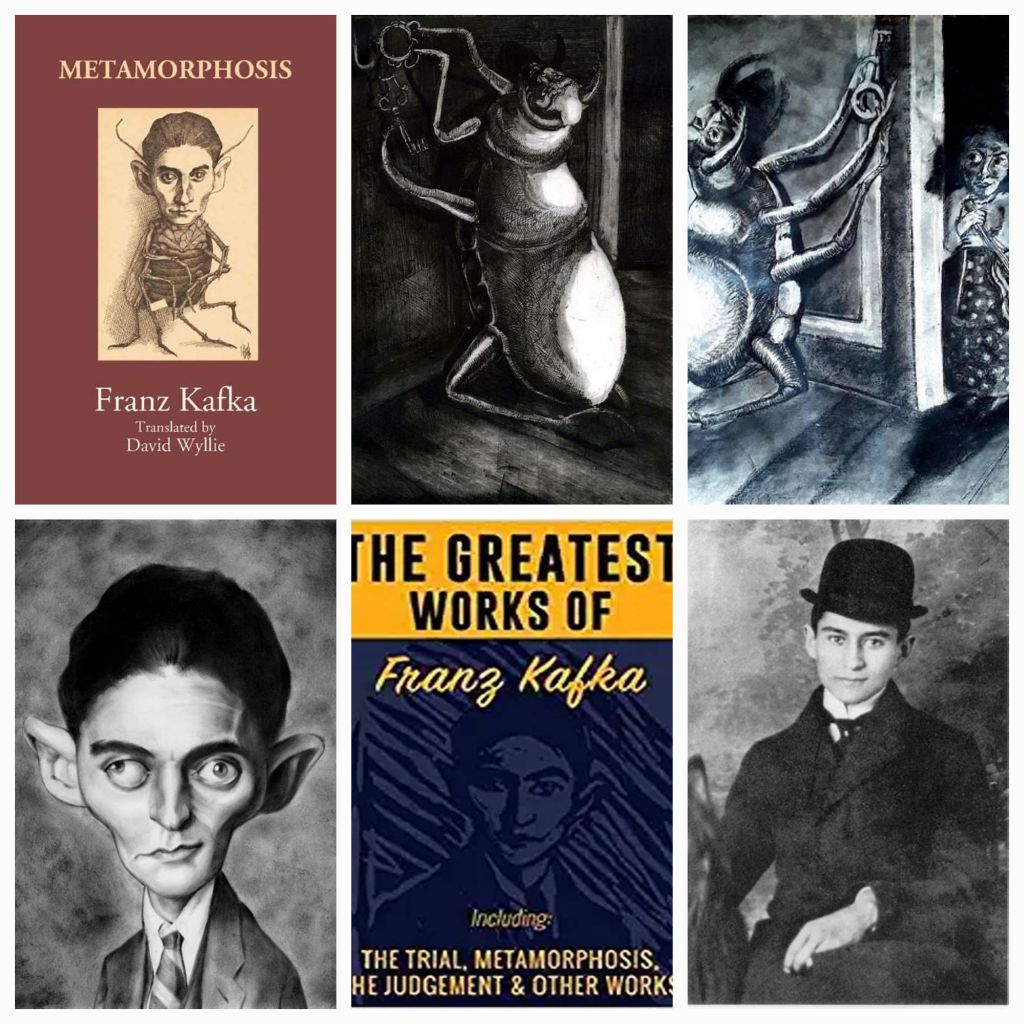
Walking with Kafka
As I close Kafka’s books, I feel a strange kinship with him. His characters are not heroes or villains but reflections of us all—fumbling through life, wrestling with authority, grappling with meaning. Kafka does not judge them, nor does he judge us. He simply observes, his pen a scalpel cutting through the layers of human existence.
You, reader, have walked this journey with me—through Gregor’s prison of chitin, Josef K.’s maze of accusations, K.’s futile climb to the castle, and the hunger artist’s cage. Kafka’s works are not mere stories; they are experiences, challenges, provocations.
Do you feel it now? That lingering unease, that sense of being seen yet unseen, understood yet baffled? That is the Kafkaesque—a shadow that follows you, whispering truths you’d rather not hear. And yet, like all great art, it leaves you richer for having faced it. Would you not agree?
Perhaps, like me, you will return to Kafka, not for comfort but for clarity. Or perhaps you will turn away, seeking solace in simpler narratives. Either choice is valid, for in Kafka’s world, there are no right answers—only the unending search.
#FranzKafka #TheMetamorphosis #TheTrial #LiteratureLovers #Kafkaesque #ClassicLiterature #Existentialism #Surrealism #Modernism #A HungerArtist #FamousWriters #Absurdism #LiteraryAnalysis #KafkaLegacy

 Poetry Hub
Hello. Thanks for visiting. I’d love to hear your thoughts! What resonated with you in this piece? Drop a comment below and let’s start a conversation.