Books as Interstellar Portals: Exploring Diverse Worlds and Unveiling Truths Through David M. Glantz’s Cuando chocan los titanes
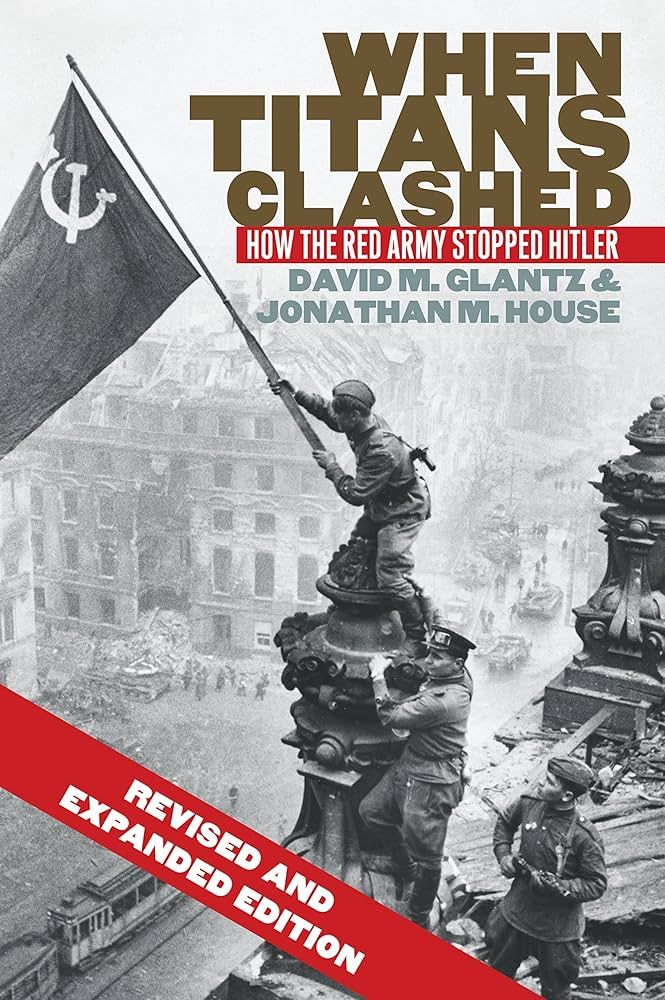
Books are more than objects of paper and ink—they are interstellar portals that transport us across time, space, and dimensions, allowing us to experience the lives, cultures, and histories of others. They have the uncanny ability to shatter barriers, bridge gaps, and challenge our perceptions of the world. Reading, in its essence, is an act of discovery, a journey not only into the unknown but also into the recesses of our own consciousness. David M. Glantz’s Cuando chocan los titanes, a riveting historical account of the clashes between the Soviet Union and Germany during World War II, exemplifies the transformative power of books as these portals.
The Narrative of War: History Unveiled
Cuando chocan los titanes delves deep into the brutal and cataclysmic encounters between the two titans of the Eastern Front during World War II. Glantz meticulously reconstructs events with a historian’s precision, presenting both the strategic and human dimensions of the conflict. Through his narrative, the book opens a portal to the blood-soaked fields of Stalingrad, the icy trenches of Leningrad, and the vast expanses of the Soviet steppes.
Yet, beyond the recounting of battles, this book serves as a mirror reflecting the grim realities of war: the fragility of human life, the catastrophic consequences of ideology, and the resilience of the human spirit in the face of unimaginable suffering. As readers, we are not merely passive observers but active participants in this voyage through time. Each page confronts us with questions about power, morality, and the cyclical nature of human violence.
Confronting Ignorance: A Personal Revelation
For me, reading Glantz’s work is not just an exploration of history but a confrontation with my own ignorance. Growing up in Brazil, where narratives of global conflicts were often shaped by Western perspectives, the story of the Eastern Front was obscured, if not entirely omitted. The battles fought by the Soviet Union, which bore the brunt of Nazi aggression and played a pivotal role in the Allied victory, were frequently minimized or distorted.
Through this book, I came to realize the extent to which historical narratives can be manipulated, sanitized, or outright erased to serve political agendas. The atrocities, heroism, and sheer human endurance documented in Cuando chocan los titanes were revelations that forced me to reconsider everything I thought I knew about World War II.
The Atrocities of War: A Portal to Empathy
One of the most profound aspects of this book is its unflinching depiction of the atrocities committed during the war. The brutality of the Eastern Front—where millions of soldiers and civilians perished—is not sanitized or romanticized. Instead, it is presented in stark, unrelenting detail.
As a reader, this can be overwhelming. The scale of human suffering is difficult to comprehend, and yet, it is through this very confrontation that we are drawn closer to the humanity of those who lived through these events. Glantz’s narrative transforms abstract numbers and statistics into vivid, heartrending stories of individuals caught in the maelstrom of history.
This journey through the portal of Cuando chocan los titanes has left me more empathetic, more aware of the fragility of peace, and more committed to understanding the complexities of human conflict.
The Power of Books to Challenge and Transform
The act of reading is inherently transformative. Books like Cuando chocan los titanes challenge us to question dominant narratives, unearth hidden truths, and confront uncomfortable realities. They remind us that history is not a static record but a dynamic interplay of perspectives, each shaped by the biases, contexts, and agendas of its narrators.
In Brazil, as in many other countries, the historical narrative of World War II has often been dominated by Western-centric perspectives. The sacrifices and contributions of the Soviet Union have been overshadowed by stories of D-Day, the liberation of Paris, and the atomic bombings of Hiroshima and Nagasaki. Glantz’s work serves as a corrective, amplifying the voices of those who fought and died on the Eastern Front and shedding light on a chapter of history that deserves greater recognition.
Books as Portals to Ourselves
While books transport us to other worlds, they also serve as mirrors, reflecting our own beliefs, biases, and values. Reading Cuando chocan los titanes has been a deeply introspective experience, forcing me to grapple with the gaps in my knowledge and the ways in which my understanding of history has been shaped by cultural and political forces.
This introspection is one of the greatest gifts of literature. It compels us to engage with ideas and perspectives that challenge our assumptions, broadening our horizons and deepening our understanding of the world and ourselves.
A Call to Explore Diverse Portals
David M. Glantz’s Cuando chocan los titanes is a testament to the power of books as interstellar portals. It has transported me to the battlefields of the Eastern Front, illuminated a crucial yet overlooked chapter of history, and sparked a journey of personal and intellectual discovery.
As readers, we have the privilege—and the responsibility—to seek out diverse voices and stories that challenge our worldviews. Whether it is through historical accounts like Glantz’s, novels that delve into the human condition, or poetry that distills the essence of life, books offer us countless portals to explore.
In stepping through these portals, we not only discover new worlds but also uncover the layers of our own humanity. Let us embrace this journey with curiosity, courage, and an open heart, knowing that each book we read has the power to transform us in ways we may never fully comprehend.
#BooksArePortals
#DavidMGlantz
#CuandoChocanLosTitanes
#WWIIHistory
#EasternFront
#HistoricalPerspective
#ReadToDiscover
#HiddenHistories
#LiteraryReflection
#TransformativeReading

 Poetry Hub
Hello. Thanks for visiting. I’d love to hear your thoughts! What resonated with you in this piece? Drop a comment below and let’s start a conversation.