Literature is a realm where cultures, emotions, and histories converge, weaving narratives that not only entertain but also enlighten. For someone like me, perpetually on a quest for literary treasures, few experiences compare to uncovering the brilliance of Indian authors. Indian literature is an expansive canvas, rich with intricate patterns of emotion, identity, and the vivid hues of its cultural tapestry. Yet, amidst the global literary discourse, some works remain less celebrated than they deserve. Here are five profoundly resonant books by Indian authors that beckon readers to immerse themselves in their nuanced worlds.
1. The God of Small Things by Arundhati Roy
Arundhati Roy’s The God of Small Things is an exquisite symphony of language and narrative. Set in the lush backwaters of Kerala, this 1997 Booker Prize-winning novel chronicles the fragmented lives of fraternal twins, Estha and Rahel, navigating the murky waters of love, loss, and societal censure.
Roy’s prose is not just storytelling; it’s a poetic ritual that celebrates the minutiae of existence. With sentences that glisten like dewdrops and themes that plunge into the abyss of caste discrimination, forbidden love, and familial scars, the novel becomes a haunting reminder of how fleeting moments can alter destinies. Roy’s writing doesn’t merely describe the world—it paints it, leaving an indelible impression on the reader’s psyche.
This isn’t a book you read; it’s a book you inhabit. The characters breathe, the scenery vibrates, and the emotions echo long after the final page. For anyone yearning to feel the weight of human fragility, this is your gateway.
2. A Suitable Boy by Vikram Seth
At first glance, the size of Vikram Seth’s A Suitable Boy can be daunting—a single-volume epic sprawling over 1,400 pages. Yet, within its boundless expanse lies a richly textured portrait of post-independence India, a nation straddling tradition and modernity.
The novel orbits around Lata Mehra, a young woman torn between familial obligations and personal desires as her mother embarks on a relentless quest to find her a “suitable boy.” But A Suitable Boy transcends Lata’s story, unfurling a kaleidoscope of interconnected lives. Seth juxtaposes the personal and the political, offering glimpses into the tumultuous politics, religious divides, and cultural evolution of 1950s India.
What makes Seth’s narrative extraordinary is its sheer humanity. The characters, with their quirks, ambitions, and vulnerabilities, feel as real as the people in your own life. Despite its girth, the book has an intoxicating charm that lures you deeper with each turn of the page. It’s not just a story; it’s an experience that demands time but rewards patience with an unforgettable journey.
3. Sea of Poppies by Amitav Ghosh
Amitav Ghosh’s Sea of Poppies is the inaugural chapter of his Ibis Trilogy, a historical epic set against the backdrop of the opium trade in the 19th century. The novel’s narrative is a voyage in itself, tracing the lives of an eclectic ensemble of characters aboard the Ibis, a ship bound for Mauritius.
What makes this book a marvel is Ghosh’s unparalleled ability to transport readers through time. His meticulous research and vibrant prose breathe life into a colonial world rife with conflict, migration, and shifting identities. The ship becomes a microcosm of humanity—its decks filled with farmers fleeing famine, indentured laborers escaping oppression, and seafarers navigating their destinies.
Beneath the adventure lies a deep exploration of the human condition, revealing how migration, displacement, and power shape individual and collective identities. Sea of Poppies is a tapestry of language, history, and emotion—a book that invites you not just to read but to lose yourself within its waves.
4. The Inheritance of Loss by Kiran Desai
Kiran Desai’s The Inheritance of Loss is a quiet storm of a novel, sweeping across the rugged Himalayan landscapes and urban shadows of New York City. This Man Booker Prize-winning work is as much a meditation on post-colonial disillusionment as it is an intimate portrait of fractured lives.
Desai introduces us to Sai, an orphaned teenager living with her reclusive grandfather in a dilapidated mansion, and Biju, the son of their cook, struggling as an undocumented immigrant in America. These parallel stories unravel themes of identity, displacement, and the lingering shadows of colonialism.
Desai’s prose is at once lyrical and razor-sharp, capturing the absurdities and tragedies of human existence with unflinching honesty. Her narrative weaves a delicate balance between the personal and the political, rendering the struggles of her characters universal. The Inheritance of Loss doesn’t shout its truths; it whispers them, leaving you profoundly moved by its understated power.
5. The Palace of Illusions by Chitra Banerjee Divakaruni
In The Palace of Illusions, Chitra Banerjee Divakaruni reimagines the ancient epic Mahabharata through the eyes of Draupadi, the enigmatic queen whose voice has often been drowned in the male-dominated retellings of history.
This isn’t just a retelling; it’s a reclamation. Divakaruni’s Draupadi is fierce, flawed, and deeply human. She emerges not as a passive victim of fate but as an active participant in the epic’s twists and turns. The narrative explores themes of destiny, power, and resilience while unearthing the emotional undercurrents of the great epic.
Divakaruni’s prose is both luminous and accessible, making the ancient tale resonate with contemporary readers. Through Draupadi’s lens, the epic transforms into an intimate exploration of love, ambition, and the eternal tug-of-war between duty and desire. The Palace of Illusions isn’t just a book; it’s a dialogue with history, myth, and the reader’s own soul.
The Unseen Magic of Indian Literature
These five books aren’t mere stories; they’re windows into the diverse and vibrant soul of Indian literature. They challenge conventions, provoke introspection, and evoke a spectrum of emotions, offering glimpses into the human condition and the cultural complexities of the subcontinent.
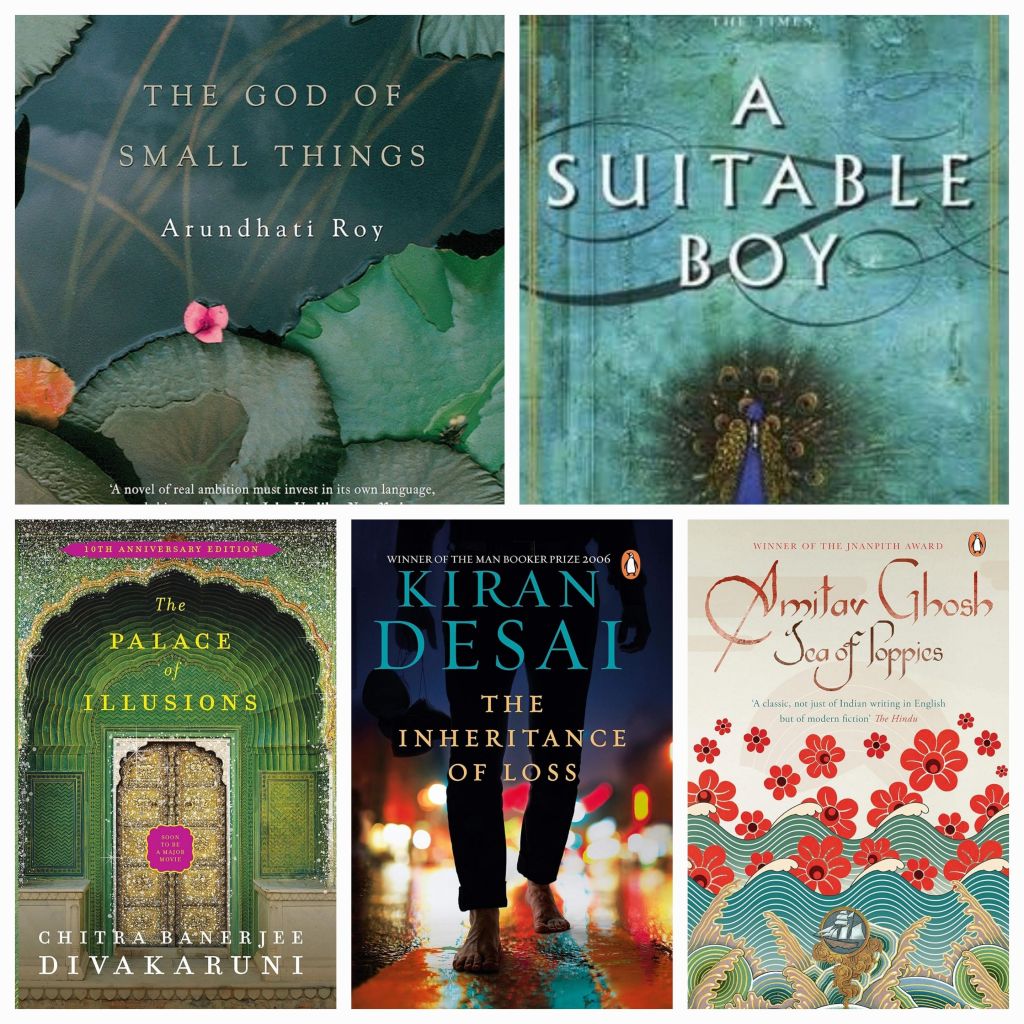
Indian literature is not just a genre; it’s a living, breathing entity that defies boundaries and definitions. With every turn of the page, these masterpieces invite readers to explore uncharted territories of thought and emotion. They are treasures waiting to be discovered, their magic illuminating the path for those willing to journey into their depths.
Dive in. You won’t just read these books; you’ll live them.
#IndianLiterature #BookRecommendations #MustReadBooks #ArundhatiRoy #VikramSeth #AmitavGhosh #KiranDesai #ChitraBanerjeeDivakaruni #CulturalTapestry #LiteraryGems


 Poetry Hub
Hello. Thanks for visiting. I’d love to hear your thoughts! What resonated with you in this piece? Drop a comment below and let’s start a conversation.