
At the edge of three nations
where rivers marry in thunderous ceremony,
where maps dissolve into mist and spray,
there exists a place that swallows
the unprepared whole—
not with malice
but with the indifferent appetite
of pure extremity.

Foz.

The name itself
a Portuguese whisper
that means mouth,
and here the earth opens
its vast throat
to speak in tongues of water,
in dialects of falling
that predate language,
that render words
obsolete as morning stars.

My friend speaks wisdom
in the currency of experience:
"Foz isn't for amateurs."
Her voice carries the weight
of someone who has stood
at the rim of impossibility
and learned that some places
demand more than tourism—
they require transformation.

Here, at the confluence
of the Paraná and Iguaçu,
where Argentina breathes
into Brazil's lungs
and Paraguay whispers secrets
to the borderless wind,
the amateur heart discovers
its own inadequacy.

What is an amateur
but someone who loves
without preparation,
who arrives armed only
with expectation,
carrying cameras
instead of reverence,
maps instead of surrender?

The falls themselves
are not scenery
but scripture written
in a language older
than human observation—
each cascade a verse
in the endless poem
of gravity and grace,
of power that needs
no audience
yet transforms
every witness.

Two hundred and seventy-five waterfalls
cascade into the abyss
like prayers falling
from the lips of angels
who have forgotten
the words but remember
the music,
the eternal percussion
of water meeting water
meeting stone
meeting sky.

The amateur sees spectacle.
The initiated feels
the planet's pulse
drumming through bedrock,
through the soles of feet,
through the chambers
of the unprepared heart
until rhythm becomes
identity,
until you are not
watching the falls
but becoming them.

In Foz, extremes don't announce themselves—
they simply are.
The Itaipu Dam holds back
enough water to drown
entire civilizations,
yet stands silent
as a meditation
on human audacity,
on the thin line
between engineering triumph
and cosmic hubris.

Twenty million tons
of concrete poured
into the earth's wound,
creating a lake
where forests once whispered
their ancient conversations
to the wind.
Progress, they called it.
The water remembers
what lies beneath.

Triple frontier,
where currencies exchange
like lovers' promises,
where Portuguese slides
into Spanish slides
into Guaraní
in the same breath,
where identity becomes
fluid as the rivers
that refuse to recognize
the arbitrary lines
humans draw on maps.

The street vendors know
languages the universities
never catalogued—
the dialect of necessity,
the grammar of survival,
the syntax of making do
with whatever flows
through the border's
porous membrane.

Here, poverty and wealth
don't exist in neighborhoods
but in the same heartbeat,
the same doorway,
the same family
where grandmother counts coins
while grandson counts dreams
in different denominations
of the same impossible currency.

My friend's wisdom echoes
through the humid air:
some cities you visit,
others you endure,
but Foz—
Foz inhabits you,
colonizes your dreams
with the sound of falling water,
with the weight of standing
at the edge of too much beauty
and surviving the encounter.

The butterflies here
are not decoration
but manifestation—
thousands of wings
writing invisible poems
against the sky,
each flight path
a calligraphy lesson
in the art of existing
without explanation.

In the Parque das Aves,
toucans wear their beaks
like questions
asked in a language
only the rainforest
remembers how to answer.
Their calls pierce
the green cathedral
where every leaf
is a stained glass window
filtering light
into reverence.

The amateur brings sunscreen
and comfortable shoes.
The wise bring
empty hands
and emptier hearts,
ready to be filled
with incomprehension
so complete
it transforms
into understanding.

At the Devil's Throat—
Garganta del Diablo—
where the earth opens
its most honest mouth
and speaks only
in roars and mist,
you learn that some sounds
cannot be recorded,
some experiences
cannot be shared,
only carried
like scars
like blessings
like the memory
of standing too close
to something holy
and surviving.

The amateur asks
how many gallons per second,
how tall, how wide,
as if mathematics
could contain mystery,
as if numbers
could translate
the vocabulary
of overwhelm.

But Foz teaches
different lessons:
how to stand
in the presence
of power
without the need
to name it,
how to witness
without possessing,
how to be small
without diminishing,
how to return home
carrying the sound
of infinite water
in the quiet chambers
of changed perception.

The city sprawls
beyond the falls,
a collection of contradictions
that would collapse
under their own weight
anywhere else
but here thrive
in the chaos
of edges meeting,
of boundaries blurring
into something
neither map nor law
can fully capture.

My friend was right.
Foz isn't for amateurs.
It's for those willing
to stand at the confluence
of too much beauty
and too much reality,
where the water falls
not just from cliff to river
but from one version
of yourself
to another.

Here, at the mouth
of three nations,
where rivers marry
in ceremonies
that shake the earth,
you learn that some places
don't just change
your itinerary—
they change the traveler,
leave you amateur
to your own life,
professional only
in the art
of being astonished.

The water continues falling.
The borders continue blurring.
The wise friend continues
being right.
And somewhere between
the roar of the falls
and the whisper of mist,
between the amateur's arrival
and the initiated's departure,
Foz continues
its patient work
of transformation,
one overwhelmed heart
at a time.
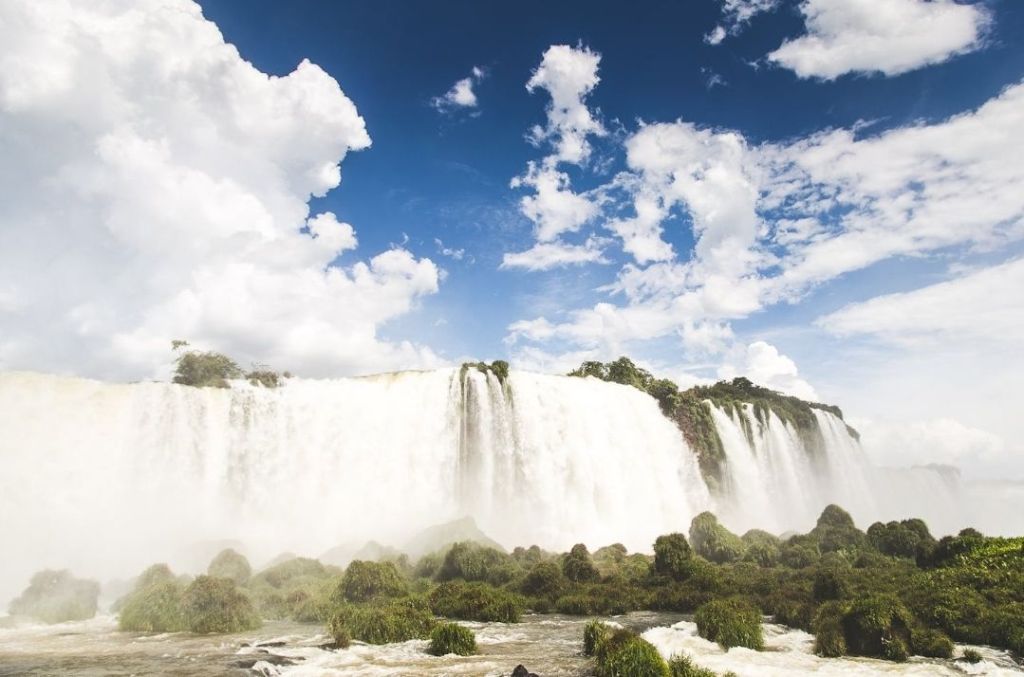
#Poetry #FozDoIguacu #IguazuFalls #Brazil #Travel #SouthAmerica #Border #Geographical #SpiritualJourney #Waterfall #TripleFrontier

 Poetry Hub
Hello. Thanks for visiting. I’d love to hear your thoughts! What resonated with you in this piece? Drop a comment below and let’s start a conversation.