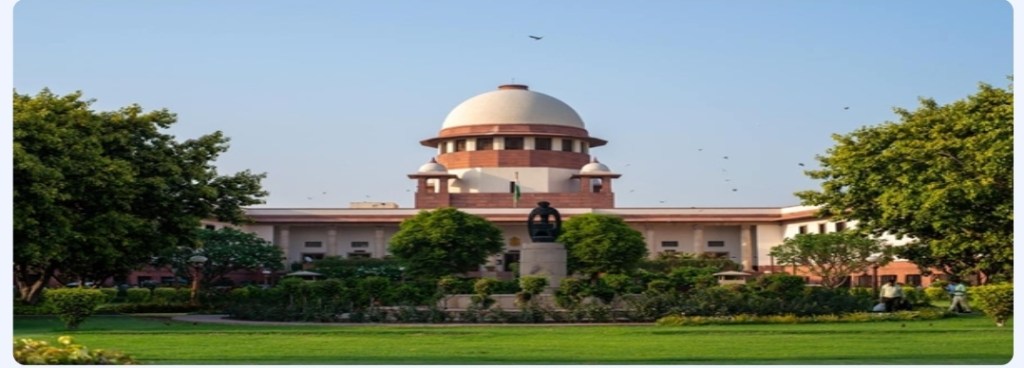
India’s democracy faces a constitutional crisis that could reshape the fundamental balance of power between its three branches of government. Moreover, the Supreme Court’s recent landmark ruling on gubernatorial powers has triggered an unprecedented presidential reference that questions the very foundations of judicial authority. Furthermore, this legal confrontation represents more than just a bureaucratic dispute – it’s a defining moment for India’s federal structure and constitutional democracy.
The Catalyst: Tamil Nadu’s Constitutional Challenge
Governor’s Prolonged Inaction Sparks Legal Battle
The controversy began when Tamil Nadu Governor R.N. Ravi systematically withheld assent to ten bills passed by the state legislature between November 2020 and April 2023. Consequently, the DMK-led Tamil Nadu government approached the Supreme Court, challenging what they termed the Governor’s “pocket veto” strategy.
Subsequently, the two-judge bench of Justice J.B. Pardiwala and Justice R. Mahadevan delivered a historic verdict on April 8, 2025. Additionally, the court not only declared the Governor’s actions “illegal and erroneous in law” but also invoked the extraordinary powers under Article 142 to grant deemed assent to the pending bills.
Unprecedented Judicial Intervention
Remarkably, the Supreme Court established specific timelines for constitutional authorities: governors must act within one month on bills, extending to three months when acting against state cabinet advice. Similarly, the President received a three-month deadline for decisions on bills reserved by governors.
Notably, Chief Minister M.K. Stalin hailed the decision as a “historic victory,” while DMK supporters celebrated with firecrackers and sweets distribution. However, this judicial intervention would soon face constitutional scrutiny from the highest levels of government.
Presidential Reference: Constitutional Counter-Attack
Article 143 Invocation Creates Legal Showdown
In response to the Supreme Court’s ruling, President Droupadi Murmu took the extraordinary step of invoking Article 143 in May 2025. Specifically, she referred fourteen constitutional questions to the Supreme Court, directly challenging the judiciary’s authority to impose timelines on executive functions.
Furthermore, this presidential reference marked the first such constitutional challenge in several years, highlighting the gravity of the separation of powers debate. Additionally, the reference questions whether courts can compel constitutional authorities to act within judicially prescribed timeframes.
Government’s Constitutional Defense Strategy
Solicitor General Tushar Mehta, representing the Centre, filed comprehensive written submissions warning of “constitutional disorder”. Specifically, the government argued that judicial timelines would “dissolve the delicate equilibrium that the Constitution establishes and negate the rule of law”.
Moreover, the Centre emphasized that Articles 200 and 201 “deliberately contain no timelines” because constitutional framers consciously designed these powers to remain flexible. Additionally, they contended that governors are not “aliens” in states but represent national interests within India’s federal structure.
The Article 142 Controversy: Complete Justice or Constitutional Overreach?
Supreme Court’s Extraordinary Powers Under Scrutiny
Article 142 grants the Supreme Court unprecedented authority to “pass such decree or make such order as is necessary for doing complete justice”. However, this provision has become increasingly controversial as the court has used it more frequently in recent years.
Subsequently, critics argue that Article 142 has transformed from a curative provision into a tool for judicial overreach. Moreover, Vice President Jagdeep Dhankar previously referred to this provision as a “nuclear missile against democratic forces available to the judiciary 24×7”.
Historical Evolution and Constitutional Limits
Initially, the Supreme Court exercised restraint in using Article 142. In the 1962 Prem Chand Garg case, the court established that orders under this provision must remain consistent with fundamental rights and statutory laws. However, subsequent rulings have gradually expanded the court’s interpretative powers under this article.
Consequently, an empirical study by IIM Ahmedabad revealed that the court mentioned Article 142 in 1,579 cases between 1950 and 2023, with explicit use in 791 cases. Furthermore, this data demonstrates the provision’s evolving role in India’s judicial landscape.
Federal Structure at Stake: Centre-State Relations in Crisis
Governor’s Role in India’s Constitutional Framework
The controversy highlights fundamental questions about governors’ constitutional position in India’s federal system. Traditionally, governors serve as constitutional heads of states, maintaining neutrality between central and state governments. However, recent conflicts have raised concerns about governors acting as “agents of the Centre”.
Additionally, the Sarkaria Commission (1988) and Punchhi Commission (2010) both recommended clear guidelines for gubernatorial conduct. Specifically, the Punchhi Commission suggested six-month timelines for gubernatorial decisions on state bills. Nevertheless, these recommendations have never been formally implemented into constitutional practice.
Contemporary Federal Tensions
Currently, similar conflicts between governors and state governments exist in Kerala, West Bengal, Telangana, and Punjab. Moreover, these disputes typically arise when opposition parties govern states while the ruling party controls the Centre.
Furthermore, the Supreme Court’s intervention in Tamil Nadu has broader implications for centre-state relations across India. Consequently, the court’s ruling could redefine the balance of power between constitutional authorities and elected state governments.
Separation of Powers: Constitutional Balance Under Threat
Judicial Activism vs. Judicial Overreach Debate
The Tamil Nadu case exemplifies the ongoing tension between judicial activism and judicial overreach in Indian constitutional law. While judicial activism protects citizens’ rights and fills legislative gaps, judicial overreach occurs when courts exceed their constitutional mandate.
Subsequently, critics argue that imposing timelines on constitutional authorities violates the separation of powers doctrine. Moreover, they contend that such judicial intervention undermines the co-equality of India’s three governmental branches.
Constitutional Interpretation and Democratic Governance
Importantly, the Constitution’s framers deliberately avoided prescribing timelines for presidential and gubernatorial actions under Articles 200 and 201. Additionally, this omission reflects their intention to maintain executive flexibility in constitutional decision-making processes.
However, supporters of the Supreme Court’s intervention argue that indefinite delays violate democratic principles and legislative supremacy. Furthermore, they contend that judicial timelines ensure accountability and prevent constitutional deadlock.
The Constitutional Bench Hearing: August 2025 Showdown
Scheduled Legal Battle Format
The five-judge Constitution Bench, headed by Chief Justice B.R. Gavai, has scheduled comprehensive hearings from August 19 to September 10, 2025. Additionally, the bench includes Justices Surya Kant, Vikram Nath, P.S. Narasimha, and A.S. Chandurkar.
Furthermore, Kerala and Tamil Nadu will first present arguments challenging the reference’s maintainability. Subsequently, the Union government will present its case on August 19, 20, 21, and 26, followed by opposing states on August 28 and September 2, 3, and 9.
Stakes and Potential Outcomes
Crucially, the Court’s advisory opinion under Article 143 is not binding on the President, unlike judgments under Article 141. However, such opinions carry significant constitutional weight and influence future governmental actions.
Moreover, the hearing will determine whether courts can impose timelines on constitutional authorities where the Constitution remains silent. Additionally, it will clarify the scope of Article 142’s “complete justice” provision and its relationship with separation of powers.
Historical Context: Commissions and Constitutional Conventions
Sarkaria and Punchhi Commission Recommendations
Both major commissions on centre-state relations have addressed gubernatorial timeline issues. The Sarkaria Commission (1988) emphasized consultation with state chief ministers during gubernatorial appointments and recommended five-year tenures. Similarly, the Punchhi Commission (2010) suggested six-month deadlines for gubernatorial decisions on state bills.
However, these recommendations have remained largely unimplemented, creating a constitutional vacuum that the Supreme Court attempted to fill. Consequently, the current crisis reflects decades of unresolved constitutional ambiguities regarding executive timelines.
International Comparisons and Constitutional Design
Notably, different constitutional systems handle executive-legislative relationships differently. The Canadian Constitution allows its Supreme Court to provide advisory opinions, while the U.S. Supreme Court avoids such advisory functions to maintain strict separation of powers.
Furthermore, India’s constitutional design attempts to balance parliamentary sovereignty (borrowed from Britain) with judicial supremacy (adapted from America). This hybrid approach creates unique challenges in defining judicial boundaries and executive prerogatives.
Implications for India’s Democratic Future
Constitutional Precedent and Rule of Law
The outcome of this constitutional battle will establish crucial precedents for India’s democratic governance. If the Court’s timeline imposition is upheld, it could encourage further judicial intervention in executive functions. Conversely, if the presidential reference succeeds, it might restrict judicial oversight of constitutional authorities.
Additionally, this case will determine whether deemed assent represents a legitimate judicial remedy or an unconstitutional usurpation of executive power. The resolution will significantly impact future centre-state disputes and constitutional interpretation.
Federal Structure and Democratic Accountability
Ultimately, this legal confrontation reflects deeper tensions within India’s federal structure. The case highlights the challenge of maintaining constitutional balance while ensuring governmental accountability and preventing institutional deadlock.
Moreover, the Supreme Court’s intervention represents an attempt to enforce constitutional obligations when political mechanisms fail. However, critics argue that such judicial solutions may create more problems than they solve by disrupting established constitutional conventions.
Conclusion: Democracy at Constitutional Crossroads
India’s constitutional democracy stands at a critical juncture as the Supreme Court and executive branch engage in an unprecedented battle over separation of powers. The Tamil Nadu case has exposed fundamental tensions between judicial oversight and executive autonomy, federal cooperation and central control, and constitutional flexibility and democratic accountability.
The August 2025 Constitution Bench hearings will determine whether India’s judiciary can impose timelines on constitutional authorities or whether such interventions violate the separation of powers doctrine. This decision will shape India’s constitutional landscape for generations, influencing how democratic institutions interact and resolve conflicts.
Regardless of the outcome, this constitutional crisis demonstrates both the robustness and fragility of India’s democratic institutions. It shows how constitutional mechanisms can address governmental deadlock while simultaneously revealing the delicate balance required to maintain democratic governance in a complex federal system.
The resolution of this constitutional battle will determine whether India can successfully navigate the tension between judicial activism and executive autonomy while preserving the democratic principles that form the foundation of its constitutional order.
#ConstitutionalLaw #JudicialActivism #SeparationOfPowers #IndianFederalism #SupremeCourt #GovernorsPowers #Article142 #PresidentialReference #CentreStateRelations #Democracy

 Poetry Hub
Hello. Thanks for visiting. I’d love to hear your thoughts! What resonated with you in this piece? Drop a comment below and let’s start a conversation.