
You said—almost absently—
those years must have been really challenging,
and the words hung in the air
like old photographs in a dusty trunk,
their corners curling under the weight of what wasn’t spoken.

I wanted to answer,
but how do you measure the blur
between holding on and letting go?
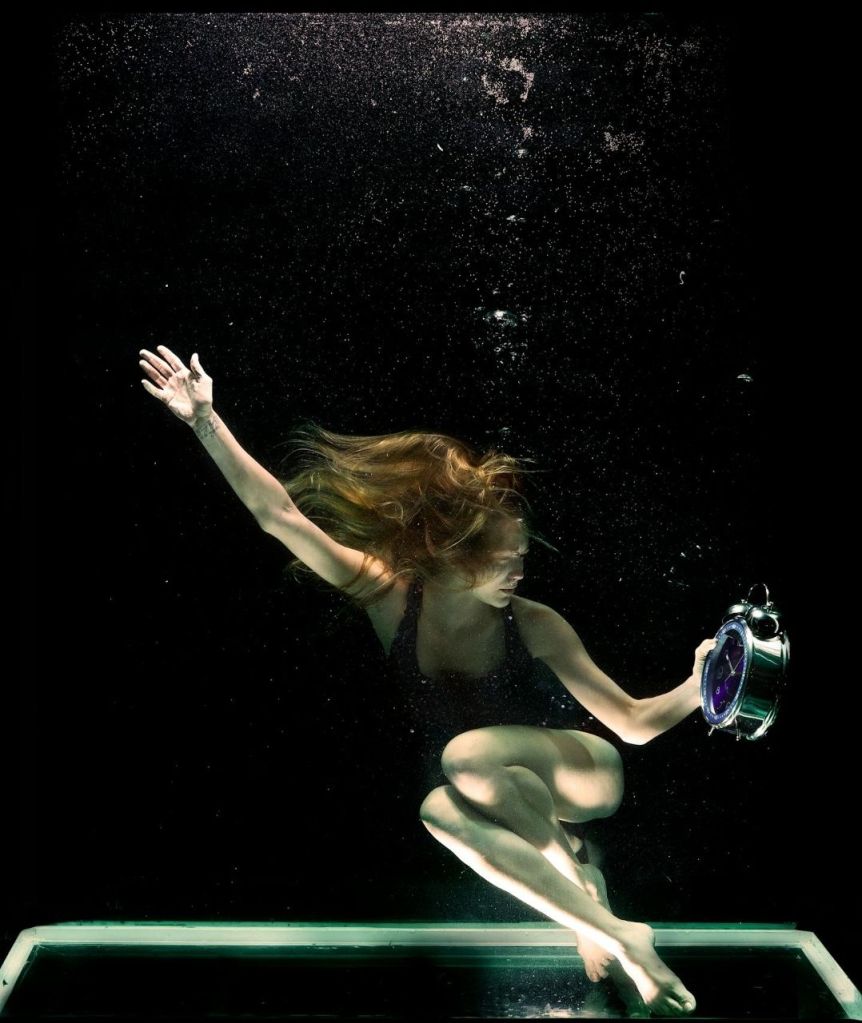
The silence that once lived inside ticking clocks
now sounds louder than thunder.

The earth seems to be spinning faster these days—
you can feel it too, can’t you?
The breath between morning and dusk shrinks,
nights arrive before we finish our thoughts.
Hours slip through our fingers
like dry sand we were once foolish enough
to try catching in the wind.

We are running for time now,
not with it.
The pact we made in our youth—
to balance ambition against peace—
has long been broken,
and yet we keep signing invisible treaties
with exhaustion and longing,
hoping one of them will finally deliver quiet.

I remember those years.
The ones that left callouses not on the hands,
but on the heart—
the years of crossing bridges before they existed,
of calling chaos “growth,”
of convincing ourselves
that everything hard had to mean something.

You remember them too.
You were there in your own battles—
spreadsheets for swords,
emails for smoke signals,
promises flickering through phone screens
at 2 a.m. when no one should be awake.

We lived through the hum of notifications
like a constant heartbeat
reminding us to keep moving,
keep proving,
keep pretending we had choice.

Sometimes I ask myself
whether time sped up
or we simply lost the ability to stand still.
When was the last moment you sat
without calculating its profit?
When did I last breathe
without checking the next thing to do?

Those years—
they taught us to survive,
but survival is not the same as living.
There was coffee gone cold in every cup,
and we learned to drink it anyway,
made peace with the taste of haste,
called it resilience.

We thought the future would reward us—
the late nights, the careful strategies,
the way we built routines around fatigue.
But all the future did
was move closer,
then race by faster than we could greet it.

Now here we are,
watching the sky change colors
before our eyes can register the shift,
the hours melting into seconds,
the decades compressing
like digital archives on a forgotten drive.

Do you remember how the streets
used to breathe slower?
How we once waited for buses,
not impatiently but with wonder—
as though waiting itself was a conversation
between time and hope?

Now even the wind feels hurried,
its voice fractured by transmission towers.
Birds migrate on confused patterns,
and we—
we migrate too,
from city to city, job to job,
meaning to meaning,
never pausing to ask if the map still matters.

The earth spins, yes—
but perhaps it’s our hearts spinning harder,
fueled by the fear of missing something
we no longer define.

You and I—
we used to count dreams like constellations,
naming them one by one until dawn.
Now we count deadlines.
We mark time in deliveries,
updates,
notifications that blink red
to remind us someone—or something—
still demands us.

Sometimes I laugh
at how the word *deadline*
contains death in disguise.
Maybe that’s why
each task completed feels like
a small resurrection,
brief, hollow,
but enough to forget the clock for a while.

Do you feel it too—
that tremor beneath ordinary things?
The sense that time no longer flows,
but crashes forward?
That the world drags us
like unwilling passengers
through days built on autopilot?

We are running for time,
and still late—
for conversations,
for healing,
for moments we promised
we’d come back to someday.

Someday is always missing now.

I keep trying to recall
how slow laughter once sounded
when there was no rush to finish it.
There was music in patience,
in watching rain
instead of recording it.
There was something unmeasured
in the way we loved—
not planned, not optimized,
just lived.

But even love feels shorter these days,
compressed into text,
edited for readability.
We send hearts in digital form,
hoping they beat the same when they arrive.

You tell me it’s progress.
I nod,
but somewhere deep in the cavities of memory,
a child version of both of us
still runs barefoot through sunlight,
not knowing clocks exist.
That child doesn’t understand
why adults trade sunsets for meetings,
or why silence needs background music.

Sometimes I envy that innocence.
Other times I grieve its loss.

Those years were challenging—
yes.
They carved us into shapes
we still don’t recognize.
We became fluent in endurance,
learned to smile convincingly,
to wear calm as costume.
But beneath that still face
lay storms of missed beginnings.

I think about all the things we postponed:
letters unfinished, dreams deferred,
trips cancelled for "better timing" that never came.
And I wonder—
did we ever pause to notice
that tomorrow has quietly stolen
the language of today?

Because the hours—
they slip,
relentlessly,
through even the strongest fingers.
And no matter how tight our grip,
we wake to find only fragments—
half-written plans,
half-remembered conversations,
whole lives diluted into schedules.

Sometimes I wish time would simply stop,
just long enough for breath to catch up with heart.
But maybe that’s too much to ask
from a world running on borrowed speed.

You said those years must have been challenging.
You were right.
They were—
and they still are,
though now the battles are quieter:
fighting forgetfulness,
fighting the blur,
fighting the tendency
to scroll past your own life.

Yet, amid all this spinning,
I’ve begun to notice small mercies—
a soft sunrise sneaking in before the alarm,
the faint calm between notifications,
a stranger’s smile in an elevator full of silence.
Maybe meaning hasn’t vanished;
it’s only hiding
in places too still for our hurried eyes.

We are running for time,
yes—
but maybe, once in a while,
we can let time catch us.
Let it place a hand on our shoulder
and whisper that there is nowhere to arrive,
that being alive is not a race
but a rhythm.

If I could go back,
I wouldn’t slow the earth;
I’d slow myself—
to see the moon linger longer,
to listen when the heart spoke softly,
to forgive the pace at which meaning unfolds.

Those years made us weary,
but they also made us endless—
because in every lost hour
we learned to create another,
and in every collapse
we discovered how light re-enters.

So yes,
the days spin faster now,
but perhaps the only way to stand still
is to stand aware—
aware of each second
as both thief and miracle,
aware that your presence,
here, reading these words,
is some kind of rescue.

Let the clocks race if they must—
we'll walk, not run,
even if walking feels rebellious.
We’ll gather the minutes that fall
between appointments and anxieties,
and call them ours again.

Because time may no longer belong to us,
but tenderness still does.
And if nothing else slows the spin,
let that—
the quiet touch of being human—
be our anchor
in this too-fast turning world.

 Poetry Hub
Hello. Thanks for visiting. I’d love to hear your thoughts! What resonated with you in this piece? Drop a comment below and let’s start a conversation.