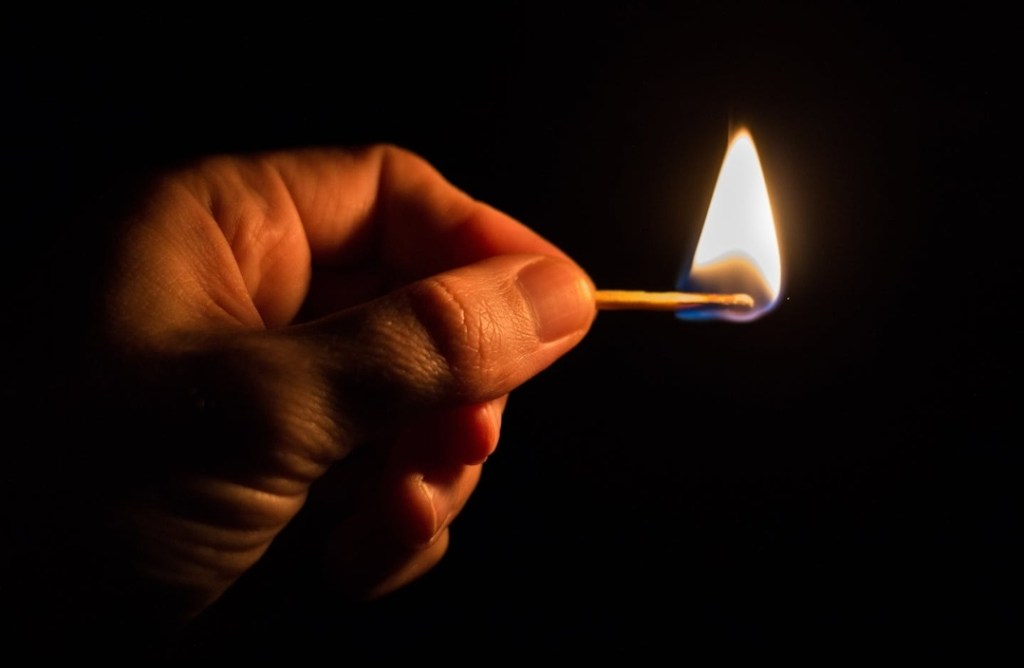
Some people write their stories in sunlight,
mine was born under dim bulbs and hours that refused to die.
I remember the first silence that grew louder than any language,
a kind of muteness that swallowed every word before it could breathe.
Those were my chapters of becoming — written not with ink
but with hands that trembled too much to hold anything steady.
If I search for beginnings, I find only a mirror:
a child staring back, too aware of the noise inside his own skull,
while the world outside kept teaching me how to disappear.

I was raised in rooms where laughter was rationed,
where hope was spoken like an ancient myth
one could admire, but never touch.
There was the smell of something waiting to collapse:
furniture heavy with secrets,
air trembling with unsaid truths that bruised the walls.
Every evening, I would sit beneath the weight of unspoken prayers,
count the cracks crawling through paint
as though those fractures were maps to someplace softer.

Maybe I learned too early that love had conditions—
invisible strings tightening around the ribs,
pulling you into performances of belonging
until you lost the original shape of your solitude.
There were years I walked on eggshells made of glass,
learning the craft of endurance,
learning to flinch gracefully,
learning how to hide fear behind polite words and steady eyes.
But every endurance leaves residue —
dust on the soul that no forgiveness can wipe clean.

I remember adolescence as a kind of drowning,
not in water, but in the thick heaviness of thought.
Every day I carried the ache of unfinished sentences,
those that the body wanted to shout but the throat refused to allow.
I used silence like a shield, like a weapon, like a bed to sleep in.
I wore invisibility so convincingly
that even mirrors refused to recognize me.
Dreams felt too bright, too violent,
so I learned to keep them folded,
hidden under notebooks filled with sketches of escape.

Loneliness came not as absence but as a companion—
it held me tighter than anyone ever did.
It whispered lullabies of surrender and survival in the same breath.
Together, we built small rituals:
counting the seconds between my breaths,
staring into corners long enough to believe
something might stare back.
Sometimes, I traced the outline of light on the floorboards
and thought — if I stay perfectly still, the world won’t notice my cracks.

The years that followed were a blur of endurance —
a slow stitching of flesh and memory,
a balancing act between wanting to dissolve
and wanting to be seen for what remained.
I learned how to wear faces that didn’t belong to me,
how to nod when I wanted to scream,
how to perform normalcy so convincingly
that I could almost fool myself.
There were jobs taken not out of purpose,
but because routine felt safer than meaning.
There were friendships that felt like negotiations,
half warmth, half silence.

Sometimes I wonder what the word “home” truly means.
I have walked through houses that looked like safety
but smelled like resignation.
I have sat at dinner tables where every conversation
was a rehearsal for endurance,
where affection was traded for predictability.
Even now, I carry that confusion like an heirloom —
the inability to trust comfort,
the lingering doubt that peace is just the prelude to loss.

There was love too — of course there was.
But love, for me, always arrived as a storm wrapped in serenity,
a gentle beginning that knew how to bleed.
I loved people as if they were the last shelter before the flood.
I gave away parts of myself that never grew back.
Each heartbreak became a verse in my ongoing revision.
Sometimes I wonder whether I loved them
or merely needed witnesses for my loneliness.
Each departure taught me new ways
to understand the weight of being left behind.

In moments of stillness, I return to those darker rooms inside,
where I store the ghosts of versions I no longer am.
The boy who waited for approval that never came.
The young adult who mistook exhaustion for purpose.
The one who learned to wear sadness without making noise.
They all live there — quiet but awake —
and I visit them, not out of nostalgia,
but out of an obligation to remember the soil that shaped me.

I don’t write this as redemption.
There are no clean endings in this story, only awareness.
I have stopped expecting healing to feel like light;
sometimes, it feels like standing alone at night
and realizing you have survived every version of your own undoing.
My autobiography is not a triumph but a confession —
that I am still learning how to live with echoes,
still learning that emptiness is also a form of space.
There are days the silence feels heavy again,
but now I let it sit beside me — unjudged, unhidden.

I have burned diaries, deleted photographs,
buried letters that spelled out names I no longer say aloud.
The past never really leaves; it only changes its disguise.
Sometimes, it walks beside me in shadows
when the world quiets down enough to listen.
Sometimes, it speaks through the tilt of my handwriting,
the tremor in my sentences,
the sudden ache when a familiar song plays.
Each trace feels like proof — not of pain endured,
but of being human enough to still feel its residue.

If this autobiography ever gets finished,
I think it will end mid-breath,
right between surrender and defiance.
Because that’s where I’ve always lived —
in the gray corridors of existence,
where memory and hope trade shifts quietly,
where even despair has a heartbeat,
and even emptiness hums a fragile sort of melody.

There is a paragraph I never publish,
the one I rewrite endlessly in my head.
It begins with, “Once I wanted to vanish completely,”
and ends with, “but instead, I learned how to remain.”
That is perhaps the only highlight that matters —
not the victories, not the polished portraits,
but the stubborn persistence of breath
that refused to give up its pulse even when all else dimmed.
Every scar along the way has become a story-thread,
and I keep stitching them — not to cover the wound,
but to trace the shape of what still survives beneath.

And if anyone reads these words someday,
I hope they find not a chronicle of sadness,
but a quiet companionship in knowing
that surviving doesn’t always look like joy.
Sometimes, it looks like simply existing —
broken, uncertain, but still breathing.
That is my highlight:
to still be here,
to still be writing the self that once almost disappeared,
to still carry the weight of all my unfinished sentences
and know that even they are part of the story.
And Then…
But reflection isn’t a closing curtain —
it’s a slow, halting walk along hallways lined with shattered mirrors
where none of the fragments fit quite perfectly,
but the shape of their jagged edges reveals a truth
no polished glass ever could.
I pause here, at what feels like the edge of something,
and ask if the emptiness that haunted my youth
was simply a stretched canvas,
readying itself to receive colors I had not yet learned to bleed.

All the darkness, for years an unwanted guest,
eventually became an intimate companion.
There’s kinship in hollow rooms,
an invitation to listen for sounds beneath the hush —
the creak of memory, the faint rustle of half-forgotten laughter,
the echo of footsteps going nowhere but deeper inside.
I learned something vital in those hours:
that the ache is not hostile, but honest;
that wounds, when permitted to breathe,
teach you to hear the language of your own marrow.

Time, that patient thief, took much
but also left secret gifts,
slyly tucked within grief’s folds:
a resilience not loud like triumph,
but steady as a heartbeat refusing surrender;
a wisdom that came not from overcoming,
but from abiding —
the kind forged in the crucible of repeated endings.
I once grieved what I would never become;
now I quietly thank the shapes I could not fit,
the doors that closed, and the roads that vanished.
None of them failed me;
they simply taught me what kind of walls I could lay down,
and what kinds of windows I could cut through the stone.

There’s a grace in finally understanding
that the dark is not a punishment, but a presence.
After so much longing for escape,
I see now that emptiness is an invitation—
to know the self beneath all the scaffolds,
the figure trembling in the dim,
clutching his small truths to a battered chest.
I am less afraid of shadows than I was;
sometimes, I welcome them —
let them settle around my shoulders like a familiar cloak
and walk where their stillness leads.

Acceptance isn’t a thunderous arrival,
but the soft settling of dust after a storm.
I remain unfinished, and perhaps that is mercy;
to have new corners yet to explore,
to hold space for doubt as a teacher,
to allow tenderness where once there were barricades.
If the past echoes, it also illuminates.
Even scars are lanterns if you choose their light.
Let this be the long highlight written gently into the fabric of my autobiography:
that I made room for what ached,
that I let sorrow take its seat beside hope,
that I stopped demanding explanations from every shadow,
and found a strange, sturdy peace in simply belonging to myself.

Often, I catch myself in acts of quiet forgiveness,
toward old versions, abandoned dreams,
those whose love I once begged for,
those I could not keep,
and especially the me who thought survival had to look like heroism.
It doesn’t. Sometimes, survival is small —
a meal alone without apology,
an evening spent listening to rain spindle against glass,
a moment when the name you utter is finally your own,
spoken in kindness rather than regret.

If anyone still reads this, let them know
an emptied heart can become a vessel;
that not every loneliness is hungry,
some become gardens with time.
All the years I condemned to sadness
now soften into loam —
ripe for seeds of gentle possibility.
I take the lessons darkness offered and tend to them,
not as burdens, but as gifts unearthed
from beneath what seemed relentless loss.

The future is unwritten, like the last page in a book
that invites — not demands — the hand to move.
I will walk into it with all the shades of my memory,
shadow and light braided into my steps.
And should emptiness greet me again,
I will nod, greet it as an old friend,
share silence until it dissolves
into something resembling gratitude.

This is the final highlight I wish to mention:
the revelation that even a life marked by darkness
can become the source of illumination
for the very one who lived it.
Regret recedes, sorrow ripens into wisdom,
and the endless rooms of memory
welcome me home with their vast, honest hush.
I sit inside the emptiness now and find
it is not without comfort;
it is not without meaning.
And above all —
I am not alone inside it.
I have myself, I have my story,
I have the quiet truth that even darkness
can be lived, and survived,
and even, in time, revered for the tender shape it gives
to a soul that chooses to remain open.
This post is a part of Blogchatter Half Marathon

 Poetry Hub
Hello. Thanks for visiting. I’d love to hear your thoughts! What resonated with you in this piece? Drop a comment below and let’s start a conversation.