I learned early
that survival is a kind of theatre.
Not the loud kind with curtains and applause,
but the quiet one
performed inside the ribcage,
where breath decides
which mask must rise today.
I carried three cards in my pocket—
creased, invisible, warm from touch.
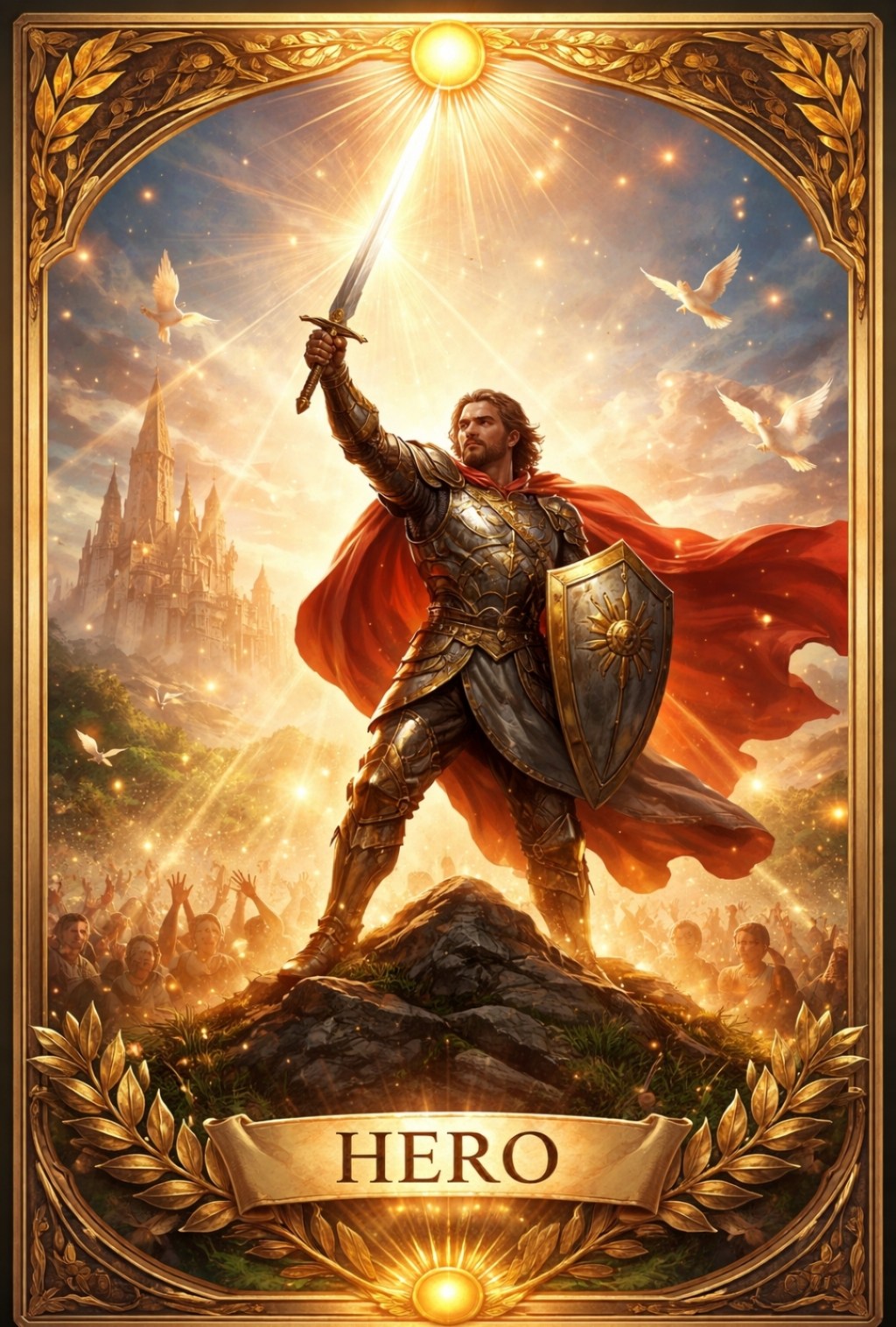
Hero.
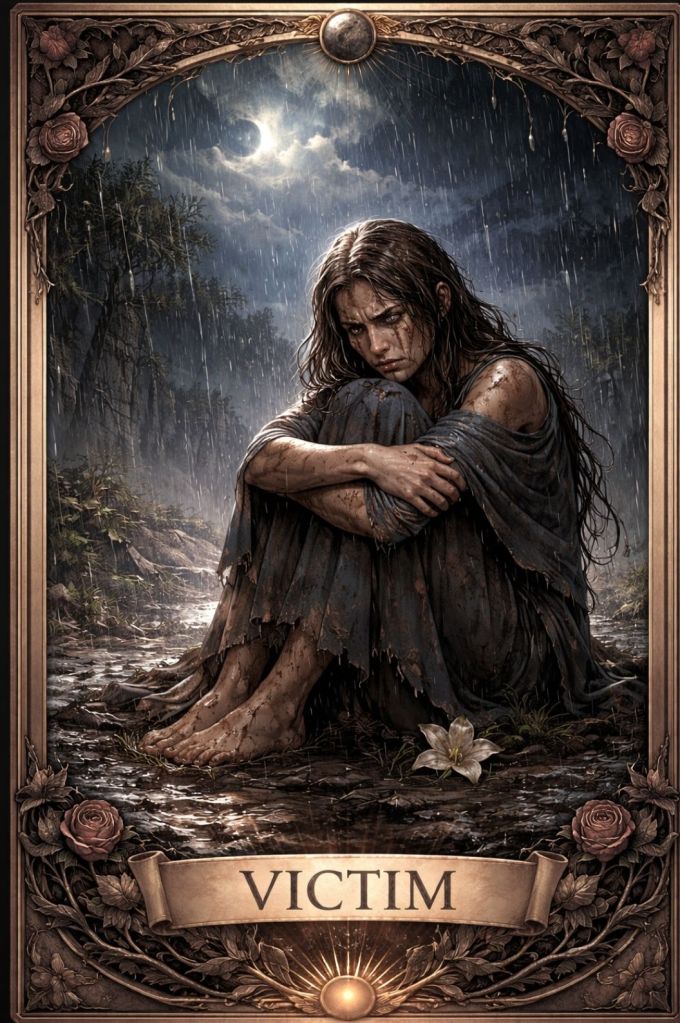
Victim.
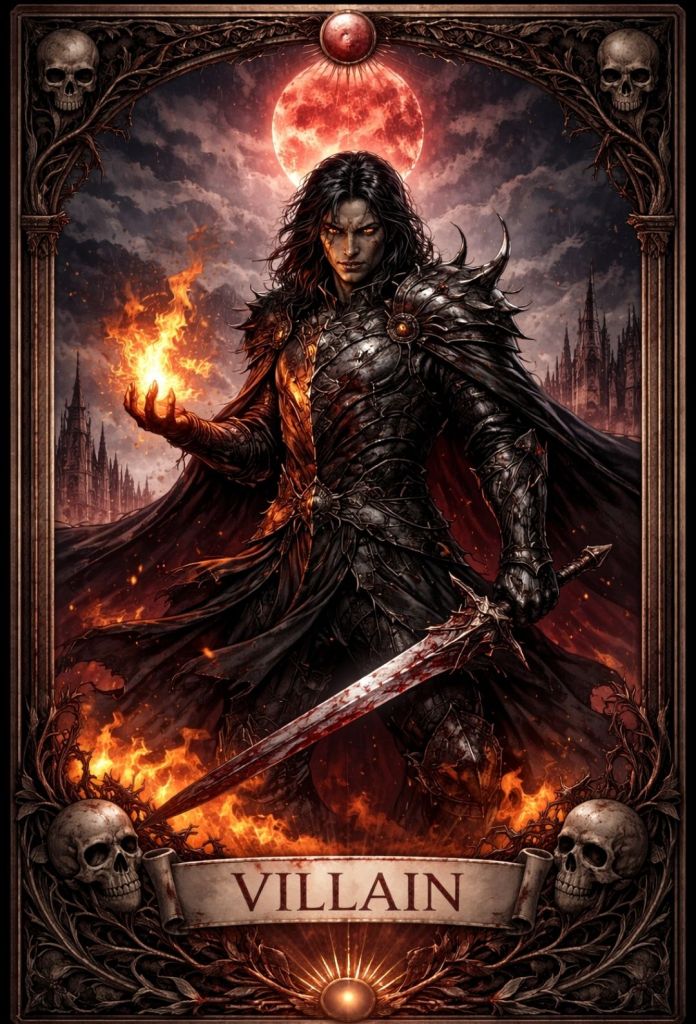
Villain.
I did not name them then.
I only knew the weight of them,
how they pressed against my thigh
as I walked through classrooms, kitchens, hospitals,
through friendships that arrived like spring
and left like drought.
The Hero card
was the first to shine.
It smelled of iron and morning light,
of shoulders squared against the wind.
I played it when silence needed a voice,
when someone had to stand
between harm and the fragile.
I learned to lift others
even when my own spine ached,
to stitch hope with hands that trembled.
In forests, I imagined myself a tree
that did not bend,
roots gripping centuries of soil.
In the sky, I borrowed the sun—
burning, tireless,
offering warmth without asking
who deserved it.
People praised the glow.
They called it strength.
They did not see
the nights I lay awake,
armor rusting quietly,
wondering how long a heart
can beat like a drum
before it splits its skin.
The Hero card demands light,
but light casts shadows.
And shadows remember.
So sometimes
I reached for the Victim card.
It was softer,
creased from too much folding.
It tasted of rain on unpaved roads,
of doors half-closed,
of explanations whispered instead of shouted.
I used it when the world felt too large,
when injustice arrived without invitation
and stayed without apology.
As Victim,
I learned the grammar of pain—
how to shrink sentences,
how to lower my eyes
so the storm might pass overhead.
I learned that suffering can be currency,
that tears sometimes buy protection,
that silence can masquerade as peace.
In rivers, I became driftwood—
not steering,
only surviving collision after collision.
In the night sky,
I identified with the moon:
scarred, borrowed light,
existing because something else
allows me to shine.
There is a strange comfort
in being wounded.
It absolves you of action,
wraps you in the logic of inevitability.
But comfort, like fog,
blurs the edges of responsibility.
And fog, left too long,
forgets how to lift.
Then there was the Villain card.
Ah—
the one I pretended not to own.
It was sharp,
edges cutting through excuses.
I played it when fear wore the mask of power,
when anger needed an outlet,
when I decided that survival
required someone else to lose.
As Villain,
I justified.
I edited memory.
I convinced myself that cruelty
was simply clarity sharpened.
I told myself the world was unfair,
so why should I be gentle?
In deserts,
I became the sun at noon—
merciless, unquestioned.
In the cosmos,
I aligned with black holes,
devouring without apology,
calling it gravity.
The Villain card works fast.
It delivers results.
Boundaries appear.
People retreat.
But after the dust settles,
there is an echo—
a hollowness where connection once lived.
Power without compassion
is a room with no windows.
For years,
I shuffled these cards like fate.
Hero when praised,
Victim when cornered,
Villain when threatened.
I told myself this was maturity,
adaptation,
wisdom earned through bruises.
But somewhere along the way,
the deck grew heavy.
My pockets sagged.
Each card began to blur into the others,
ink bleeding under pressure.
I could no longer tell
where protection ended
and performance began.
One evening—
not dramatic,
just honest—
I sat beneath a sky
crowded with stars.
No audience.
No mirror.
Just the slow breathing of the universe,
expanding without asking permission.
I realized then:
the cosmos does not need cards.
Stars do not choose
to be heroes.
Planets do not audition
for victimhood.
Galaxies do not turn villain
when they collide.
They move according to truth,
to gravity,
to a law deeper than narrative.
And I wondered—
what would it mean
to live without pulling a card?
To meet a moment
without strategy?
To respond instead of perform?
The thought frightened me.
Without cards,
who would I be?
A body without labels.
A breath without explanation.
A human without alibi.
Slowly,
I placed the cards on the ground.
The Hero card dissolved into ash—
its sacrifice honored,
but no longer compulsory.
The Victim card softened into soil—
its pain acknowledged,
but not enthroned.
The Villain card cracked into stone—
its lessons kept,
its poison released.
What remained
was something quieter.
Not the loud presence of conquest,
nor the fragile presence of injury,
nor the intimidating presence of dominance.
But the steady presence of a mountain
that knows both erosion and endurance,
of an ocean
that can cradle and drown
yet chooses rhythm.
Now, when I walk,
I try to walk like earth—
carrying scars and forests
in the same body.
When I speak,
I listen for starlight in my words—
not to shine,
but to orient.
I still feel the old reflexes twitch.
The cards whisper sometimes,
especially in moments of threat or praise.
But I no longer let them decide.
I breathe.
I look up.
I remember the sky
has survived far worse collisions
than my small wars.
I am not a hero today.
Not a victim.
Not a villain.
I am a witness
learning how to stay.
A consciousness
untangling itself from costumes.
A single life
trying to move in alignment
with something vast and forgiving.
And perhaps that is the quiet revolution:
not choosing the right card,
but daring to put the deck down—
to meet the world
with open hands,
empty pockets,
and a heart
finally free
to be real.

 Poetry Hub
Hello. Thanks for visiting. I’d love to hear your thoughts! What resonated with you in this piece? Drop a comment below and let’s start a conversation.