I sit before the blank
as if it were a judge,
robed in white silence,
waiting for me to speak first.
The room is quiet,
but not empty.
Inside my head,
chairs scrape,
throats clear,
and a familiar voice rises—
polished, precise, merciless.
Not yet, it says.
You don’t have the right words.
You don’t have the right hands.
If you begin now, you will expose
how unfinished you are.
So I wait.
I wait for courage to ripen,
for certainty to bloom like a rare flower
that only opens under ideal conditions—
correct light, correct season,
no dust in the air,
no tremor in the soil.
Days pass.
Ideas circle me like migratory birds
who sense the climate is wrong
and never land.
Perfectionism wears the mask of care.
It tells me it only wants the best,
only wants to protect the work
from being small,
from being ordinary,
from being laughed at by time.
But I know its deeper hunger.
It feeds on delay.
It grows fat on silence.
I have learned this the way one learns
the taste of salt in tears—
slowly, unwillingly,
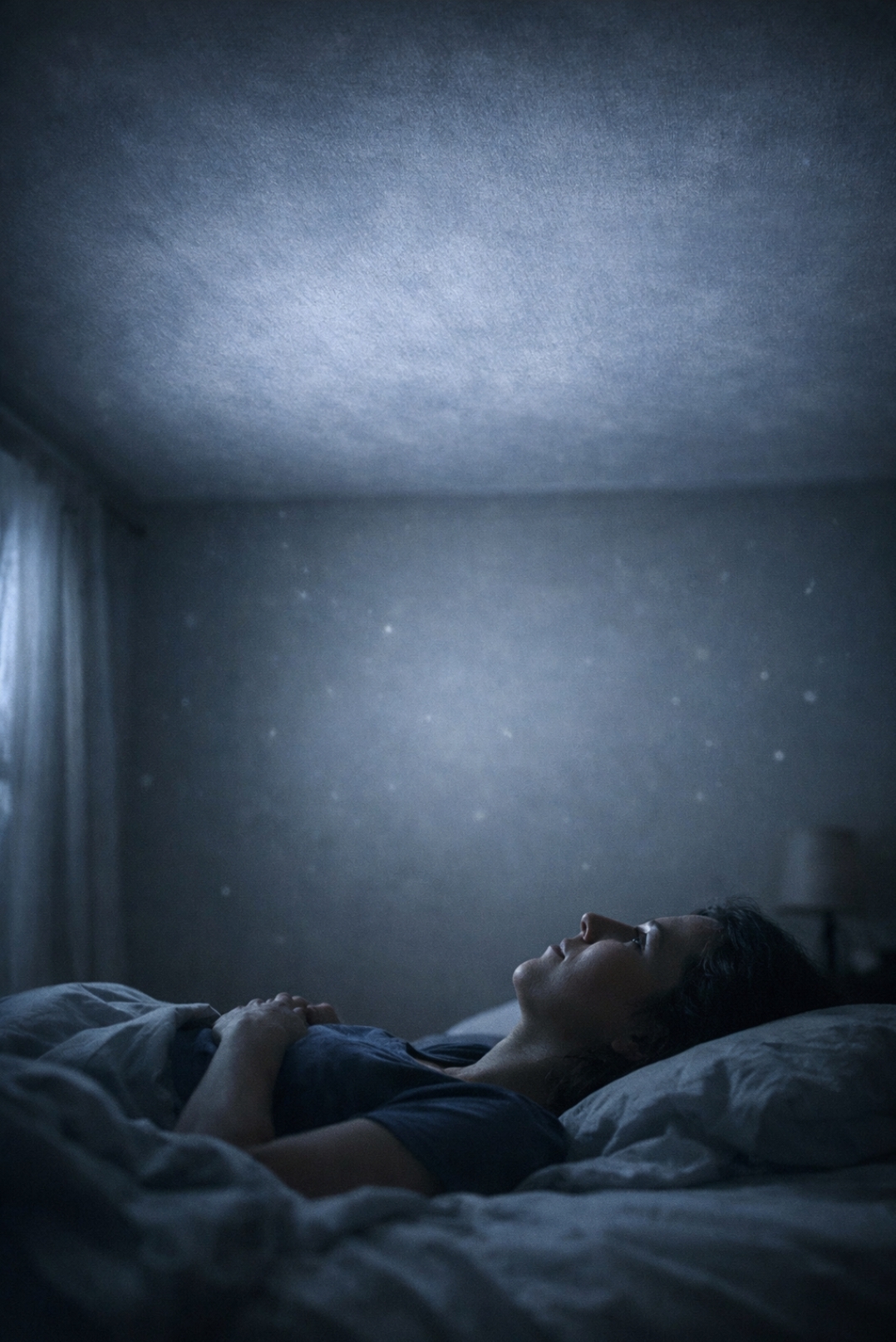
after many nights of staring
at ceilings that resemble blank pages.
I remember standing by the sea once,
watching waves collapse again and again,
never identical,
never apologizing for their rough edges.
The ocean does not revise itself.
It arrives.

A wave does not ask
if it is worthy of the shore.
Somewhere along the way,
I forgot that art was once a verb.
Something you did,
like walking,
like breathing fog into cold air,
like tracing patterns in sand
knowing the tide would erase them.
Now art feels like a monument—
stone-heavy,
demanding flawlessness
before the first chisel strike.
Inside me is a museum
of unmade things:
canvases still folded into thought,
poems sleeping in the margins of fear,
songs that never learned their own voices.
They are not dead.
They hum softly,
like stars behind cloud cover,
present even when unseen.
The internal critic believes
that mistakes are disasters.
But nature disagrees.
Look at the tree—
its branches reach in awkward angles,
scarred where storms interrupted ambition.
No branch grows apologetically.
No leaf asks permission to be asymmetrical.
The mountain does not revise its fractures.
The sky does not erase its storms.
Even the stars—
burning imperfectly,
stuttering light across centuries—
are riddled with collapse,
with violence,
with endings mistaken for failure.
Still, we call it beauty.
I once believed
that making nothing
was safer than making something flawed.
Nothing cannot be judged.
Nothing cannot fall short.
But nothing also cannot breathe.
Perfectionism promised me safety,
and delivered stagnation.
It taught me to polish the door
instead of walking through it.
When I finally begin—
clumsily,
hesitantly—
my hand shakes like a young planet
still learning its orbit.
The first line feels wrong.
The second feels worse.
The third almost convinces me to stop.
This is the moment
where the old voice leans close
and whispers,
See? You should have waited.
But something else stirs now—
quieter,
older,
less interested in being right
than in being real.
It says,
Stay.
So I stay.
I write badly.
I paint unevenly.
I make marks that will never be framed.
And something unexpected happens:
the fear loosens.
Not disappears—
just loosens,
like a knot that realizes
it does not need to strangle the rope.
The work begins to breathe.
I realize then
that perfectionism is a closed system—
no oxygen enters,
nothing escapes.
Creation, on the other hand,
is an exchange.
You offer what you have,
unfinished, trembling, alive,
and the world meets it halfway.
Mistakes become information.
Flaws become fingerprints.
Roughness becomes proof of touch.
The cosmos itself
is not a polished idea.
It is expansion and error,
collisions mistaken for chaos,
silence mistaken for emptiness.
Stars are born
from imbalance.
If gravity were perfect,
nothing would ever begin.
I think of all the moments
I withheld myself,
waiting to be better,
cleaner,
more convincing.
Time did not wait with me.
Now, when the blank returns—
as it always does—
I greet it differently.
Not as a judge,
but as a field.
Something may grow here,
or it may not.
Either way,
the soil needs turning.
I let the critic speak,
but I no longer let it decide.
It can sit in the room,
arms crossed,
but it does not hold the pen.
That role belongs to curiosity.
To breath.
To the quiet courage
of beginning anyway.
Because art was never meant
to be perfect—
only honest.
Only alive.
And somewhere beyond my small hesitation,
the universe keeps making itself,
careless and magnificent,
leaving behind evidence
that existence itself
is an unfinished draft
worth continuing.


Leave a Reply