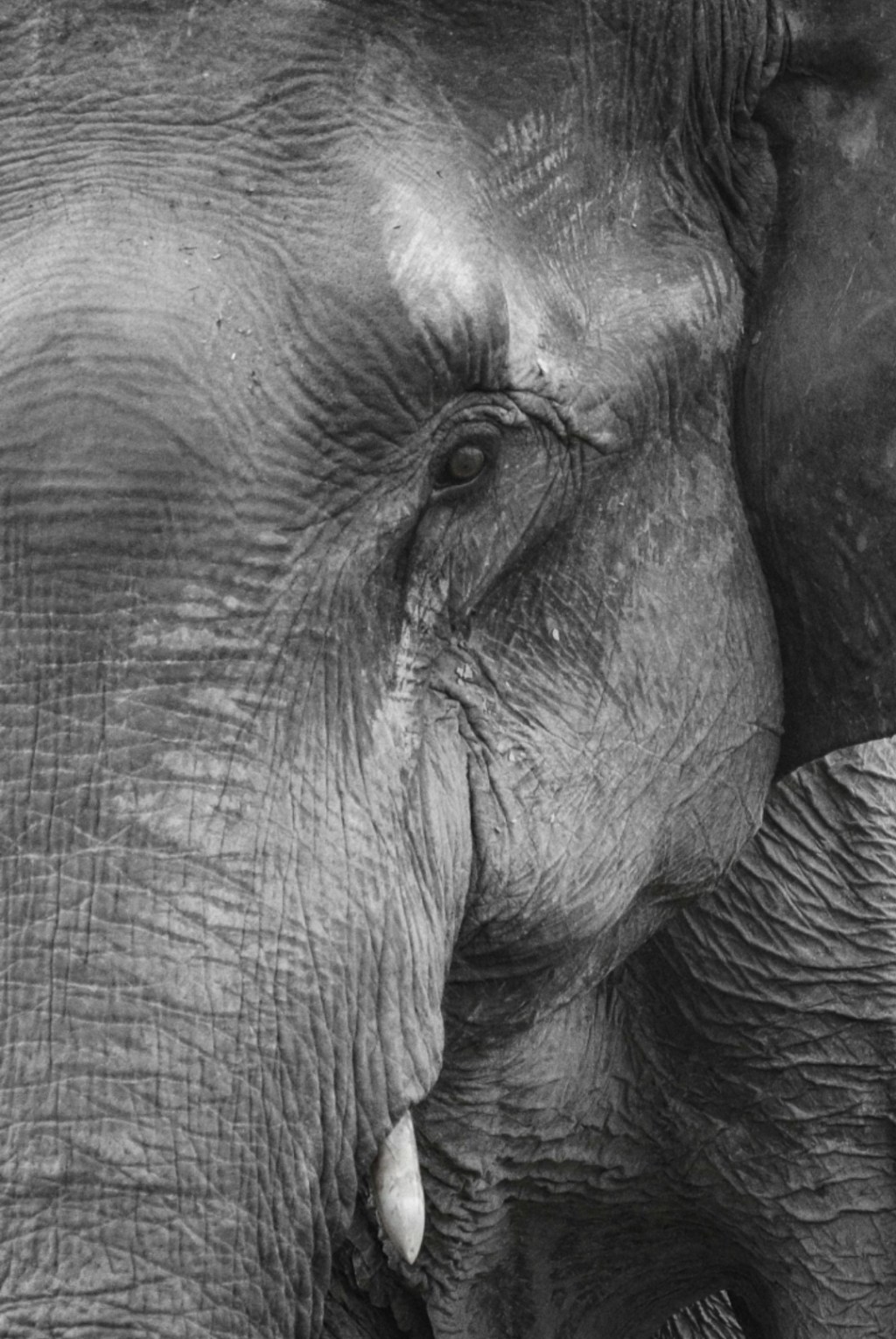
What is your favorite animal?
I try to answer the question
the way people expect answers—
quickly, cleanly,
with a photograph-ready certainty.
Lion, maybe, for courage.
Eagle, for vision.
Dog, for loyalty.
But my mind refuses to settle.
It wanders instead
to a quiet edge of memory
where the question loosens its grip
and becomes something else entirely.
Not what is your favorite animal,
but
which creature keeps finding you
when you are most yourself?
It appears first
not in the wild,
but inside the body.
A low hum in the ribs.
A patience in the breath.
A way of standing still
without feeling idle.
It is the elephant.
Not the postcard elephant—
not the tourist silhouette
or the ornamental tusks carved into souvenirs—
but the living, breathing weight of it.
The animal that carries history
in its bones.
I imagine its feet
pressing into red earth,
each step a deliberate conversation
with gravity.
Nothing rushed.
Nothing wasted.
The ground remembers the elephant
long after it has passed.
I think of how memory works the same way—
how some moments
leave shallow footprints
washed away by the next rain,
while others
compress themselves into us
until they become part of our shape.
The elephant walks with those moments.
It knows where the water hides
even in drought.
Knows how to circle back
to a place it last saw
decades ago,
as if time were merely
a long breath
taken slowly.
I envy that kind of remembering.
My own memories
often scatter like startled birds,
yet some griefs
stay enormous and unmoving,
blocking entire inner landscapes.
The elephant does not apologize
for its size.
It does not shrink
to make others comfortable.
It exists
with a gentleness that surprises
those who mistake quiet
for weakness.
I think of its trunk—
that impossible extension of self—
strong enough to uproot a tree,
delicate enough to lift a newborn,
curious enough to touch
what it does not yet understand.
How many ways of being
are braided into a single limb?
In that flexibility
I recognize a wish
I have never spoken aloud:
to be both firm and tender,
to hold the world without crushing it,
to investigate pain
without becoming it.
At night,
when sleep loosens the borders of thought,
the elephant grows larger.
It becomes a moving continent.
Stars scatter above its back
like salt on dark skin.
Its slow breathing
aligns with the pull of the moon.
I imagine the cosmos
not as a cold expanse,
but as a vast migration—
galaxies traveling together,
guided by invisible knowledge
older than fear.
The elephant fits here, too.
A celestial body
disguised as an animal.
A planet
that learned how to walk.
In its eye
there is no hurry.
Only recognition.
It looks at the universe
the way elders look at children—
with patience,
with a grief that has survived itself,
with the understanding
that everything breaks
and still deserves care.
I think of the herds,
how they move together
not as copies,
but as distinct stories
sharing direction.
No one left behind
unless death insists.
Even then,
the living return.
They touch bones.
They stand quietly
around what remains.
They mourn.
What kind of intelligence
pauses the journey
to honor absence?
In human cities,
we rush past our losses,
treat grief like an inconvenience,
schedule healing
between meetings.
The elephant refuses this.
It teaches that sorrow
is not a failure of strength,
but evidence of connection.
That remembering
is an act of love.
As the poem widens,
as my inner room opens windows
onto larger skies,
I realize the elephant
is not just an animal I admire.
It is a teacher
I keep circling.
It shows me how to be large
without domination.
How to be slow
without stagnation.
How to carry weight
without cruelty.
Somewhere beyond metaphor,
real elephants are walking—
through forests shrinking daily,
across borders drawn by hands
that forget how old the land is.
Their paths are interrupted
by roads,
by fences,
by human impatience.
The cosmos watches this too.
Stars that have burned for billions of years
witness a species
forgetting how to share space.
I wonder what the universe thinks
of our urgency,
our noise,
our belief that speed equals progress.
The elephant offers a counter-argument
without speaking.
Its body says:
Endurance is also a form of wisdom.
If I listen closely,
I hear that wisdom echo
inside my own chest.
A reminder
that I do not need to sprint
through every season.
That stillness
can be an active choice.
That memory,
even painful memory,
is a map, not a trap.
The question returns,
gentler now.
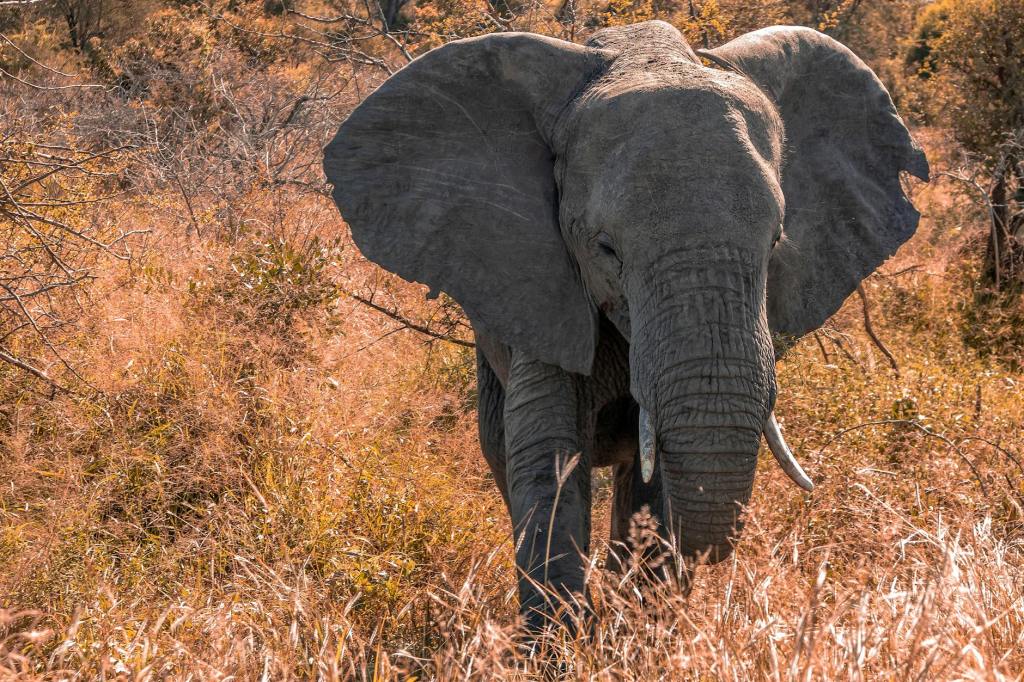
What is your favorite animal?
I answer differently.
Not as preference,
but as alignment.
The animal I walk with
is the one that teaches me
how to exist
in right proportion
to the world.
The one that reminds me
I am both dust and gravity,
both fleeting and consequential.
The elephant.
Heavy with history.
Soft with understanding.
Moving slowly enough
to let the universe
keep up.

 Between Stars & Silence
Hello. Thanks for visiting. I’d love to hear your thoughts! What resonated with you in this piece? Drop a comment below and let’s start a conversation.