There is a particular kind of quiet that arrives just before clarity.
Not the silence of answers, but the hush that comes when noise finally stops arguing with itself. Many readers recognize this feeling not in moments of triumph, but in the margins of long days—between meetings, after difficult conversations, or while rereading a sentence that insists on being understood differently.
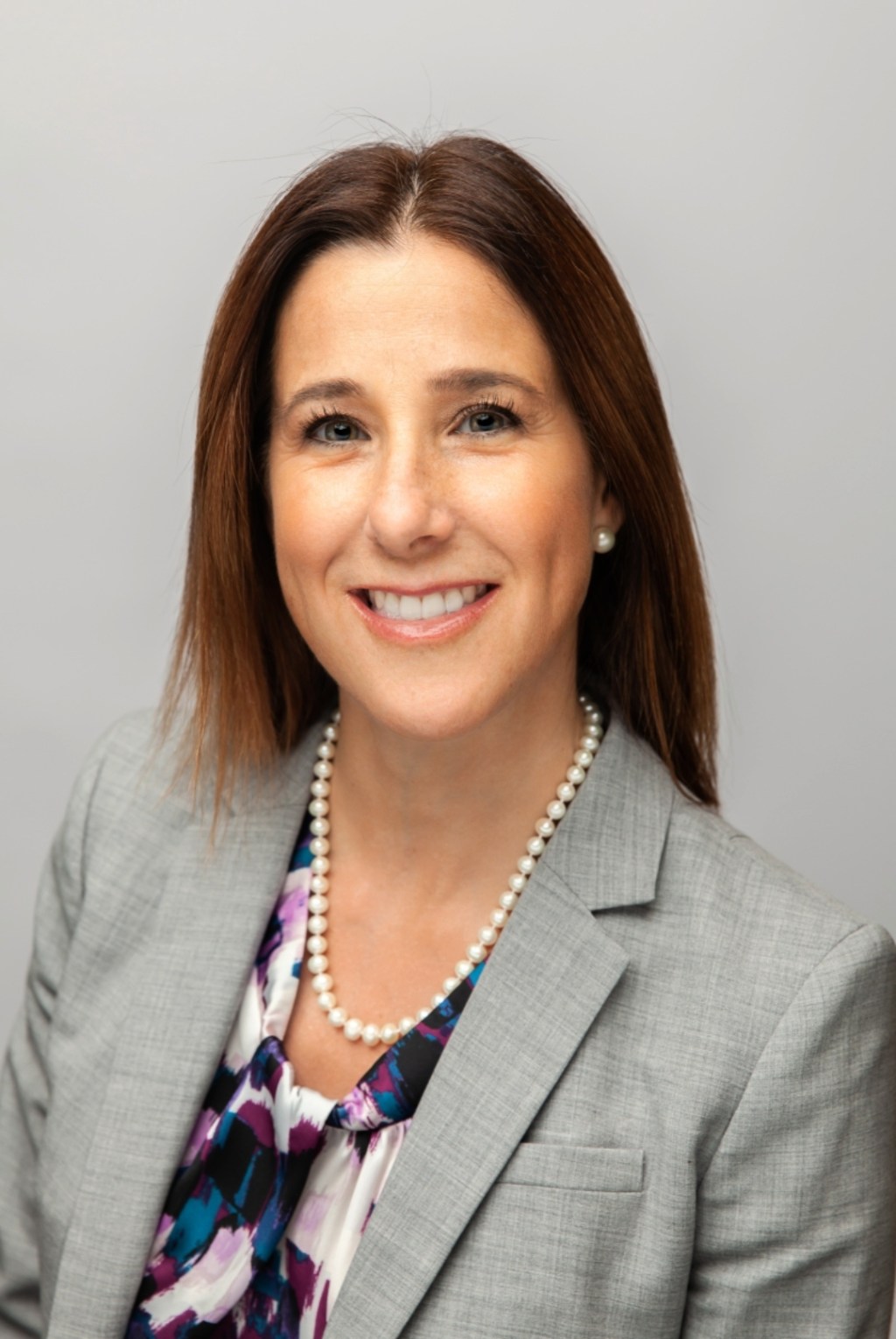
Michele Kline writes from that threshold.
An Argentinean immigrant who learned early how systems shape belonging, she has spent decades inside the machinery of organizations—hotels, teams, executive rooms—watching how chaos accumulates when people are unheard, and how relief spreads when structure meets care. Her work does not romanticize leadership. It steadies it. Grounds it. Gives it a pulse.
Unclear Processes, Brittle Cultures, Habits that no Longer Serve
As the founder and CEO of Kline Hospitality Consulting, Michele has earned a reputation as a “fixer,” though she would likely resist the word. What she actually fixes are conditions: unclear processes, brittle cultures, habits that no longer serve. With equal fluency in Kaizen, Six Sigma, and human conversation, she translates rigor into relief. Her credibility arrives quietly—through consistency, through listening, through systems that work because people do.
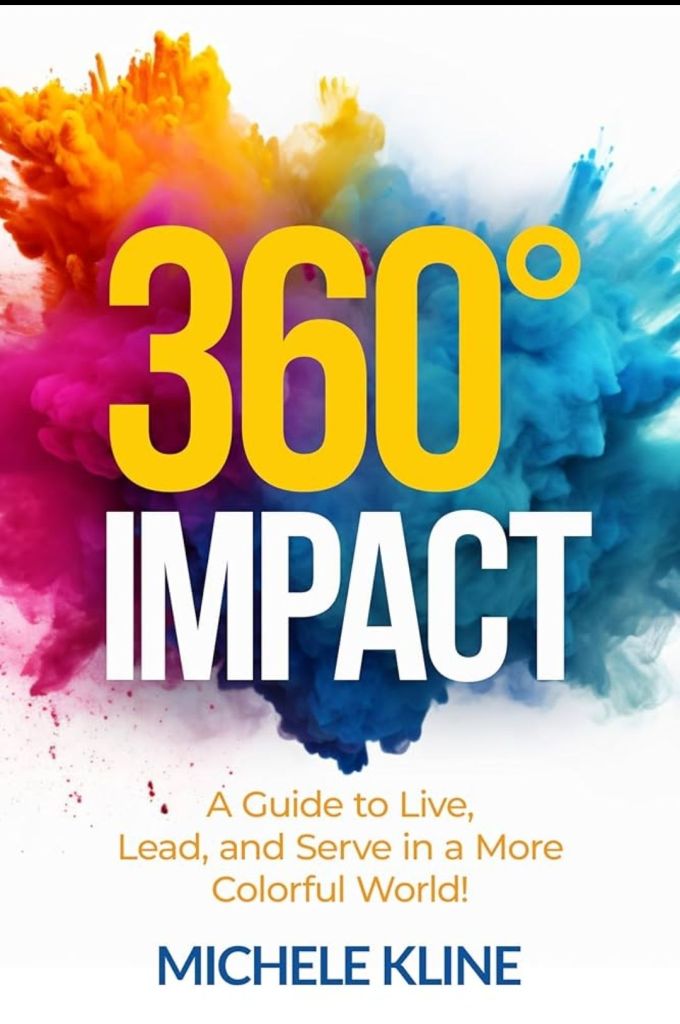
Her latest book, 360° IMPACT: A Guide to Live, Lead, and Serve in a More Colorful World!, continues this philosophy. It is neither manifesto nor manual. It reads more like a conversation held over time—layered with tools, humor, and an insistence that leadership is not a role but a practice of attention.
This interview unfolds in that same spirit. Not as a questionnaire, but as a shared pause. A place to consider what leadership asks of us now, and what it gives back when approached with intention.
The Human Threshold
Q1. What was the first quiet signal that 360° IMPACT wanted to exist, even before it had a name?
MK: The first signal came as a deep, persistent feeling that leaders were overwhelmed by complexity yet desperate for clarity. I kept noticing the same patterns in the people I coached: burnout disguised as busyness, operational mastery without human connection, and moments of brilliance trapped by indecision. I realized there was a need for a guide that didn’t just teach strategy or efficiency, but one that held space for the human in the system.
Q2. Was there a moment during the writing when the book surprised you—by resisting, or by revealing something you hadn’t planned to say?
MK: Absolutely. Midway through writing, I found myself admitting truths about my own fear of failure and the imposter moments I’d carried as an immigrant entrepreneur. The book began to ask me to be vulnerable, and in doing so, it became not just a manual for others, but a reflection of my own leadership journey.
Q3. How do you know when your work is meant to teach, and when it is meant simply to accompany someone?
MK: Teaching happens when there’s a principle or framework that can shift behavior. Accompanying happens when someone needs a mirror or a hand to hold through reflection. I listen first: if someone’s ready for action, I provide tools; if they’re in transition, I focus on presence and guidance.
Craft, Memory, Tension
Q4. Your work lives at the intersection of systems and empathy. How do you prevent structure from becoming rigid while still making it dependable?
MK: I treat structure as scaffolding, not a cage. The frameworks I build are meant to hold people up while allowing movement. I encourage regular reflection, iteration, and feedback loops both from teams and from myself so the system adapts as circumstances change. Structure without flexibility is control; structure with empathy is resilience.
Q5. What part of leadership do people most often misunderstand when they focus only on performance metrics?
MK: They forget the human currency. Metrics matter, but influence, trust, and psychological safety are what sustain results. A leader can hit numbers short-term while eroding culture, and that’s where the real cost hides. Leadership is about performance, yes, but also about presence and integrity.
Q6. When you’re coaching founders or executives, what patterns of fear show up most consistently beneath the surface?
MK: Fear of being exposed, fear of disappointing others, and fear that change will reveal inadequacy. Most leaders project confidence, but underneath there’s a tension between ambition and vulnerability. Helping them acknowledge it is the first step to courage in action.
What do Ideas Need to Finally Arrive Whole?
Q7. Which idea in this book took the longest to mature—and what did it need from you to finally arrive whole?
MK: The 360° perspective itself, the idea that influence, systems, and human connection are inseparable took the longest. It needed patience, lived experience, and a willingness to see mistakes as data rather than failure. I had to let the concept breathe through stories, examples, and reflection before it felt complete.
Q8. You’re known as a connector. How do you decide when to connect people, and when to let them sit with their own discomfort a little longer?
MK: I consider the intention behind the connection. If someone is ready to grow through dialogue, I facilitate it. If they need to wrestle with their own reflection first, I step back. Discomfort is often the soil where insight grows; connection without readiness can overwhelm rather than uplift.
Q9. How has your experience as an immigrant shaped the way you see hierarchy, authority, and voice in organizations?
MK: Being an immigrant taught me humility and observation. I’ve learned to listen for the untold stories, notice when voices are marginalized, and understand that authority doesn’t guarantee wisdom. I advocate for inclusive dialogue, ensuring that people at every level feel heard and valued.
Philosophy & Being
Q10. What does leadership give you that no other form of work does?
MK: Leadership gives me the privilege of shaping human experience on a meaningful scale. It allows me to witness transformation in real-time both in individuals and organizations and to create ripples that extend beyond my immediate reach. There’s an intimacy in guiding growth that no other work provides.
Q11. How has your relationship with uncertainty changed over the years—personally and professionally?
MK: I’ve moved from fear to curiosity. Early in my career, uncertainty felt like a threat. Now I see it as a sign that growth is happening. Professionally, it allows me to experiment and pivot without paralysis. Personally, it’s taught me resilience and trusting in the process.
Q12. Do you believe organizations can heal people, or only reveal what is already unaddressed?
MK: Organizations rarely heal in isolation. They reveal patterns, gaps, and unaddressed tensions, and those who engage consciously can transform themselves. Healing is personal, but organizations provide the context and support that can catalyze it. Leadership sets the tone.
Why Humor Disappear Under Pressure?
Q13. Where does humor belong in serious work, and why is it often the first thing to disappear under pressure?
MK: Humor is essential for perspective and resilience. It allows teams to diffuse tension and remain human under stress. It disappears because people confuse gravity with control, thinking seriousness equals credibility. In reality, levity strengthens focus, creativity, and connection.
Q14. What does it mean to lead with intention in a world addicted to urgency?
MK: It means resisting the pressure to react and instead choosing action aligned with values. It’s about clarity over speed, presence over busyness, and decisions that reflect purpose rather than panic. Leading with intention creates space for thoughtfulness and sustainable impact.
Resonance, Not Resolution
Q15. What do you hope lingers with a reader long after they close 360° IMPACT?
MK: I hope they remember that leadership is not about perfection or control, but about courage, presence, and clarity. I want them to carry the idea that transformation is possible when systems, people, and heart align, and that their influence can ripple far beyond immediate outcomes.
Q16. What are you still learning to listen to—in yourself, and in the rooms you enter?
MK: I am learning to listen to subtle tensions, unsaid emotions, and the quiet signals that reveal truth. In myself, it’s recognizing when ego or bias is coloring perception. In rooms, it’s noticing who isn’t speaking and why, because insight often hides in silence.
Q17. What question are you carrying forward into your next season of work?
MK: “How can I create systems that empower people while still honoring their humanity?” That question drives my ongoing exploration of operational excellence, leadership, and culture. It challenges me to innovate without losing empathy, and to build organizations where people thrive alongside results.
Echo & Continuity
Some conversations do not end; they simply slow down.
What emerges from time spent with Michele Kline is not a single philosophy, but a posture—a way of standing inside complexity without needing to dominate it. Her language returns again and again to clarity, not as simplification, but as care. To systems, not as control, but as relief. To leadership, not as visibility, but as responsibility.
In a cultural moment that rewards speed, this conversation lingers instead on alignment. On listening as a discipline. On the idea that impact, when it is real, moves in all directions at once.
For readers of PebbleGalaxy, this interview lives comfortably among reflections on inner worlds, mindful work, and slow living. It belongs to the same family of questions that poetry asks in different language: How do we inhabit our roles without losing ourselves? What does it mean to serve well? And what kind of attention does the world ask of us now?
There is no conclusion here—only a widening circle.
A reminder that leadership, like reading, is ultimately an act of presence.


 Poetry Hub
Hello. Thanks for visiting. I’d love to hear your thoughts! What resonated with you in this piece? Drop a comment below and let’s start a conversation.