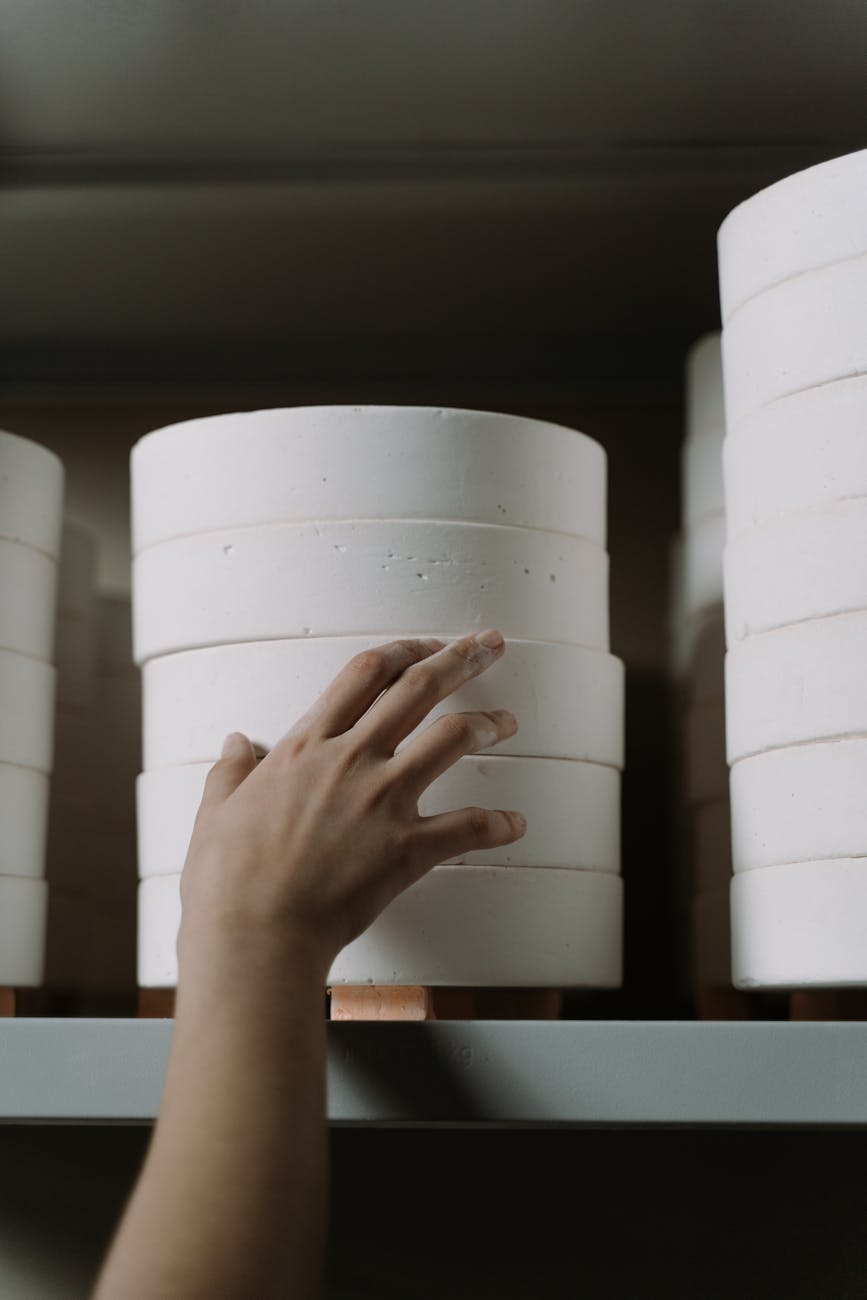
There is a moment, just before the day fully awakens, when the world feels untouched—like a thought that has not yet been spoken. In many homes, this moment carries a familiar rhythm: milk warming slowly on a stove, rising gently, as if remembering its origin in grass, in earth, in the quiet labor of animals and hands.
Then, almost imperceptibly, transformation begins.
A few drops of lemon, a trace of vinegar—something small, almost insignificant—enters the milk. And suddenly, the continuity breaks. What was whole begins to separate. Curds gather. Whey drifts away. Structure emerges from disruption.
Paneer is born not through force, but through a quiet undoing.
And perhaps this is why it invites reflection. Because in its making, paneer mirrors something deeply human: that clarity often arrives only after disturbance, that form is shaped by what we let go, and that nourishment, like meaning, is rarely simple.
“Softness is not purity. It is composition.”
We tend to think of paneer in practical terms—soft or hard, fresh or packaged, good or bad. But beneath these categories lies a more intricate reality. Paneer is not a singular entity. It is a living intersection of chemistry, craft, commerce, and perception.
At its most fundamental level, paneer is a structure of proteins—casein molecules that coagulate under heat and acid, forming a delicate network that traps fat and water within it. This network is not static. It responds. It shifts depending on how it is treated.
A softer paneer is not merely “better made.” It is composed differently. It holds more moisture—sometimes up to 55–60%. It carries more fat, often exceeding 20–25 grams per 100 grams. The fat softens the protein matrix, allowing it to yield easily, to dissolve gently against the palate.
A firmer paneer tells a different story. Pressed longer, stripped of excess whey, its structure tightens. Moisture drops closer to 45–50%. The protein becomes more concentrated, the bite more defined. It resists slightly before giving way.
And yet, in the language of everyday choice, softness is often equated with quality.
We reach instinctively for what feels luxurious, what melts, what comforts. But softness is not a measure of purity. It is a reflection of composition—of fat, of water, of process.
This is the first quiet misunderstanding that paneer reveals.
Beyond the kitchen, paneer lives within systems far larger than the act of making it.
In traditional homes, paneer was an intimate process. Milk was fresh, its source known. The transformation was immediate. There was little need for preservation, standardization, or scale.
Today, paneer moves through vast networks.
Milk is collected, standardized, sometimes homogenized. Fat levels are adjusted to ensure consistency. Coagulation is controlled with precision. Pressing is calibrated. Packaging extends shelf life. Cold chains carry it across cities and states.
In this world, paneer becomes predictable.
A block purchased in one place resembles a block purchased elsewhere. It behaves reliably in cooking. It satisfies expectations.
And yet, something subtle shifts in this predictability.
Fresh paneer from a smaller dairy or a farm-based source often feels different—not just in texture, but in presence. Its softness is not engineered; it is retained. Its flavor is not perfectly neutral; it carries traces of its origin. Its moisture varies slightly, as nature does.
It is less consistent, and therefore, more real.
This is the quiet paradox of modern food: the more we refine it for uniformity, the further it moves from its original character.
“The more consistent food becomes, the less it resembles nature.”
Within this spectrum, different paneers emerge—not as better or worse, but as expressions of intention.
There is malai paneer, rich with cream, high in fat, soft to the point of indulgence. It nourishes through comfort, through familiarity, through a sense of abundance.
There is regular paneer, balanced in composition, firm enough to hold its shape, soft enough to absorb flavor. It exists in the middle ground, where most daily meals unfold.
And then there is high-protein paneer, structured, deliberate, designed for efficiency. Lower in fat, higher in protein density, it reflects a modern relationship with food—goal-oriented, measured, optimized.
Each of these forms carries a different philosophy.
One invites ease.
One supports routine.
One demands discipline.
None are inherently superior. They simply answer different questions.
Nutrition, too, reveals its own quiet complexities.
Paneer is often valued for its protein—typically ranging from 18 to 25 grams per 100 grams. It offers calcium, essential for bone health, often around 400 to 500 milligrams. Its caloric content varies, shaped largely by fat.
But numbers alone do not tell the full story.
A softer paneer may contain slightly less protein per gram—not because it lacks protein, but because it contains more water. A firmer paneer may appear denser, its protein more concentrated, but its sensory experience less yielding.
In this way, paneer reminds us that nutrition is not just about quantity. It is about context—how food is structured, how it is consumed, and how it is integrated into life.
A piece of paneer eaten slowly, with awareness, may nourish differently than one consumed hurriedly, regardless of its protein content.
There is, however, a deeper layer that often goes unnoticed—the question of purity.
In a world where food travels long distances and passes through multiple hands, trust becomes an invisible ingredient.
Most established dairy systems maintain standards. Their paneer is real, regulated, consistent. Yet outside these systems, in less controlled environments, imitation can emerge—products that resemble paneer but are composed differently, sometimes using vegetable fats or starches.
These imitations are not always easy to detect.
They may look similar. They may even feel similar.
And so, purity becomes less about appearance and more about understanding.
It asks of us a different kind of engagement—not just tasting, but questioning. Not just consuming, but knowing.
And then there is the most subtle dimension of all—the human relationship with paneer.
Because paneer is rarely just food.
It is memory.
It is the softness of a meal prepared by someone who cared.
It is the familiarity of a taste that does not surprise, but reassures.
It is the quiet certainty that something, at least, remains unchanged.
In choosing paneer, we often choose more than nutrition.
We choose comfort or control.
We choose indulgence or restraint.
We choose what aligns with who we believe we are—or who we are trying to become.
A softer paneer may feel like kindness.
A firmer paneer may feel like discipline.
A premium paneer may feel like assurance.
These are not nutritional categories. They are reflections of inner states.
“Purity is not visible; it must be understood.”
So the question that remains is not which paneer is best.
It is whether we are paying attention.
Do we notice the difference between softness and structure?
Do we understand why one paneer yields and another resists?
Do we consider the journey it has taken to reach us?
Or do we move through these choices unconsciously, guided by habit, by assumption, by convenience?
Paneer, in its quiet way, asks for awareness.
It asks us to see beyond surface, beyond texture, beyond labels.

In the end, paneer is a simple thing.
Milk, transformed.
And yet, within that transformation lies a gentle teaching—that what nourishes us is not only what we consume, but how we understand it.
Because when we begin to see our food clearly—not just as product, but as process, as intention, as relationship—we begin, almost without noticing, to see ourselves with the same clarity.
And perhaps, in that small shift of awareness, something within us also begins to take form.
And so, in the quiet presence of something as simple as paneer, we are invited to pause.
To notice not just its softness or firmness, but the journey it carries—from milk to form, from nature to system, from choice to consequence.
Because in learning to see our food clearly, we begin, almost gently, to see ourselves with the same honesty.
And perhaps that is where true nourishment begins.
Key Takeaways — Fresh Paneer
- Softness is composition, not quality
Softer paneer contains more fat and moisture (often ~55–60% water). It feels richer but isn’t inherently “better.” - Firm paneer is structurally denser
Lower moisture (~45–50%) and tighter protein networks make it firmer, often with slightly higher protein concentration per bite. - Fat drives texture and experience
Higher fat (20–25g/100g in malai paneer) creates a creamy, melt-in-mouth feel. Lower fat leads to a drier, chewier texture. - Moisture creates the illusion of softness
What feels “juicy” is often water retention—not necessarily superior nutrition. - Processing defines paneer more than branding
Coagulation method, pressing intensity, and milk standardization shape texture far more than the brand name itself. - Industrial vs fresh paneer is a trade-off
Packaged paneer offers consistency and safety; fresh or farm-based paneer offers variability and a closer link to its source. - Nutrition is contextual, not absolute
Paneer typically delivers ~18–25g protein, ~20–25g fat, and ~260–320 kcal per 100g—but these vary by variant (malai, regular, high-protein). - High-protein paneer is engineered for efficiency
Lower fat, higher density, firmer bite—suited for fitness goals rather than indulgence. - Purity cannot be judged by texture alone
Real paneer and analogue paneer can look similar; awareness of source and ingredients matters more than feel. - Branded paneer generally ensures safety
Established dairy brands follow regulatory standards; risks are higher in unregulated or very low-cost sources. - Paneer is both food and emotional memory
It carries associations of comfort, home, and familiarity—shaping perception beyond its nutritional profile. - Food choices reflect inner states
Preference for soft, firm, premium, or high-protein paneer often mirrors lifestyle priorities—comfort, discipline, control. - Awareness transforms nourishment
Understanding what you eat—its composition, origin, and intent—is as important as the nutrients it provides. - The deeper insight
Paneer teaches that transformation, balance, and awareness exist even in the simplest things we consume daily.

Leave a Reply