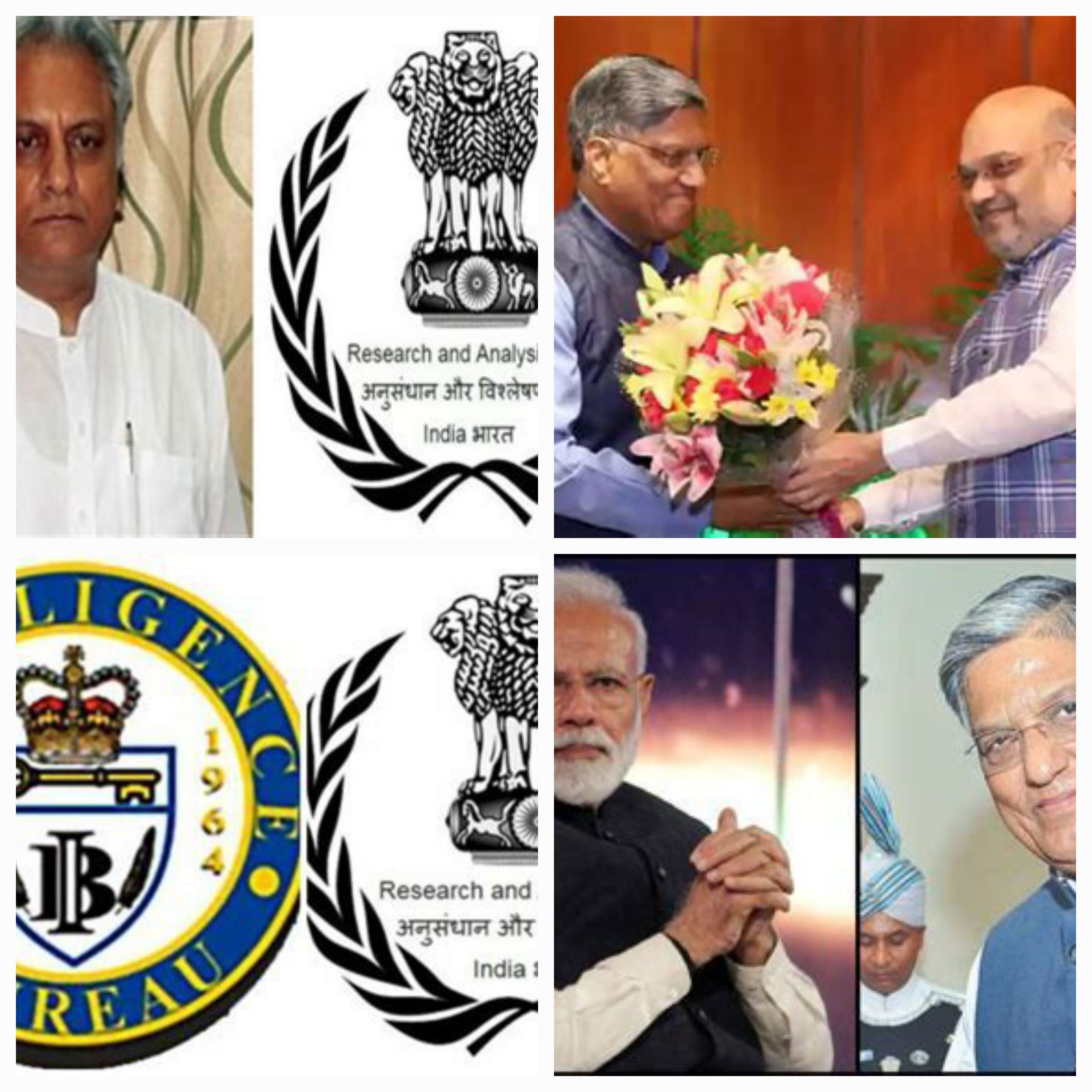
Anil Dhasmana: The Spy Master Who Leads India’s Eye in the Sky
Anil Dhasmana is no stranger to the world of espionage and covert operations. He is the former chief of the Research and Analysis Wing (R&AW), India’s premier foreign intelligence service, and the current chief of the National Technical Research Organisation (NTRO), India’s technical body that is responsible for geospatial intelligence and satellite imagery.
Some of the top achievements of Anil Dhasmana during his tenure as the chief of R&AW are:
He was the lead planner of the Balakot air strikes in February 2019, a daring and unprecedented operation that targeted a terrorist training camp in Pakistan.
He oversaw several other operations against Pakistan and China, such as the surgical strikes in September 2016, the Doklam standoff in June-August 2017, and the capture of Kulbhushan Jadhav, an Indian naval officer who was allegedly abducted by Pakistani agents from Iran and accused of espionage.
He played a key role in strengthening India’s relations with its allies and partners, such as the US, Israel, France, Russia, and the Gulf countries, and enhancing intelligence sharing and tackling various crucial issues of utmost importance.
Dhasmana was appointed as the chief of NTRO in September 2021, after a gap of more than two years since he stepped down from R&AW in June 2019. His appointment came at a time when India faces multiple security challenges from its neighbours, especially Pakistan and China, and needs to enhance its intelligence capabilities and coordination.
A Career in Intelligence
Dhasmana, a 1981 batch Indian Police Service officer, joined R&AW in 1993 from his parent cadre Madhya Pradesh. He has a master’s degree in commerce from Uttar Pradesh and is a native of Pauri, Uttarakhand.
He is considered an expert on Pakistan, Afghanistan, Balochistan, and Islamic affairs. He has served as the chief of station in London and Frankfurt, and the chief of station, SAARC & Europe desks. He has also handled the counter-terrorism and covert action division of R&AW.
He was appointed as the chief of R&AW in January 2017, succeeding Rajinder Khanna. He was the lead planner of the Balakot air strikes in February 2019, after Pakistan-backed terrorists killed 40 CRPF soldiers in the Pulwama car bombing. The air strikes were a daring and unprecedented operation that targeted a terrorist training camp in Pakistan’s Khyber Pakhtunkhwa province, and marked a paradigm shift in India’s response to cross-border terrorism.
He also oversaw several other operations against Pakistan and China during his tenure, such as the surgical strikes in September 2016, the Doklam standoff in June-August 2017, and the capture of Kulbhushan Jadhav, an Indian naval officer who was allegedly abducted by Pakistani agents from Iran and accused of espionage.
He also played a key role in strengthening India’s relations with its allies and partners, such as the US, Israel, France, Russia, and the Gulf countries, and enhancing intelligence sharing and cooperation on various issues of mutual interest.
He retired from R&AW in June 2019, after his term was extended by six months due to the general elections. He was felicitated by Home Minister Amit Shah at a dinner in July 2019, where he was praised for his outstanding service and contribution to the nation’s security.
A New Challenge
After a brief hiatus, Dhasmana returned to the center of action in September 2021, when he was appointed as the chief of NTRO, succeeding former Intelligence Bureau officer Satish Jha. NTRO is a technical intelligence agency that was established in 2004, after the Kargil war exposed the gaps in India’s intelligence gathering and analysis. NTRO works closely with R&AW, IB, and the armed forces, and provides them with vital inputs from various sources, such as satellites, radars, drones, communications, cyber, and signals.
Dhasmana’s appointment as the chief of NTRO is seen as a sign of greater coordination and synergy between R&AW and NTRO, and a more aggressive stance against India’s rivals. NTRO plays a crucial role in tracking the movements and activities of the China’s People’s Liberation Army near the many friction points along the Line of Actual Control, where both sides have deployed thousands of troops and heavy equipment since May 2020. The standoff has resulted in several violent clashes, including the Galwan Valley incident in June 2020, where 20 Indian soldiers and an unknown number of Chinese soldiers were killed.
NTRO also monitors the activities of Pakistan’s military and intelligence agencies, and their support to various terrorist groups that target India. NTRO has been instrumental in providing actionable intelligence that has helped to foil several terror plots and attacks, such as the Pathankot airbase attack in January 2016, the Uri army base attack in September 2016, and the Nagrota army camp attack in November 2016.
NTRO also has a mandate to protect India’s critical infrastructure and cyberspace from external threats and attacks. NTRO has a cyber security division that is responsible for detecting and countering cyber attacks on India’s government, military, and civilian networks and systems. NTRO also has a cyber offensive capability that can launch cyber attacks on the adversaries’ networks and systems.
A Vision for the Future
Dhasmana is expected to bring his vast experience and expertise to the helm of NTRO, and lead the agency to new heights of excellence and efficiency. He is likely to focus on enhancing the technical capabilities and capacities of NTRO, and ensuring that it provides timely and accurate intelligence to the decision-makers and the operational agencies. He is also likely to foster a culture of innovation and collaboration within NTRO, and with other intelligence and security agencies.
Dhasmana is also likely to leverage his contacts and rapport with the foreign intelligence agencies, and seek to expand and deepen the intelligence cooperation and exchange with them, especially on the issues of common concern and interest, such as terrorism, extremism, proliferation, and regional stability.
Dhasmana is also likely to face some challenges and constraints in his new role, such as the budgetary and bureaucratic hurdles, the legal and ethical dilemmas, the technological and operational gaps, and the external and internal threats and risks. He will have to balance the demands and expectations of various stakeholders, and maintain the secrecy and integrity of the agency and its operations.

As the new chief of NTRO, Anil Dhasmana has taken some major steps to enhance the agency’s performance and efficiency. Some of these steps are:
He has initiated a modernization and expansion plan for NTRO, which includes upgrading the existing infrastructure, acquiring new technologies and equipment, and increasing the manpower and budget of the agency.
He has established a closer coordination and collaboration with R&AW, IB, and the armed forces, and ensured that NTRO provides timely and accurate intelligence inputs to them on various security issues, especially the border situation with China and Pakistan.
He has also strengthened the cyber security and cyber warfare capabilities of NTRO, and developed a robust mechanism to detect and counter cyber attacks on India’s critical networks and systems, as well as to launch cyber operations against the adversaries.
He has also enhanced the intelligence cooperation and exchange with the foreign intelligence agencies, especially the US, Israel, France, Russia, and the Gulf countries, and sought to share and receive vital information and analysis on the common threats and challenges.
Dhasmana is a seasoned and respected spy master, who has served the nation with dedication and distinction. He is the man who leads India’s eye in the sky, and the one who keeps a watchful eye on India’s enemies and friends. He is the one who knows the secrets and the truths, and the one who shapes the outcomes and the futures. He is Anil Dhasmana, the chief of NTRO.


Leave a Reply