Suspension of Disbelief: Willingly Accepting Improbabilities in Storytelling
All forms of storytelling and creative works require the audience or reader to willingly suspend their disbelief and accept certain improbabilities, contradictions, or physical impossibilities within the boundaries of the story or narrative world. This suspension of disbelief is what allows audiences to immerse themselves in fictional realms and fully engage with the characters, plots, themes and messages being conveyed. It is a crucial facet of creative storytelling that has been an integral part of oral traditions, novels, plays, films and other art forms across cultures throughout history.
In Western literary criticism, the term “suspension of disbelief” was coined by the philosopher and poet Samuel Taylor Coleridge in 1817 to describe this phenomena. However, the basic concept has always been an unspoken part of human storytelling practices. Ancient myths, legends, folktales and epics from around the world relied on audiences being able to believe in fantastical elements like gods, monsters, magic and other supernatural forces for the sake of enjoyment and meaning-making. Stories allowed listeners and readers to stretch the boundaries of realism and bring wonder, excitement and deeper understanding into people’s lives.
Some clear examples of suspension of disbelief appear in ancient mythology. In Greek myths, audience had to accept tales of gods and goddesses possessing superhuman abilities to control nature and interfere in human affairs. Norse legends portray gods like Thor wielding powerful hammers and lightning bolts. Hindu scriptures like Ramayana require faith in stories where monkeys and bears assist gods in battles. Arabic folktales speak of genies granting wishes from lamps and bottles. In each case, the improbable fanciful forces were embraced as part of the imaginative narrative experience.
Folktales passed down orally across generations in Africa, Asia, Europe and elsewhere also thrived on suspension of disbelief. Tales often featured anthropomorphized animals assuming human traits and behaviors or described magical feats that stretched believability. West African folktale tricksters like Anansi the spider used clever lies and shapeshifting that could not literally occur, yet audiences willingly went along with the imaginative tales. Native American folk heroes Coyote and Raven used nonsense jokes and implausible antics that were entertaining despite lacking realism. Suspension of disbelief allowed the impossible to become possible within the bounds of each story.
In medieval Europe, early novels like Geoffrey Chaucer’s Canterbury Tales and anonymous works like Beowulf required readers to accept fantastical quests, magical devices, and supernatural elements as standard conventions. As the genre evolved, early modern romance novels like Miguel de Cervantes’ Don Quixote leaned into parody by having the titular character misread chivalric romances as real life, showing how suspension of disbelief was an awareness even as it was practiced. Jonathan Swift’s Gulliver’s Travels took satire to an extreme by describing the bizarre societies and cultures its protagonist encountered, a hyperbolic stretch of imagination that captivated 18th century readers.
Across various regions and eras, plays and theatrical performances that brought myths, legends and folktales to life on stage further demonstrated suspension of disbelief. Noh dramas in medieval Japan featured masked actors portraying spirits, while shadow puppet plays in Indonesia depicted stories from the Mahabharata and Ramayana with two-dimensional leather figures. Elizabethan dramatists like Shakespeare wove fantastical elements like witches, ghosts and parallel worlds into masterful tragedies and comedies to awaken wonder in audiences. Surrealist magic realism in Augusto Boal’s Theatre of the Oppressed techniques blurred fictional lines to spark empathy and social commentary.
Unique examples exist as well in less mainstream writings. The 15th century Moroccan Sufi allegory The Conference of the Birds by Attar shows birds embarking on a quest to find their king, representing a spiritual journey, asking readers to embrace symbolic meaning over logic. Hundreds of years later in Mexico, short tales collected by anthropologist Miguel León-Portilla in Native Mesoamerican Spirituality depict precognitive dreams, plant transformations and prophesies that bend natural laws for mystical insight. In India, Tamil folklore poems called Pathinen Kural depict talking birds and shape-shifting animals embroiled in humorous disputes, suspending reality for communal entertainment.
Across film history globally, suspension of disbelief has been crucial from silent movies through contemporary blockbusters. Early cinematic achievements like Fritz Lang’s German Expressionist masterpiece Metropolis (1927) brought dystopian urban futures to life through miniatures and matte paintings. Akira Kurosawa fused samurai dramas with fantasy in legendary Japanese films like Throne of Blood (1957), based on Macbeth. Bollywood musicals envelop audiences in dynamic song and dance sequences that transcend plausibility. Animated Disney classics make the impossible possible through scores, visuals and heart, transporting viewers of all ages. Contemporary franchises like Harry Potter, Star Wars and Marvel superhero movies imaginatively expand our worlds through imaginary rules and virtual realities that we buy into through empathy for characters.
In the digital age, suspension of disbelief takes on new dimensions through immersive technologies. From high-concept virtual reality adventures to elaborately programmed alternate reality games, interactive fictions actively engage participants mind, body and spirit. As storytelling pushes further into virtual domains, inherited willingness to suspend disbelief will remain key to transporting humans into meaningful possible worlds beyond present limits. Throughout diverse traditions, creative works grant the gift of envisioning other realities – a testament to the human innate capacity for imagination that makes belief in impossible possible.
In conclusion, the practice of suspension of disbelief has transcended geographical and chronological borders as an intrinsic and beneficial part of how humans relate to creative arts. By willingly stretching the bonds of reason and realism when entering narrative realms, audiences throughout history have been able to glean deeper insights, connections and catalyze social change through empathizing with improbable characters and scenarios. As new mediums emerge, this willingness to imaginatively engage alternative realms through suspending disbelief will surely continue enabling meaningful storytelling to inspire and transform.

Let me write a short children story using this feature extensively. Here it goes:
“The Magical Meadow Adventure”
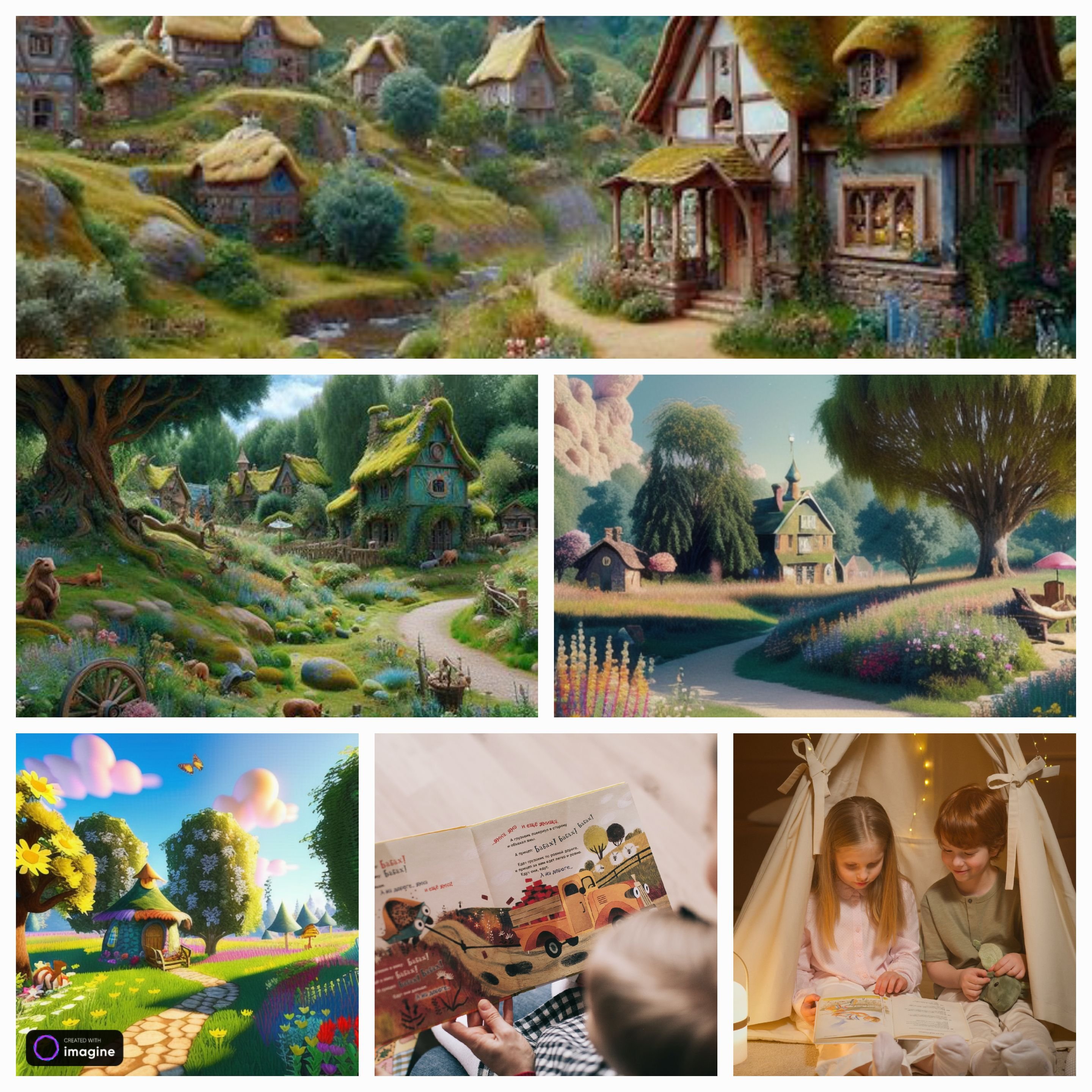
Once upon a time in the quaint village of Willowridge, there was a peculiar meadow hidden at the edge of the enchanted forest. In this magical meadow, animals spoke in rhymes, and flowers sang lullabies to the breeze.
One sunny day, a curious bunny named Cotton ventured into the meadow. To his surprise, the daisies whispered tales of a hidden treasure guarded by a friendly dragon named Sparklefire. With wide-eyed wonder, Cotton hopped towards the ancient oak tree, where a wise owl named Whisker was perched.
“Dear Cotton,” Whisker hooted, “To find the treasure, you must first dance with the giggling butterflies and solve the riddles of the chatty mushrooms.”
Cotton, eager for adventure, twirled with the butterflies, who tickled him with their delicate wings. The mushrooms giggled as they presented him with riddles that made his fluffy ears twitch with excitement.
Following Whisker’s guidance, Cotton reached the crystal-clear pond where a talking fish named Bubbles awaited. Bubbles shared the secret code to enter Sparklefire’s lair – a melody that only the whispering wind knew.
With determination, Cotton hummed the magical tune, and the wind carried his melody to Sparklefire’s ears. The dragon, a shimmering kaleidoscope of colors, appeared with a warm, friendly smile.
“Brave bunny,” Sparklefire purred, “To claim the treasure, you must catch the moonlight in this enchanted acorn.”
Cotton, trusting the whimsy of the meadow, chased the moonlight as it danced through the tall grass. With a twinkle in his eye, he captured the silvery glow in the acorn.
As a reward, Sparklefire unveiled the treasure – a chest of rainbow-colored wishes. Cotton’s heart fluttered with joy as he made a wish for every friend in Willowridge. The wishes twinkled in the air like fireflies, bringing magic and happiness to the village.
And so, with the treasure of wishes, Cotton returned to Willowridge, sharing the enchanting tale of the magical meadow, where dreams come alive in the dance of butterflies and the laughter of mushrooms. The children of Willowridge listened wide-eyed, their imaginations ignited by the extraordinary adventure of a bunny who believed in the magic of the meadow.

Leave a Reply