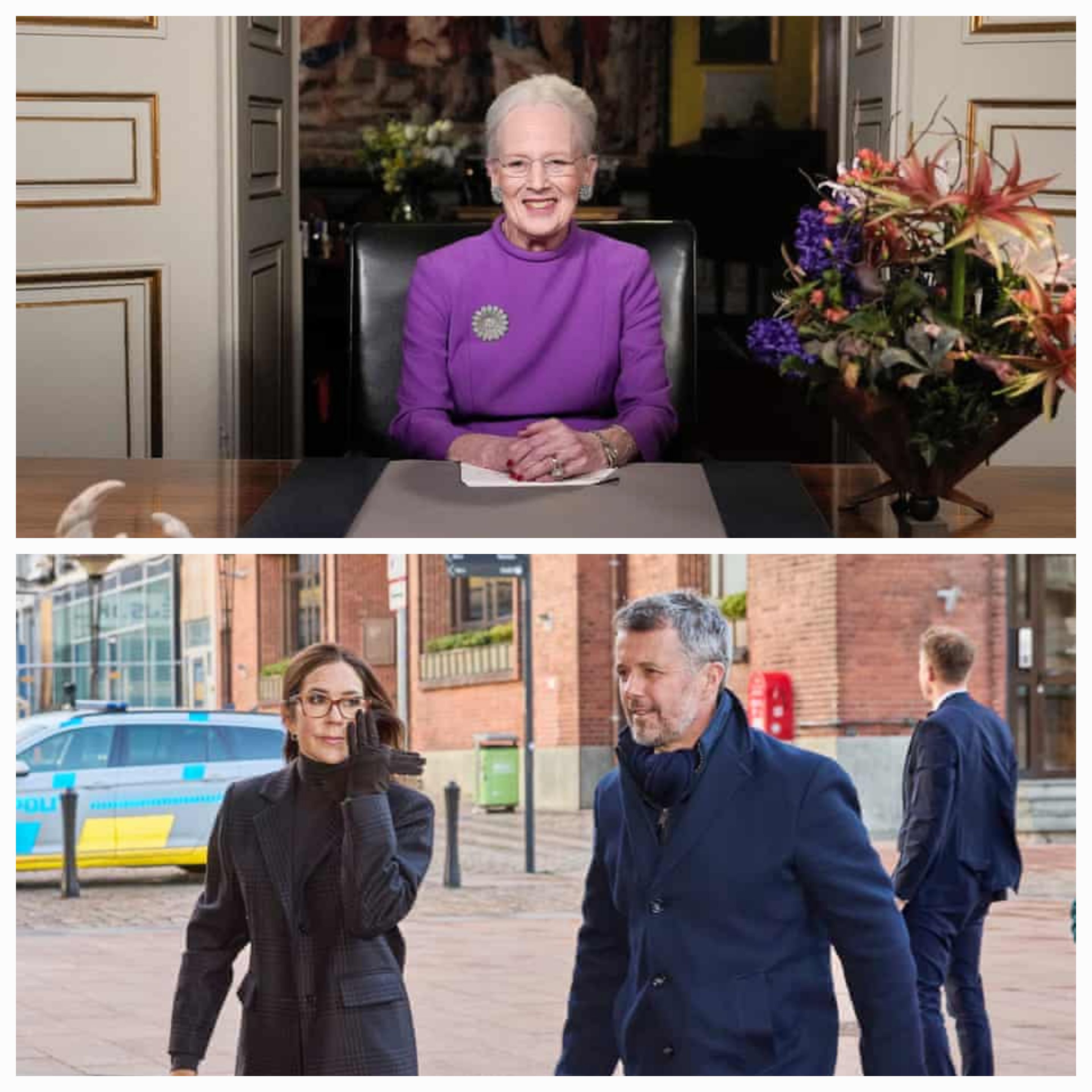
Denmark prepares for historic royal transition as Queen Margrethe II steps down
Denmark will witness a historic royal transition on January 14, 2024, when Queen Margrethe II, the longest-reigning monarch in Europe, will abdicate the throne after 52 years. She will be succeeded by her eldest son, Crown Prince Frederik, who will become King Frederik X of Denmark.
Queen Margrethe II, who turned 83 last year, announced her decision to abdicate in her annual New Year’s Eve speech on December 31, 2023. She said she wanted to “pass on the responsibility to the next generation” and expressed her confidence in her son and his wife, Crown Princess Mary, to lead the country in the future.
The Queen’s abdication came as a surprise to many, as she had previously stated that she would not follow the example of other European monarchs who had stepped down in recent years, such as King Juan Carlos of Spain, Queen Beatrix of the Netherlands, and King Albert II of Belgium. She had said that abdication was “not a Danish tradition” and that she would remain on the throne “as long as I live”.
However, some royal experts had speculated that the Queen might change her mind, especially after her husband, Prince Henrik, retired from public duties in 2016 and spent more time in his native France. Prince Henrik, who died in 2018, had expressed his frustration with not being given the title of king consort and had refused to be buried next to his wife in the royal mausoleum.
The Queen’s abdication will mark the end of an era for Denmark, as she has been a popular and respected figure who has steered the country through various political, social, and economic changes. She is also known for her artistic talents, as she has designed costumes, sets, and stamps, as well as written books and translated works.
Crown Prince Frederik to Ascend: A New Era for Denmark’s Monarchy
The new king, Crown Prince Frederik, is 55 years old and has been preparing for his role since he was 18. He is a graduate of Harvard University and has served in the Danish military, including a stint in Afghanistan. He is also an avid sportsman, who has participated in marathons, triathlons, and polar expeditions. He married Australian-born Mary Donaldson in 2004, and they have four children: Prince Christian, Princess Isabella, Prince Vincent, and Princess Josephine.
The royal transition will be celebrated with a series of events, including a farewell ceremony for the Queen, a proclamation of the new king, and a gala dinner at the Christiansborg Palace. The Danish people will also have the opportunity to greet the new royal couple and their family at various locations across the country.
Denmark is a constitutional monarchy, which means that the king or queen is the head of state, but has limited powers and acts according to the constitution and the laws of the country. The king or queen is not elected, but inherits the throne according to the rules of succession.
The current rules of succession were adopted in 1953 and are based on absolute primogeniture, which means that the eldest child of the monarch, regardless of gender, is the first in line to the throne. The line of succession is limited to the descendants of King Christian X, who reigned from 1912 to 1947, and his wife, Queen Alexandrine.
The current monarch is Queen Margrethe II, who ascended the throne in 1972 after the death of her father, King Frederick IX. She is the first female monarch of Denmark since the 15th century. Her heir apparent is her eldest son, Crown Prince Frederik, who will become King Frederik X when she abdicates or dies.
The line of succession also includes Crown Prince Frederik’s four children, Prince Joachim and his four children, and Princess Benedikte and her three children. However, Princess Benedikte’s children are not eligible to inherit the throne unless they move to Denmark and receive royal permission to marry.
If there is no eligible person to inherit the throne, the Danish Parliament has the right to elect a new monarch and determine a new line of succession. ² This has never happened in the history of Denmark, as the royal family has always had at least one heir.
From Queen to King: Denmark’s Royal Handover Marks a Momentous Day
The role of the Danish monarch is to be the head of state and the symbol of the unity of the Kingdom of Denmark, which includes Denmark proper and the autonomous territories of the Faroe Islands and Greenland. The monarch has limited powers and acts according to the constitution and the laws of the country. The monarch shares the legislative power with the parliament, appoints and dismisses the prime minister and the ministers, represents Denmark internationally, and bestows honours and titles. The monarch also heads the Evangelical Lutheran Church in Denmark, which is the state religion.

The current monarch is Queen Margrethe II, who has reigned since 1972. She is the first female monarch of Denmark since the 15th century. She will abdicate on January 14, 2024, and will be succeeded by her eldest son, Crown Prince Frederik, who will become King Frederik X.

Leave a Reply