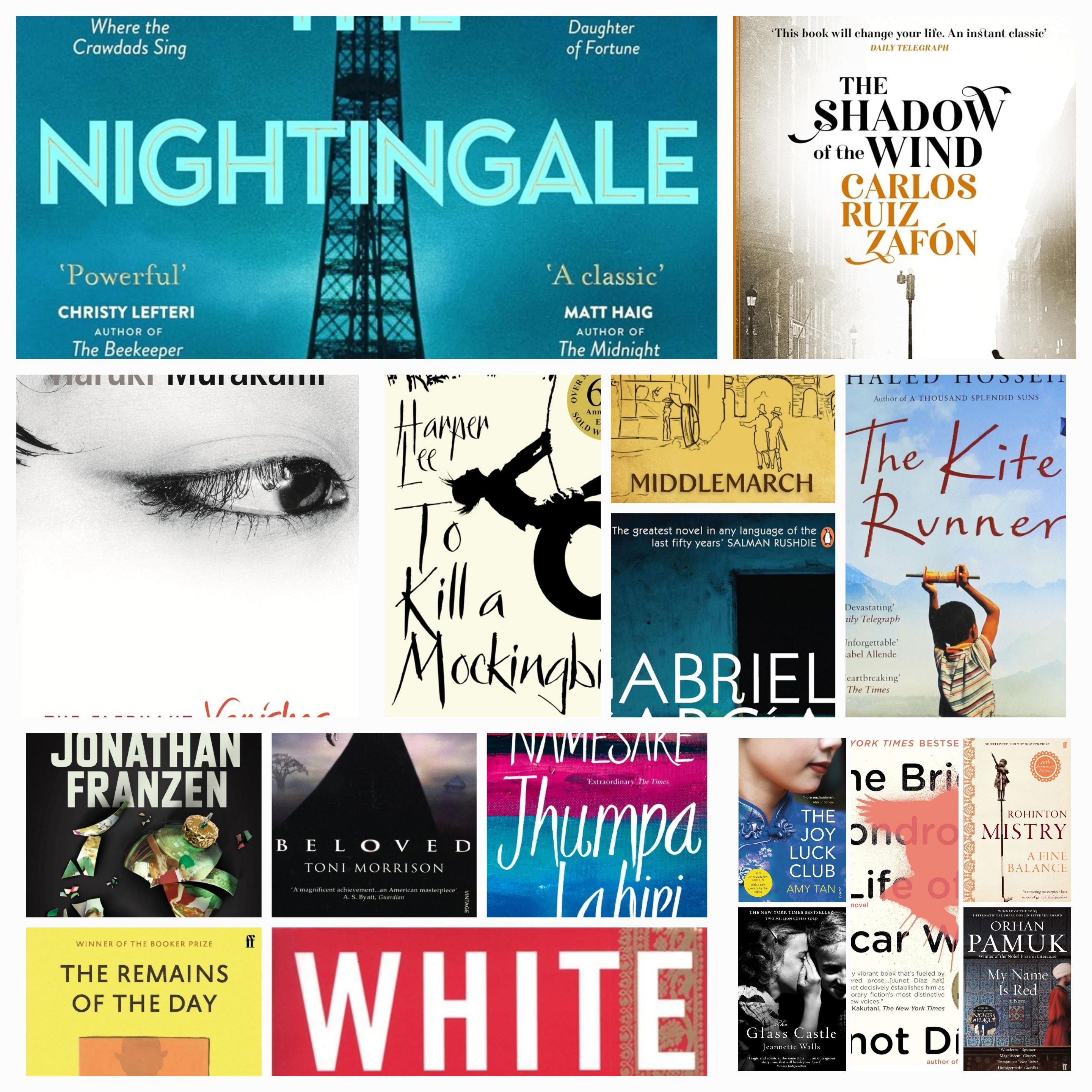
In the vast realm of literature, certain books transcend the boundaries of fiction to offer readers a profound and realistic glimpse into the intricacies of life. This curated list of 20 fiction books stands as a testament to the power of storytelling, with each narrative skillfully navigating the complexities, challenges, and joys that define the human experience. From the courtroom drama of Harper Lee’s “To Kill a Mockingbird” to the post-apocalyptic landscape in Cormac McCarthy’s “The Road,” these novels are celebrated for their ability to mirror real-life scenarios. Join me on a literary journey through these compelling works, each accompanied by a brief exploration of why they are revered for their close resemblance to the multifaceted tapestry of reality. As we delve into the lives of characters grappling with love, identity, societal expectations, and historical upheavals, we uncover the timeless allure of literature that mirrors the richness of the world we inhabit.
Here is a list of 20 fiction books that are known for their realistic portrayal of life, along with brief explanations of why they are considered close to real life.
1. To Kill a Mockingbird by Harper Lee
– This classic explores racial injustice in the American South during the 1930s, addressing timeless themes of morality, empathy, and compassion. The character of Atticus Finch serves as a moral compass, addressing racial injustice. The court trial of Tom Robinson highlights the pervasive racism of the time. The novel was adapted into a classic film in 1962, directed by Robert Mulligan.
2. Middlemarch by George Eliot
– George Eliot’s masterpiece offers a nuanced portrayal of Victorian society, delving into the complexities of relationships, ambition, and societal expectations. The intricate web of relationships in the town of Middlemarch reflects the challenges and choices faced by individuals navigating societal expectations. No direct movie adaptation, but there have been TV adaptations capturing the essence of the novel.
3. The Kite Runner by Khaled Hosseini
– Set against the backdrop of Afghanistan, this novel intricately weaves personal and political narratives, capturing the impact of historical events on individual lives. The friendship between Amir and Hassan explores societal divisions and personal redemption against the backdrop of Afghanistan’s turbulent history. The novel was adapted into a film in 2007, directed by Marc Forster.
4. The Grapes of Wrath by John Steinbeck
– Steinbeck’s depiction of the Joad family’s struggles during the Great Depression is a poignant exploration of poverty, migration, and the human spirit. The Joad family’s journey mirrors the struggles of many during the Great Depression, highlighting economic hardship and displacement. The novel was adapted into a film in 1940, directed by John Ford.
5. One Hundred Years of Solitude by Gabriel Garcia Marquez
– Though magical realism is prevalent, Marquez’s portrayal of the Buendía family offers a reflection on the complexities of Latin American history and politics. The magical realist narrative weaves together the Buendía family’s history, reflecting the political and social upheavals of Latin America.
6. Norwegian Wood by Haruki Murakami
– Murakami’s novel is a realistic exploration of love, loss, and mental health, capturing the essence of the human experience. The novel explores the complexities of love, loss, and mental health through the protagonist Toru Watanabe’s relationships. The novel was adapted into a film in 2010, directed by Tran Anh Hung.
7. The Corrections by Jonathan Franzen
– This family saga dissects the complexities of modern American life, delving into relationships, societal expectations, and the pursuit of happiness. The Lambert family’s dynamics mirror the challenges of modern American life, including issues of identity, mental health, and societal expectations. A TV adaptation was in development but ultimately did not proceed.
8. Beloved by Toni Morrison
– Morrison’s novel, set after the American Civil War, skillfully intertwines historical events with a haunting exploration of slavery’s impact on individuals and families. Set after the American Civil War, the novel delves into the haunting impact of slavery on Sethe and her family. The novel was adapted into a film in 1998, directed by Jonathan Demme.
9. The Namesake by Jhumpa Lahiri
– Lahiri’s novel provides a nuanced portrayal of the immigrant experience in the United States, addressing themes of identity, belonging, and cultural assimilation. The novel explores the identity struggles of Gogol Ganguli, an Indian-American born and raised in the United States. The novel was adapted into a film in 2006, directed by Mira Nair.
10. The Remains of the Day by Kazuo Ishiguro
– This novel, set against the backdrop of post-war England, explores themes of duty, loyalty, and the passage of time through the lens of an English butler. The novel follows the life of Stevens, an English butler, and explores themes of duty, loyalty, and the passage of time. The novel was adapted into a film in 1993, directed by James Ivory.
11. White Teeth by Zadie Smith
– Zadie Smith’s debut novel is a multigenerational exploration of cultural identity, family dynamics, and the immigrant experience in London. The novel explores cultural identity through the Jones and Iqbal families, reflecting the multicultural landscape of London.
12. The Road by Cormac McCarthy
– McCarthy’s stark post-apocalyptic narrative delves into the primal instincts for survival and the unbreakable bond between a father and son. In a post-apocalyptic world, a father and son navigate the harsh landscape, emphasizing the primal instincts for survival. The novel was adapted into a film in 2009, directed by John Hillcoat.
13. The Joy Luck Club by Amy Tan
– Tan’s exploration of Chinese-American families interweaves cultural clashes, generational conflicts, and the search for identity in a new land. The novel delves into the generational and cultural clashes among Chinese-American families, highlighting the complexities of identity. The novel was adapted into a film in 1993, directed by Wayne Wang.
14. The Brief Wondrous Life of Oscar Wao by Junot Díaz
– Díaz’s novel blends Dominican history with the struggles of an immigrant family, offering a raw and authentic depiction of the immigrant experience. The novel explores the impact of the fukú curse on the de León family, combining Dominican history with magical realism. There were plans for a movie adaptation.
15. A Fine Balance by Rohinton Mistry
– Set in India during the 1975 Emergency, Mistry’s novel explores the lives of four characters from different backgrounds, reflecting the social and political turmoil of the time. The novel follows the lives of characters in 1975 India, exploring the impact of political turmoil on personal relationships.
16. The Glass Castle by Jeannette Walls
– Walls’ memoir-like narrative portrays her unconventional and often tumultuous childhood, addressing themes of poverty, resilience, and familial bonds. Walls recounts her unconventional childhood, marked by poverty and resilience, highlighting the complexities of familial bonds. The novel was adapted into a film in 2017, directed by Destin Daniel Cretton.
17. My Name Is Red by Orhan Pamuk
– Pamuk’s novel, set in 16th-century Istanbul, combines art, religion, and political intrigue to create a rich tapestry that mirrors the complexities of human nature. Set in 16th-century Istanbul, the novel intertwines art, religion, and political intrigue, reflecting the complexities of human nature.
18. The Nightingale by Kristin Hannah
– This historical fiction novel provides a gripping account of two sisters in Nazi-occupied France, emphasizing the sacrifices and resilience of women during wartime. The novel portrays the sacrifices and resilience of two sisters in Nazi-occupied France during World War II. The novel was in development for a film adaptation.
19. The Shadow of the Wind by Carlos Ruiz Zafón
– Zafón’s novel, set in post-World War II Barcelona, combines elements of mystery, love, and literature, creating a rich and atmospheric portrayal of the city. Set in post-World War II Barcelona, the novel combines mystery, love, and literature, creating a rich portrayal of the city. Plans for a film adaptation were announced, but it hasn’t been released.
20. The Elephant Vanishes by Haruki Murakami
– Murakami’s collection of short stories captures the mundane and extraordinary aspects of everyday life, blurring the lines between reality and the surreal. The short stories capture the mundane and extraordinary aspects of everyday life, blurring the lines between reality and the surreal. No direct movie adaptation, but some of Murakami’s other works have been adapted.
These books stand out for their ability to reflect the complexities, nuances, and emotions of real life, making them timeless explorations of the human experience. Each work offers a unique perspective on various aspects of society, culture, and individual journeys.
While some of these books have made successful transitions to the big screen, others remain untouched or faced challenges in adaptation. Each adaptation brings its interpretation, enhancing the visual experience while trying to capture the essence of the written work.
In conclusion, these 20 fiction books serve as literary treasures, offering readers a passport to worlds that mirror the intricacies of real life. From the poignant struggles of the Joad family in John Steinbeck’s “The Grapes of Wrath” to the enchanting and surreal narratives in Haruki Murakami’s “Norwegian Wood,” each book on this list contributes to the universal conversation about what it means to be human. As we immerse ourselves in the narratives crafted by these masterful storytellers, we find solace, inspiration, and a profound connection to the shared experiences that define our existence. These books transcend the limitations of their pages, leaving an indelible mark on our hearts and minds. Through their nuanced portrayals of love, loss, resilience, and the human spirit, these works stand as a testament to the enduring power of literature to capture the essence of life itself. So, let us continue to explore, embrace, and celebrate these literary gems that bridge the gap between fiction and reality, reminding us of the boundless possibilities that storytelling holds.

This post is part of the Bookish League blog hop hosted by Bohemian Bibliophile.


Leave a Reply