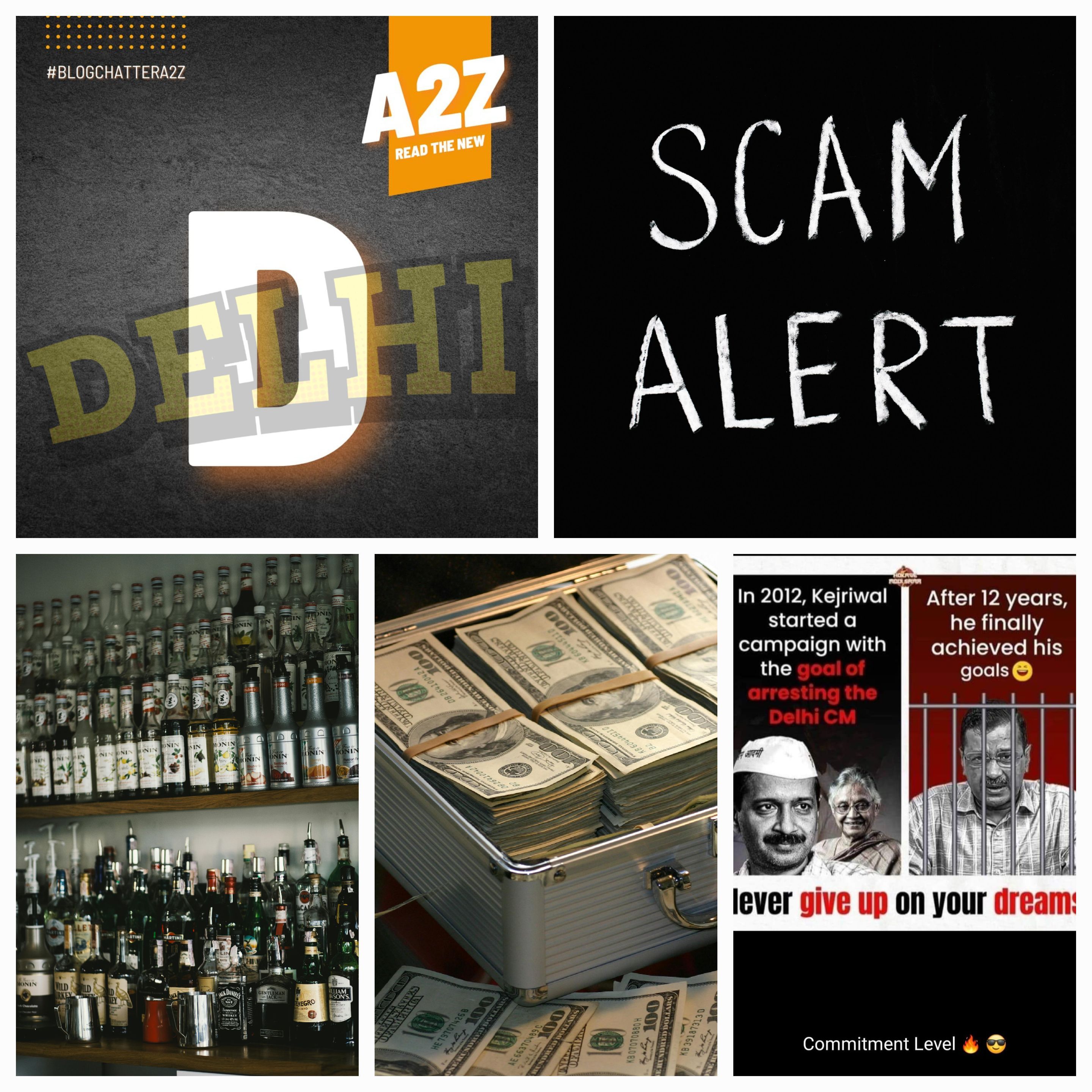
Delhi Jal Board Scam: Corruption Unveiled, Millions Seized by ED
In a sprawling metropolis that serves as the heart of India’s political pulsations, a scandal emerges, weaving a complex tapestry of corruption, power, and systemic failure. The Delhi Jal Board Scam, unearthed by the Enforcement Directorate (ED), exposes a nexus so intertwined with the fabric of governance that it prompts a national introspection on the integrity of our institutions. At the core of this revelation is the alleged involvement of high-ranking officials and the Aam Aadmi Party (AAP), accused of orchestrating a scheme of kickbacks and embezzlement, drawing the attention of the country to the shadowy dealings within the Delhi Jal Board (DJB). This incident, layered with allegations, arrests, and political fallout, has not only unveiled the depths of corruption but also highlighted the challenges of battling entrenched interests within public systems. As the ED’s investigation progresses, revealing a labyrinth of deceit involving inflated contracts, misappropriated funds, and illicit transactions, the narrative unfolding in the courts and across media platforms paints a grim picture of governance gone awry. Amidst this chaos, the citizens of Delhi, the primary stakeholders of the DJB’s services, find themselves grappling with the betrayal of their trust and the corrosion of their faith in those elected to serve them. As the city stands at this juncture, the unfolding saga of the Delhi Jal Board Scam becomes more than a story of corruption; it becomes a litmus test for the resilience of India’s democratic institutions and their ability to safeguard the public interest against the onslaught of greed and malfeasance.
In a startling revelation, the Enforcement Directorate (ED) has unearthed a web of corruption surrounding the Delhi Jal Board (DJB), implicating not only officials but also the Aam Aadmi Party (AAP) in the embezzlement of funds. The ED’s latest allegations, presented before the Delhi High Court, shed light on a scheme where kickbacks were not only funneled into the pockets of bureaucrats but also diverted to the AAP under the guise of political contributions.
In a revelation that has sent shockwaves through the corridors of power in Delhi, the Enforcement Directorate (ED) has uncovered a sprawling network of corruption ensnaring the Delhi Jal Board (DJB), implicating not only high-ranking officials but also casting a shadow over the Aam Aadmi Party (AAP). The latest allegations presented before the Delhi High Court by the ED paint a disturbing picture of a nefarious scheme where kickbacks flowed freely into the coffers of bureaucrats and found their way into the political machinery of the AAP under the guise of legitimate contributions. The unfolding scandal has peeled back the layers of deception within the DJB, revealing a labyrinth of embezzlement and illicit dealings that threaten to erode public trust in governance.
On Tuesday, the ED leveled fresh accusations against AAP, alleging their complicity in the tender scam orchestrated within the Delhi Jal Board. According to the ED, a former chief engineer of DJB facilitated the transfer of a staggering sum of ₹2 crore to his associates within the department as bribes. Furthermore, the ED’s crackdown has led to the seizure of assets totaling ₹8.80 crores, underscoring the magnitude of the corruption scandal.
Amidst mounting pressure, the Delhi High Court has taken cognizance of the chargesheet filed by the ED, listing the case for Thursday, April 4, 2024. Moreover, the court has summoned Devender Mittal and Tejinder Pal Singh, and production warrants have been issued for Jagdish Aroda and Anil Agrawal, who are currently incarcerated.
Jagdish Kumar Aroda, the erstwhile chief engineer, and his wife Alka Aroda, along with Anil Kumar Agrawal, owner of Integral Screw Industries, have had various immovable and movable assets valued at ₹8.80 crores provisionally attached by the ED. The ED alleges that Aroda and others have stashed ill-gotten gains in the form of properties in Delhi, invoking provisions of the Prevention of Money Laundering Act, 2002.
The ED’s investigations have revealed a sordid tale of collusion and deceit within the Delhi Jal Board. Aroda, in his capacity as chief engineer, purportedly inflated the costs of contracts awarded to ENKGI Infrastructure Limited, despite the company failing to meet technical qualifications. Subsequent scrutiny by the ED uncovered a trail of falsified documents and misappropriated funds, wherein only a fraction of the ₹24 crores disbursed by the DJB for contractual work was actually utilized for legitimate purposes, with the remainder siphoned off as bribes.
It’s noteworthy that the Central Bureau of Investigation (CBI) initially initiated a probe into the Delhi Jal Board case. Subsequently, based on the findings, the ED took over the case under the purview of money laundering. The CBI conducted search operations on July 9, 2022, yielding significant evidence. Following suit, the ED conducted raids on July 23, 2023, in Noida, Gurugram, Kerala, and Chennai, unearthing incriminating evidence implicating several individuals.
As the legal battle intensifies, the spotlight remains firmly fixed on the murky dealings within the Delhi Jal Board, underscoring the urgent need for systemic reforms and stringent enforcement of anti-corruption measures. The unfolding saga serves as a sobering reminder of the pervasive nature of corruption and its corrosive impact on governance and public trust.
Arvind Kejriwal Arrested: ED Alleges Involvement in Liquor Policy Scam
The Enforcement Directorate (ED) has made damning accusations against Arvind Kejriwal, alleging his direct involvement in orchestrating the Delhi liquor policy scam and subsequent money laundering activities. According to the ED, the Aam Aadmi Party (AAP) was the primary beneficiary of the Delhi liquor policy scam, with Kejriwal exercising control over all its operations. Witness testimonies also corroborate Kejriwal’s role in the formulation of this policy.
In response to the ED’s allegations, the Delhi High Court was informed on Tuesday, April 2, 2024, that Arvind Kejriwal is the mastermind behind the Delhi liquor policy scam. The ED has labeled Arvind Kejriwal as the “prime conspirator” in the liquor scam, alleging that through the AAP, he was engaged in money laundering activities. Furthermore, the ED cited Kejriwal’s repeated evasion of summons—despite nine summonses being issued—as a reason for his arrest. The AAP has refuted the ED’s claims, asserting that the ED is making false allegations in the absence of any evidence of money trails. It’s important to note that the Supreme Court has dismissed the existence of any money trail.
The Hindustan Times reports that the ED informed the Delhi High Court that Arvind Kejriwal is the “chief architect and conspirator” of the “Delhi liquor policy scam.” Under his leadership, the Delhi government’s ministers, AAP leaders, and other individuals were involved in drafting this policy, which was designed to benefit the “Southern Group.” This policy was formulated through collusion with members of the Vijay Nayar, Manish Sisodia, and Southern Group.
The ED has accused the AAP of committing money laundering through Arvind Kejriwal. This offense falls under Section 70 of the Prevention of Money Laundering Act, 2002. The ED contends that the AAP was the primary beneficiary of the Delhi liquor policy scam, and Arvind Kejriwal controlled all its activities. Witness testimonies also indicate his involvement in the policy’s formulation.
The ED has opposed Arvind Kejriwal’s bail, citing his repeated failure to participate in the investigation despite numerous opportunities. The ED alleges that Kejriwal spent ₹45 crores of the cash involved in this scam during the Goa Legislative Assembly elections in 2022.
Arvind Kejriwal challenged his arrest as unlawful before the Delhi High Court on March 23. Following this, the court sought a response from the ED. The ED presented its case, after which the Delhi High Court refused to halt Arvind Kejriwal’s arrest. Since then, Arvind Kejriwal has been in ED custody. He was transferred to Tihar Jail two days ago.
Arvind Kejriwal’s weight is rapidly declining in Tihar Jail. Concerns have been raised about his rapid weight loss, prompting the need for monitoring. According to sources within the Aam Aadmi Party, Arvind Kejriwal has lost 4.5 kilograms. However, sources within the Tihar Jail administration refute these claims, stating that his weight remains stable at 55 kilograms.
Delhi Liquor Scam Unravels Political Intrigue: AAP Caught in Legal Crossfire
In the labyrinth of Delhi’s political landscape, recent revelations regarding a liquor scam have not only stirred controversy but also raised pertinent questions about the nexus between power, corruption, and justice. At the heart of this saga lies the arrest of a prominent leader, plunging his party into a whirlpool of legal battles and public scrutiny.
The Delhi High Court witnessed a dramatic courtroom showdown as the legal counsels representing Chief Minister Arvind Kejriwal and the Enforcement Directorate (ED) presented their arguments regarding bail proceedings. Abhishek Manu Singhvi, a seasoned advocate representing Kejriwal, vehemently denounced the arrest as a politically motivated ploy to undermine the Chief Minister’s credibility and hamper his electoral campaign.
Singhvi highlighted the absence of concrete evidence linking Kejriwal to any wrongdoing under the Prevention of Money Laundering Act (PMLA) section 50, emphasizing that the arrest lacked substantial grounds and was conducted without due process. He accused the ED of orchestrating a smear campaign aimed at tarnishing Kejriwal’s image, conveniently timed to coincide with the upcoming elections.
On the other side of the legal divide, the ED presented a different narrative, asserting that Kejriwal’s involvement in money laundering was beyond dispute. They argued that the meticulously orchestrated liquor scam bore the hallmarks of a well-calculated scheme, with Kejriwal allegedly playing a pivotal role in its execution.
The courtroom drama further unfolded as Raju, representing the government, shed light on the intricate web of corruption surrounding the liquor policy overhaul. He revealed how the revised excise policy, ostensibly aimed at boosting revenue, was surreptitiously manipulated to accommodate vested interests, including the infamous South Group.
The South Group, comprising influential individuals from various sectors, allegedly colluded with Kejriwal’s administration to secure lucrative contracts in exchange for hefty bribes. The revelations shed light on the murky underbelly of Delhi’s political ecosystem, where vested interests often trump public welfare.
As the legal battle rages on, Delhiites are left grappling with the ramifications of systemic corruption and political machinations. The episode serves as a stark reminder of the imperative to uphold the principles of transparency, accountability, and integrity in governance. Whether justice prevails or political expediency prevails remains to be seen, but one thing is clear: the Delhi liquor scam has cast a long shadow over the corridors of power, leaving no room for complacency or indifference.

As the curtains fall on this chapter of Delhi’s political theatre, the Delhi Jal Board Scam and the interconnected liquor policy scandal encapsulate more than just instances of corruption; they symbolize a systemic malady that plagues the corridors of power. The revelations brought forth by the Enforcement Directorate, coupled with the ensuing legal battles, have not only ensnared prominent political figures but also exposed the vulnerabilities in our governance structures. The arrest and the dramatic proceedings surrounding Arvind Kejriwal, juxtaposed with the alleged embezzlement within the DJB, serve as a stark reminder of the fragility of public trust and the ease with which it can be eroded. As Delhi navigates through these tumultuous waters, the broader implications for democratic governance and accountability in India loom large. The demand for transparency, stringent anti-corruption measures, and systemic reforms has never been more urgent, echoing through the halls of justice and into the public sphere. The resolution of these scandals will not only determine the fate of those implicated but will also set a precedent for how India confronts the specters of corruption and malfeasance. In this moment of reckoning, the citizens of Delhi and the nation watch closely, awaiting justice and the restoration of faith in their institutions. The journey from allegation to accountability, fraught with legal and political skirmishes, underscores the enduring struggle for integrity in public life. As this story continues to unfold, it reaffirms the imperative for vigilance, accountability, and a collective commitment to uphold the principles that form the bedrock of our democracy.
As the legal battle intensifies and the specter of corruption looms large over the political landscape of Delhi, the need for robust institutional reforms and unwavering commitment to accountability has never been more pressing. The Delhi liquor scam serves as a sobering reminder of the insidious influence of corruption on the fabric of democracy, underscoring the urgent imperative to root out systemic malfeasance and uphold the principles of transparency and integrity. In the crucible of justice, the fate of those embroiled in this sordid affair hangs in the balance, but the reverberations of their actions resonate far beyond the hallowed halls of power, echoing the enduring struggle for ethical governance and the pursuit of justice for all.
#DelhiScandal #CorruptionExposed #ArvindKejriwal #EnforcementDirectorate #DJBScam #LiquorPolicy #MoneyTrail #PublicTrust #LegalBattle #GovernanceCrisis #DelhiJalBoardScam #AamAadmiParty #EmbezzlementScheme #GovernanceIntegrity #PoliticalFallout #LegalBattles #PublicTrustBetrayal #SystemicFailure #AAPInTrouble #MoneyLaundering #DelhiHighCourt #Embezzlement #PoliticalCorruption
I’m participating in #BlogchatterA2Z

Leave a Reply