Human Smoke by Nicholson Baker: A Deep Dive into History and Morality
Introduction: A Controversial Take on a Tumultuous Era
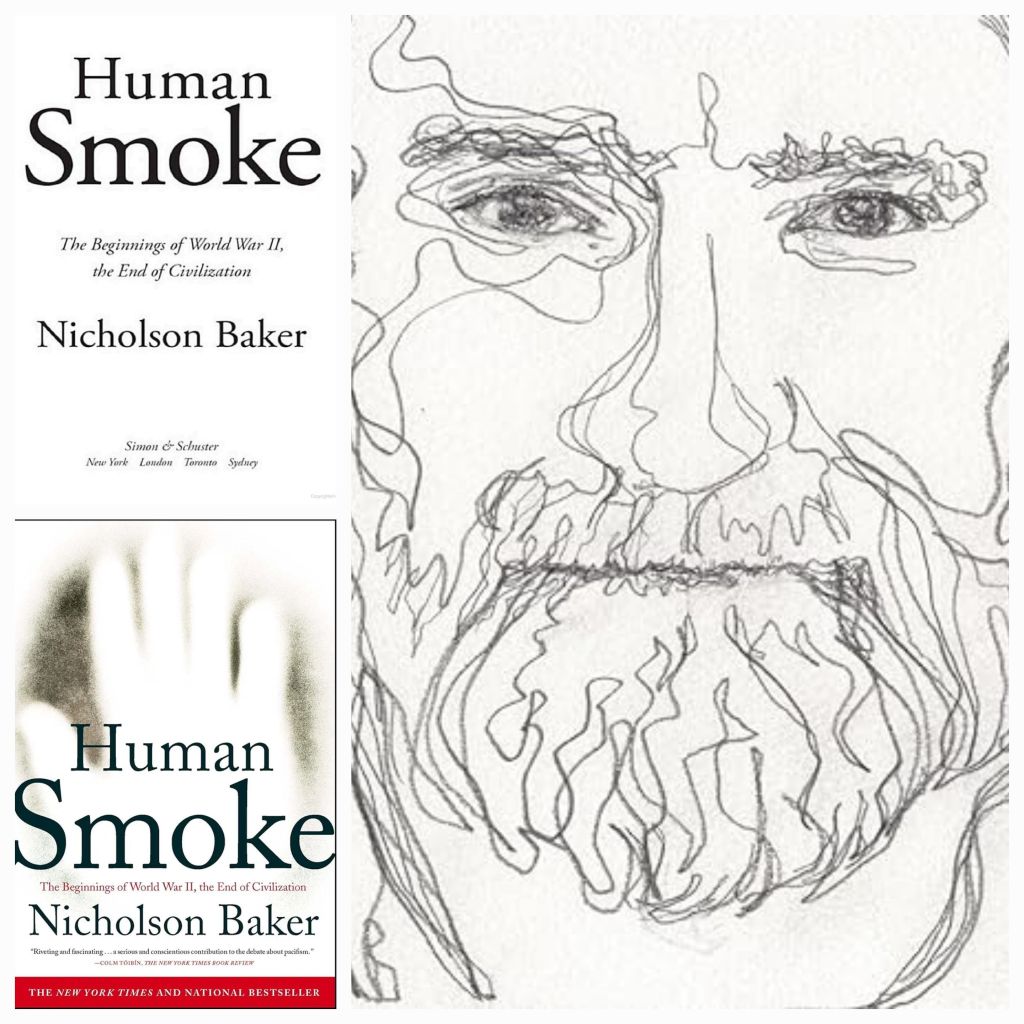
Nicholson Baker’s Human Smoke is a book that has stirred deep emotions, provoked controversy, and challenged many historical narratives since its publication in 2008. At its core, it is a revisionist look at the lead-up to World War II, drawing heavily on a documentary-style presentation of historical facts, events, and personalities. Rather than following a traditional narrative structure, Baker assembles a vast mosaic of vignettes—short, carefully curated fragments of historical details from speeches, diaries, newspaper clippings, and correspondence—creating a panoramic view of the years leading up to the conflict.
The book does not aim to tell the story of the war, or even to pass judgment explicitly. Instead, Human Smoke presents facts and leaves it to readers to draw their own conclusions. However, the book’s underlying thesis—that World War II was not as morally clear-cut as most people believe and that pacifism could have been a viable alternative—has ignited debate among historians, critics, and readers alike.
The Structure and Style: Fragmented yet Focused
One of the most striking features of Human Smoke is its unique structure. The book is composed of brief entries—some as short as a sentence or two—spanning from 1892 to the end of 1941, just before the United States entered the war. This format is reminiscent of a scrapbook or a diary, creating a sense of immediacy and intimacy. By using this fragmented approach, Baker avoids a linear retelling of history, instead piecing together moments that highlight the complexity of the era.
Each vignette focuses on a particular event, individual, or conversation, with some entries quoting famous figures such as Winston Churchill, Franklin D. Roosevelt, and Adolf Hitler, while others bring forward forgotten voices—journalists, pacifists, and everyday people whose perspectives are often missing from mainstream historical accounts.
This mosaic of moments allows readers to view the war not as a singular, inevitable event but as a series of choices and consequences. By presenting these moments without much interpretation, Baker invites readers to reconsider long-held beliefs about the righteousness of the Allied cause and the decisions that led to the war’s escalation.
Challenging Historical Narratives: The Case for Pacifism
One of Baker’s most controversial stances in Human Smoke is his implicit suggestion that pacifism might have been a morally superior course of action leading up to World War II. Throughout the book, he highlights the voices of pacifists who advocated for negotiation and nonviolence, often contrasting them with the aggressive rhetoric of political leaders like Churchill and Roosevelt, who, in Baker’s portrayal, seem eager for war.
The book suggests that the decisions of Allied leaders were not always noble or heroic. For example, Baker includes numerous quotes from Churchill that reveal his callousness toward civilian suffering, particularly in his support for the British blockade of Germany during World War I, which led to widespread starvation. Similarly, Baker paints Roosevelt as someone who, while publicly condemning fascism, did little to help Jewish refugees fleeing Nazi persecution before the war.
By focusing on these pacifist voices and contrasting them with the decisions of war leaders, Baker forces readers to question whether war was truly inevitable or whether different choices could have led to a more peaceful resolution. While most histories of World War II emphasize the justness of the Allies’ cause, Human Smoke suggests that the road to war was paved with moral compromises and avoidable tragedies.
A Critique of Allied Leaders: Winston Churchill and Franklin D. Roosevelt
Baker’s portrayal of Churchill is particularly critical. He presents Churchill as a warmonger, someone who was eager to fight and willing to sacrifice civilian lives to achieve his goals. One of the most striking elements of the book is the attention Baker gives to Churchill’s actions during World War I, especially the British blockade that caused massive civilian suffering in Germany. Baker’s inclusion of these events from Churchill’s earlier career suggests that the future prime minister’s approach to warfare was shaped by a willingness to use extreme measures to achieve his ends, even if it meant causing widespread suffering.
In contrast to the more traditional portrayal of Churchill as a heroic defender of democracy, Baker paints a more complex picture, one in which Churchill’s determination to defeat the Nazis is tempered by his often brutal tactics. The book leaves readers with the uncomfortable question of whether Churchill’s methods, including the indiscriminate bombing of German cities, were morally justified.
Roosevelt, too, does not escape Baker’s critical eye. In particular, Human Smoke emphasizes Roosevelt’s reluctance to help Jewish refugees during the 1930s, despite his public condemnations of Hitler’s regime. Baker suggests that Roosevelt’s policies, which included restrictive immigration quotas and a refusal to intervene on behalf of European Jews, contributed to the horrors of the Holocaust. While Roosevelt is often celebrated for his leadership during the war, Human Smoke portrays him as a man whose actions were often dictated by political expediency rather than moral courage.
Human Smoke and the Holocaust: A Critique of Inaction
Baker does not shy away from the horrors of the Holocaust, but he presents them in a different light than many traditional histories. Rather than focusing solely on the atrocities committed by the Nazis, Human Smoke also examines the failure of other nations, particularly the United States and Britain, to intervene on behalf of the Jews during the 1930s. Baker highlights instances where political leaders ignored or downplayed reports of the Holocaust, failed to offer sanctuary to refugees, or chose not to take military action that could have disrupted the Nazi genocide.
This critique of inaction is one of the most powerful elements of Human Smoke. By presenting the Holocaust not as an isolated atrocity but as part of a larger pattern of indifference and complicity, Baker forces readers to confront the uncomfortable reality that the Allied powers, while ultimately responsible for defeating the Nazis, did not do enough to prevent the suffering of millions of people. This is not to suggest that Baker is blaming the Allies for the Holocaust, but rather that he is asking readers to reconsider the narrative of moral clarity that often surrounds their actions during the war.
The Debate Over Human Smoke: Historians Weigh In
Human Smoke has generated considerable debate among historians, with some praising Baker for his fresh perspective and others accusing him of oversimplifying complex historical events. Critics argue that Baker’s selective use of quotes and his focus on pacifist voices create a skewed version of history, one that downplays the very real threats posed by fascism and imperialism. They contend that Baker’s critique of Allied leaders, particularly Churchill and Roosevelt, ignores the broader context of the war and the difficult choices they faced.
Supporters of Human Smoke, however, argue that Baker’s book is an important corrective to the traditional, triumphalist narrative of World War II. They point out that Baker is not attempting to rewrite history but rather to offer an alternative perspective, one that emphasizes the human cost of the war and the possibility of a different path. In this sense, Human Smoke can be seen as a challenge to readers to think critically about the moral choices made during the war and to consider whether pacifism could have been a viable alternative to violence.
Conclusion: A Thought-Provoking and Challenging Work
Nicholson Baker’s Human Smoke is not a book that provides easy answers or tidy conclusions. Instead, it is a deeply challenging work that invites readers to grapple with the moral ambiguities of history. Through his use of vignettes, Baker presents a fragmented, impressionistic view of the years leading up to World War II, one that emphasizes the complexity of human choices and the often-overlooked voices of pacifists.
While the book has its critics, Human Smoke remains a powerful and thought-provoking exploration of one of the most pivotal periods in modern history. By questioning the traditional narratives of heroism and moral clarity that surround the war, Baker encourages readers to think more deeply about the consequences of violence and the possibility of peace.
In the end, Human Smoke is not just a revisionist history of World War II—it is a meditation on the nature of war itself and the choices that individuals and nations make in the face of conflict. Whether one agrees with Baker’s conclusions or not, there is no denying the book’s ability to provoke reflection and debate on the moral complexities of the past.
#HumanSmoke #NicholsonBaker #WorldWarII #Pacifism #HistoricalRevisionism #WinstonChurchill #FranklinRoosevelt #HolocaustHistory #WWIINarratives #WarEthics #DocumentaryStyleHistory #AlternativeHistory #WarAndPeace
I’m participating in the #TBRChallenge by Blogchatter


 Poetry Hub
Leave a reply to Chandra Sundeep Cancel reply