The Nehru-Liaquat Pact: Origins, Objectives, Successes, and Failures Over the Decades
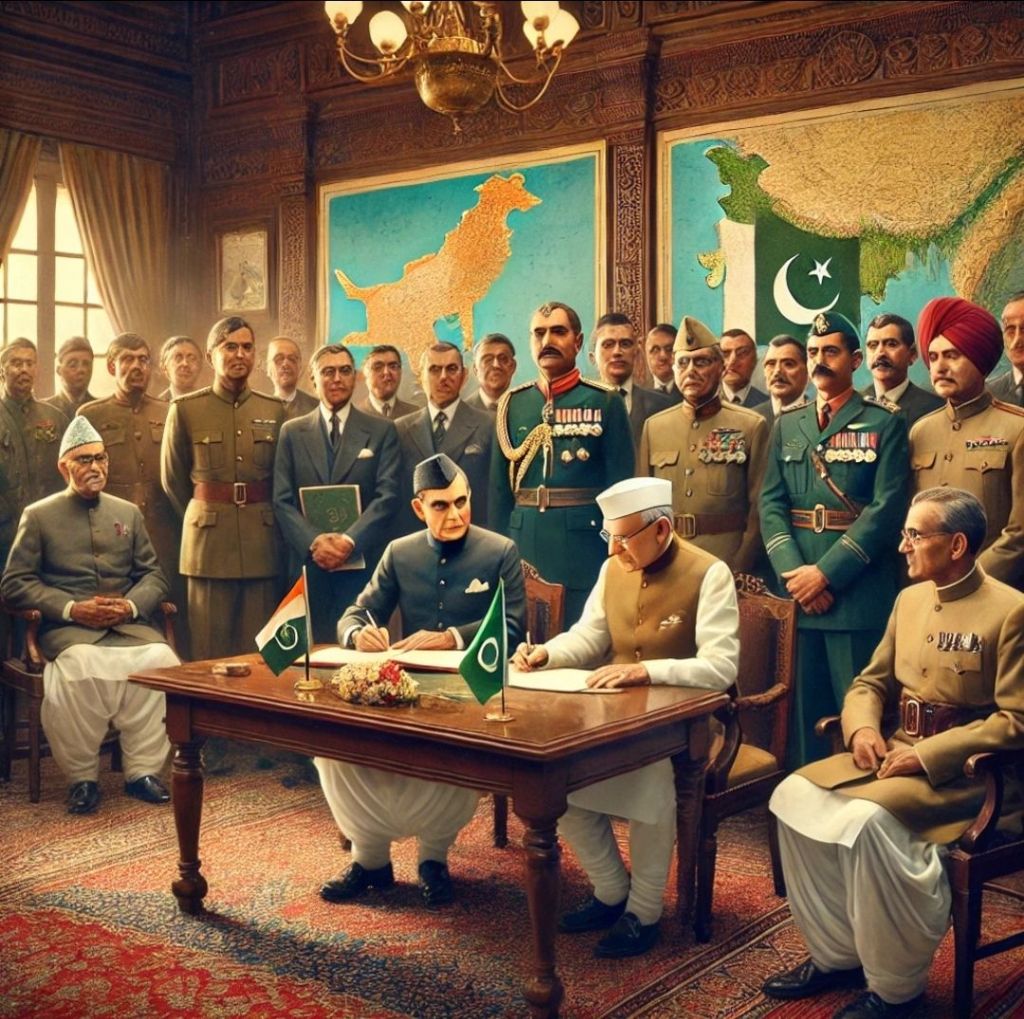
The Nehru-Liaquat Pact, also known as the Delhi Agreement, stands as a critical moment in the turbulent post-Partition era of South Asia. Signed on April 8, 1950, by Indian Prime Minister Jawaharlal Nehru and Pakistani Prime Minister Liaquat Ali Khan, this agreement was an attempt to address the communal violence, persecution, and mass displacement that occurred in the wake of the Partition of British India in 1947. This article delves into the origins and objectives of the pact, its initial successes, and its enduring challenges and failures over the decades.
Context Leading to the Pact
The Partition of India in 1947 was one of the most traumatic events in South Asian history, leading to the division of British India into two independent nations—India and Pakistan. This division was largely based on religious lines, with India being predominantly Hindu, and Pakistan being established as a homeland for Muslims. The partition led to widespread communal violence, with Hindus, Muslims, and Sikhs involved in brutal sectarian clashes. Millions of people were displaced, leading to one of the largest migrations in history, as Hindus and Sikhs fled Pakistan, and Muslims left India for Pakistan.
In the aftermath, communal tensions remained high. The minority populations in both countries—Muslims in India and Hindus/Sikhs in Pakistan—faced persecution and insecurity. By 1950, the situation had escalated to the point where the specter of war between the newly formed nations loomed large. It was under these dire circumstances that the Nehru-Liaquat Pact was conceived.
Key Objectives of the Nehru-Liaquat Pact
The main objective of the Nehru-Liaquat Pact was to protect the rights and safety of minorities in both India and Pakistan. The agreement aimed to provide a measure of stability and peace to both countries by addressing the ongoing persecution of minorities, which had the potential to ignite further communal violence and even conflict between India and Pakistan. The core provisions of the pact included:
1. Minority Protection: The governments of India and Pakistan agreed to protect the rights of minorities in their respective countries. This included the right to practice their religion freely, the right to security, and the right to equal treatment under the law.
2. Restoration of Property: Refugees who had fled during the Partition would be allowed to return to their homes if they wished. If returning was not feasible, the governments would ensure the restoration of their property or provide suitable compensation.
3. Non-Discrimination: The pact emphasized non-discrimination based on religion, affirming that no individual should be forced to change their religion or face coercion to leave their country due to religious identity.
4. Establishment of Minority Commissions: Both countries agreed to establish special commissions that would investigate and address complaints of discrimination, forced conversions, and the abduction of women. These commissions were intended to ensure swift justice for minority grievances.
5. Rehabilitation of Refugees: Both India and Pakistan committed to the rehabilitation of displaced persons and refugees affected by the violence of the Partition. This included providing financial assistance and ensuring their safe relocation.
Initial Successes of the Nehru-Liaquat Pact
In the immediate aftermath of the signing, the Nehru-Liaquat Pact brought a semblance of stability to a deeply fractured region. By addressing the plight of minorities in both countries, the agreement helped de-escalate tensions between India and Pakistan, averting the threat of an outright war. Both governments made genuine efforts to uphold the terms of the pact, and in the short term, it brought a degree of relief to the persecuted minorities.
1. Diplomatic Success: The pact was seen as a diplomatic victory, showcasing a willingness from both nations to cooperate for the sake of peace and stability. It helped prevent what could have been a disastrous escalation into full-blown conflict between India and Pakistan, at a time when their militaries were still mobilizing in the shadow of Partition.
2. Relief to Minorities: For minorities, particularly Muslims in India and Hindus/Sikhs in Pakistan, the pact provided a sense of security. The promise of minority rights protection encouraged many to remain in their homes rather than flee to the other country.
3. Stabilization of Relations: The pact allowed for the temporary stabilization of India-Pakistan relations, which were extremely fragile after Partition. It created a framework for future cooperation and mutual engagement, even if it only brought temporary relief.
Challenges and Failures of the Nehru-Liaquat Pact
Despite its initial successes, the Nehru-Liaquat Pact ultimately failed to achieve its long-term goals. Over the decades, both India and Pakistan struggled to fully uphold the terms of the agreement, and many of the issues the pact sought to address continue to plague the region to this day.
Failure to Fully Protect Minorities
While the pact aimed to ensure the protection of minorities, both countries faced significant challenges in implementing this promise. Minority communities in both India and Pakistan have continued to face systemic discrimination, violence, and political marginalization.
In India, the Muslim minority has periodically faced violence, particularly during communal riots. The rise of Hindu nationalism in recent decades has exacerbated tensions, with Muslims often feeling marginalized and targeted by laws and policies.
In Pakistan, the situation for Hindus, Sikhs, and other minorities has been similarly precarious. Forced conversions, abduction of women, and discrimination in employment and education have been recurring issues. Many minorities have continued to migrate to India or other countries to escape persecution.
Weak Implementation of Restitution for Refugees
The pact’s promise of allowing refugees to return to their homes and reclaim their property was never fully realized. In many cases, displaced individuals were unable to return to their former homes, either due to local resistance or the practical challenges of resettlement. Furthermore, the compensation promised by the pact for lost property was often delayed or insufficient.
Breakdown of India-Pakistan Relations
Although the pact was intended to foster a long-term diplomatic relationship, India and Pakistan’s relations have been marred by multiple wars (in 1947-48, 1965, 1971, and 1999) and ongoing conflicts, particularly over the Kashmir region. The mutual distrust that has defined India-Pakistan relations has undermined the goodwill created by the Nehru-Liaquat Pact.
The Emergence of Sects and Factionalism
The rise of sectarianism, both within India and Pakistan, has complicated the implementation of the pact. In Pakistan, the Sunni majority has often been at odds with Shia and Ahmadi minorities, leading to targeted violence. In India, religious tensions between Hindus, Muslims, and other minority communities have only grown in recent years, further undermining the principles of the pact.
Modern-Day Relevance of the Nehru-Liaquat Pact
In the decades since the signing of the Nehru-Liaquat Pact, both India and Pakistan have evolved considerably, but the issues surrounding minority rights, communal violence, and inter-country relations remain pressing concerns.
In India, the rise of Hindu nationalism and the recent implementation of laws like the Citizenship Amendment Act (CAA) have raised concerns among minority communities, particularly Muslims. Critics argue that these laws are a violation of the spirit of the Nehru-Liaquat Pact, which promised protection to all religious minorities.
In Pakistan, the plight of religious minorities continues to make headlines. Issues such as forced conversions and attacks on minority religious sites highlight the ongoing struggle for equal rights.
Despite its good intentions, the Nehru-Liaquat Pact has not been enough to curb the entrenched communalism and factionalism in South Asia. While it helped prevent war and provided immediate relief in 1950, the structural issues it sought to address continue to this day.
Conclusion: A Diplomatic Effort with Mixed Results
The Nehru-Liaquat Pact was a landmark diplomatic agreement, attempting to address the trauma of Partition by ensuring the protection of minority rights. It represented a sincere effort by two leaders to bring peace and stability to their countries during a period of unprecedented turmoil. However, despite its initial successes, the pact’s impact has been limited by poor implementation, the resurgence of communalism, and the breakdown of relations between India and Pakistan.
In the years since its signing, both nations have struggled to protect their minorities fully, and the challenges of religious discrimination, property restitution, and peaceful coexistence remain pressing. While the Nehru-Liaquat Pact stands as a symbol of a moment when India and Pakistan came together for peace, its legacy is a reminder of how fragile and complex the pursuit of communal harmony can be in the subcontinent.
#NehruLiaquatPact #IndiaPakistanRelations #PartitionOfIndia #MinorityRights #DelhiAgreement #IndoPakHistory #RefugeeCrisis #PostPartition


 Poetry Hub
Leave a reply to satyam rastogi Cancel reply