
When you open Phantoms of August by Mashrur Arefin, translated from its original Bengali title August Abchaya, you’ll feel the weight of history pressing down on you, and so did I. It isn’t just a story—it’s a reckoning with one of the darkest moments in Bangladesh’s past. You are invited into a world where the assassination of Sheikh Mujibur Rahman, the nation’s founding father, on August 15, 1975, casts its long shadow over everything.
I felt it from the first page: the unease, the tension, the unrelenting sense of tragedy. You, too, might find yourself pulled into that fateful time, where betrayal hung thick in the air and fear shaped every decision. Through Arefin’s evocative prose, I walked those streets, felt the tremors of political upheaval, and lived the anguish of a country in mourning. You will, too, if you allow the book to draw you into its fragmented, multi-layered narrative.
At the center of it all is the protagonist—a philosophy professor and translator. When you follow his journey, it’s impossible not to connect with him. He isn’t just seeking the truth about Mujibur Rahman’s assassination; he’s searching for his own place within this chaotic narrative. His questions become your questions, his doubts your doubts. As he digs deeper into history, he finds himself unraveling, and you’ll feel it, too—that delicate tension between what you know and what you wish you didn’t. I saw in him a reflection of my own struggles with memory and identity, and perhaps you will see yours as well.
But the story doesn’t unfold in a straight line. No, it resists such simplicity. Its non-linear narrative demands your attention, challenges you to piece it all together. For me, this fragmented structure mirrored the nature of memory itself—disjointed, unreliable, and yet so vital. You might find yourself piecing together clues, retracing your steps, re-reading sections to ensure you caught every nuance. That’s the beauty of it—it doesn’t hand you answers but invites you into its labyrinth, where every turn reveals something new and unexpected.
As you immerse yourself in this story, you’ll notice that it’s not just about political conspiracies or historical facts. It’s about something deeper: the collision between personal and collective memory. I found myself wondering, as you likely will, how much of our history is shaped by individual experiences and how those experiences shape us in return. The novel doesn’t provide easy answers—it forces you to sit with these uncomfortable questions.
Then there’s the writing itself—lyrical, evocative, almost poetic. Arefin’s prose made me stop and reread sentences just to savor their beauty. I could see the dusty streets of Dhaka, feel the oppressive weight of the August heat, hear the whispers of conspiracy in dimly lit rooms. You’ll be transported, too, if you let yourself sink into the rhythm of his words. It’s not just the plot that grips you; it’s the way every sentence feels like it carries the weight of a nation’s grief.
The characters are another triumph. The professor, with all his flaws and complexities, felt real to me, as if I knew him—or perhaps, as if I was him. His internal conflict resonated deeply, and the supporting characters added layers to the story, their lives intertwined in ways that reflected the intricate web of connections in any society. You’ll meet them, get to know them, and perhaps, like me, you’ll find pieces of yourself in their struggles and hopes.
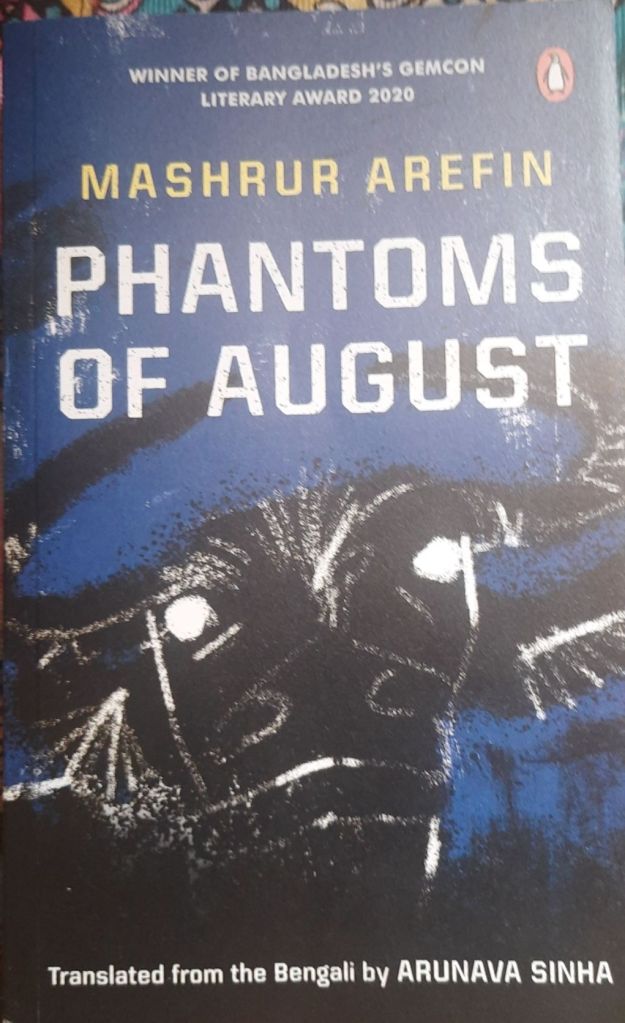
By the time I finished the book, I wasn’t just thinking about Bangladesh’s history; I was thinking about history itself—how it’s written, remembered, and lived. You’ll walk away from this novel, as I did, with a deeper understanding of not just the events of 1975 but also the universal truths about loss, identity, and resilience. It reminded me, and will likely remind you, that history isn’t just dates and events—it’s a collection of human experiences, each one as complex and nuanced as the last.
Reading Phantoms of August was more than an experience for me—it was a transformation. I felt connected to a past that wasn’t mine but became part of me through Arefin’s words. If you pick it up, I believe you’ll feel the same. This isn’t a book you read and forget; it’s a story that stays with you, reshaping the way you see the world, the past, and even yourself. Are you ready to take that journey?
#PhantomsOfAugust #AugustAbchaya #MashrurArefin #BangladeshiLiterature #HistoricalFiction #SheikhMujiburRahman #PoliticalThriller #BengaliNovels #IdentityAndMemory #LiteraryFiction
I’m participating in the #TBRChallenge by Blogchatter


 Poetry Hub
Leave a reply to PebbleGalaxy Cancel reply