A Deep Dive into the Darkness: My Review of The Gurugram School Murder
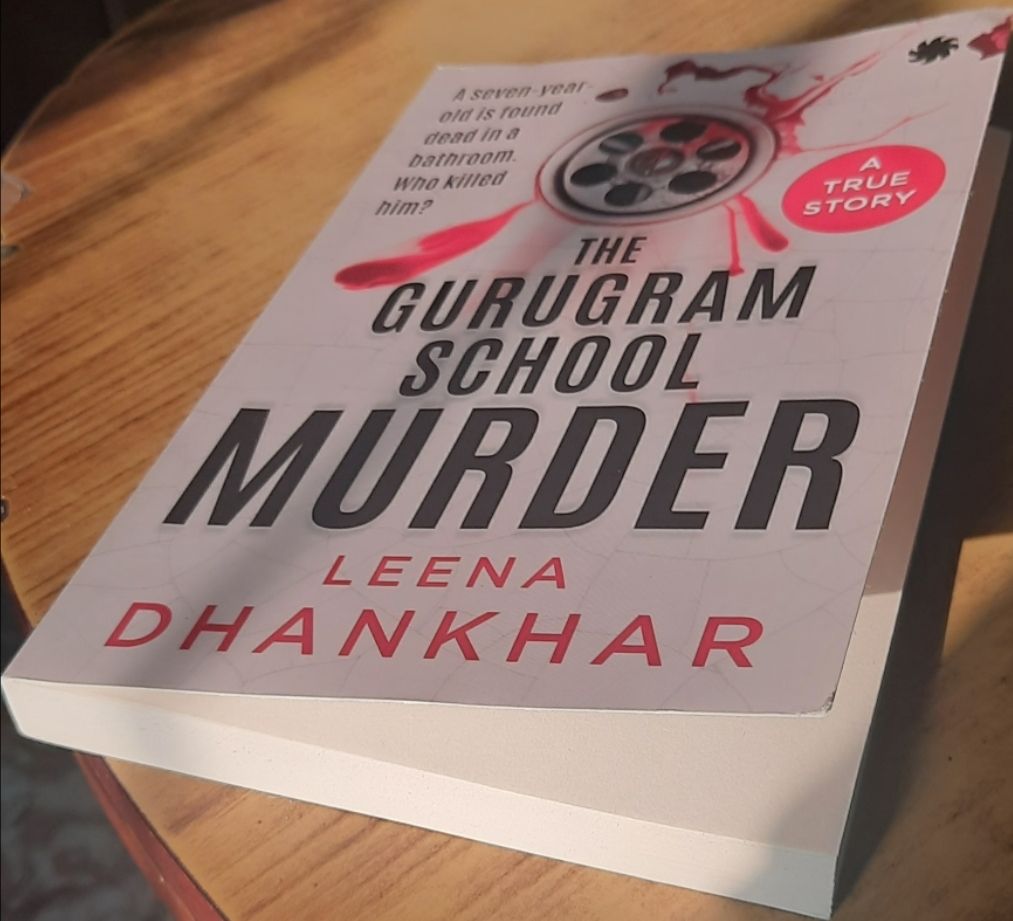
As I clutched Leena Dhankhar’s The Gurugram School Murder, an unsettling chill coursed through me. It wasn’t my first foray into true crime, but something about this story felt disturbingly different. True crime often quenches our morbid curiosity, but this book—it didn’t just tell a story; it interrogated society. It peeled back layers of our collective failures and left me grappling with questions I didn’t know I needed to ask.
The Initial Shock: A Story That Hits Close to Home
September 8, 2017. For many, it’s just a date. For the parents of a seven-year-old boy in Gurugram, it’s the day their world shattered. A child murdered in a school—a sanctuary meant to nurture innocence, not destroy it.
I paused more times than I can count as I read the opening chapters. It wasn’t that the narrative was hard to follow. No, Dhankhar’s writing is razor-sharp and gripping. It was hard to bear. You feel the raw weight of a tragedy that defies comprehension. I couldn’t help but wonder—how do parents survive something like this? How does a society allow it to happen in the first place?
A Crime That Unveiled Systemic Rot
Dhankhar doesn’t merely recount the facts; she constructs a labyrinth. Each chapter is a meticulously researched dissection of a botched investigation, societal negligence, and the many layers of deceit. The police framed an innocent bus conductor almost immediately—an action so incomprehensibly unjust that it felt like fiction. But the truth? It was worse. The real perpetrator, a 16-year-old student, was hiding in plain sight.
Dhankhar’s voice rings clear through the pages, cutting through the noise with relentless precision. You feel her outrage. Her disbelief. Her determination to hold a mirror up to the systems that failed not just the victim but everyone who trusted them. The police’s cover-up wasn’t just a subplot; it was a searing indictment of institutional apathy.
The Emotional Wreckage: A Family’s Grief
Reading this book wasn’t passive; it was participatory. Dhankhar plunges you into the emotional core of the story—the devastated parents’ fight for justice. You don’t just read about their grief; you feel it. The ache in their voices, the fury in their hearts—it reaches off the page and grips you by the throat.
And here’s where it gets personal. I couldn’t stop myself from imagining my own family in their place. Would I have the courage to fight as they did? Would I survive such a loss? Dhankhar forces you to confront these uncomfortable questions, shattering any illusion of detachment.
More Than a Crime: A Call for Accountability
This isn’t just the story of one horrific crime. It’s a spotlight on everything broken in our system—the corruption, the inefficiency, the staggering lack of accountability. It’s a call to action, a plea for change. Dhankhar doesn’t mince words; she challenges us to rethink our trust in the systems that are supposed to protect us.
And yet, for all its indictments, the book remains hopeful in its pursuit of justice. The parents’ resilience, Dhankhar’s unwavering commitment to the truth—it’s a reminder that even amidst despair, the human spirit fights on.
A Narrative Like No Other
Let’s talk about style. Dhankhar doesn’t just write; she crafts. Her storytelling is almost Avant-Garde in its approach. Courtroom transcripts blend seamlessly with investigative details and deeply personal reflections. The narrative shifts from cold, hard facts to poetic musings on loss, trust, and humanity.
It’s immersive and haunting, a melody of emotions that lingers long after the book is closed. At times, I found myself rereading passages—not because I missed anything, but because I wanted to experience the rhythm of her words again.
Themes That Transcend the Crime
What struck me most were the themes that simmer beneath the surface. Innocence corrupted. The fragility of trust. The societal pressures that drive individuals—especially teenagers—to devastating acts. Dhankhar doesn’t just analyze the crime; she unravels the threads that lead to it.
The psychological dive into the mind of the teenage perpetrator was chilling. What compels a child to commit murder? The answers Dhankhar provides are nuanced, empathetic, and deeply unsettling. She doesn’t excuse; she explains.
Closing the Book, but Not the Questions
When I finished the final chapter, I closed the book, but the questions it raised stayed open. How many more innocent lives are destroyed by systemic failure? How many truths are buried under cover-ups? Dhankhar has given voice to this story, but it’s up to us to ensure its lessons don’t fade into silence.
Would I recommend The Gurugram School Murder? Without hesitation. But be prepared—it’s not just a book you read; it’s one you live. It’s not just a story; it’s a reckoning.
Your Turn to Reflect
As you pick up this book, ask yourself: What does justice mean to you? What would you do if your trust in the system was betrayed? And most importantly, how can we, as a society, ensure that no child’s life is ever cut short like this again?
Have you read The Gurugram School Murder? If not, you should. Let’s start a conversation—about justice, accountability, and the stories we owe it to ourselves to confront.
#TrueCrimeBook #LeenaDhankhar #GurugramSchoolMurder #IndianCrimeStories #TrueCrimeReview #BookLovers #JusticeForAll #CrimeAndSociety #InvestigativeJournalism #PsychologicalInsights
I’m participating in the #TBRChallenge by Blogchatter


 Poetry Hub
Leave a reply to Aishwariya Laxmi Cancel reply