
A Journey into Japan’s Sacred Vegan Cuisine
Shojin Ryori (精進料理) is not just food. It’s a philosophy. It is the mindful, plant-based cuisine rooted in Japanese Buddhism. Deeply spiritual and strikingly simple, Shojin Ryori nourishes body, mind, and soul.
Origins Rooted in Zen
Shojin means “devotion” or “progress along the path.” Ryori means “cooking.” Together, they embody a humble devotion to spiritual and physical purification. This cuisine originated in Buddhist temples in Japan. Monks practiced it as a form of discipline and reverence for all living things.
Brought to Japan from China in the 6th century, it evolved under the influence of Zen Buddhism. Over time, Shojin Ryori became a core part of temple life. However, it is now cherished beyond monastery walls.
The Philosophy Behind Each Bite
At its heart, Shojin Ryori promotes balance. It avoids meat, fish, onions, garlic, and other pungent foods. Why? Because these are believed to disturb spiritual clarity and inner calm.
Instead, the cuisine relies on seasonal vegetables, tofu, seaweed, and fermented ingredients. Simplicity reigns, but creativity flows freely within these limits. Every dish is crafted with awareness, respect, and intention.
This thoughtful preparation honors three core principles:
- 五味 (Go-mi) – Five Tastes: Sweet, salty, sour, bitter, and spicy.
- 五色 (Go-shiki) – Five Colors: Red, green, yellow, white, and black.
- 五法 (Go-ho) – Five Cooking Methods: Raw, steamed, boiled, grilled, and fried.
These principles guide the cook like a compass. They ensure every meal is balanced and nourishing.
The Art of Harmonious Eating
Each Shojin Ryori meal brings together the five tastes. You might taste sweetness in simmered pumpkin. Saltiness in soy sauce. Sourness in pickled daikon. Bitterness in leafy greens. Spiciness in a hint of grated ginger. Umami? That comes from kombu, shiitake, or miso.
These elements create a full sensory experience. Not just taste, but also color and texture play a role.
Green blanched spinach, red carrot ribbons, yellow kabocha squash, white tofu, and black hijiki seaweed—they all arrive on the plate in harmony. These colors aren’t random. They nourish different organs and emotions, based on ancient Eastern medicine.
Furthermore, dishes are prepared using different cooking methods. Some ingredients are steamed to preserve freshness. Others are fried lightly for texture. Some are slow-simmered for deep flavor.
This variety is not just for taste. It supports digestion and fosters mindfulness. You are encouraged to eat slowly, with gratitude.
Simple Yet Profound Ingredients
Shojin Ryori makes the ordinary extraordinary. Tofu becomes the star. Miso becomes a rich base. Even a simple radish gains new dignity.
Let’s explore a few staples:
- Koya Dofu (Freeze-dried Tofu): Light and spongy, it absorbs broth beautifully.
- Goma-dofu (Sesame Tofu): Not tofu, but ground sesame thickened with starch. It is creamy and subtle.
- Konnyaku (Devil’s Tongue Jelly): Firm and jelly-like, it adds texture and fiber.
- Daikon (White Radish): Often pickled or simmered, it brings a refreshing sharpness.
- Nasu (Eggplant): Grilled or simmered, it turns meltingly soft.
- Kombu and Shiitake: Used for making dashi, a savory broth without meat or fish.
Even rice isn’t plain. It may be mixed with barley, millet, or beans, enhancing its flavor and nutrition.
No Wastage, Only Gratitude
Shojin Ryori also honors the idea of mottainai, meaning “don’t waste.” Every part of the vegetable is used—leaves, peels, stems. Leftover broth might become soup the next day. A carrot top becomes garnish. Nothing is discarded casually.
This practice is deeply ecological and spiritual. It teaches appreciation for nature and restraint in consumption. In every bite, you feel the presence of earth, sun, water, and time.
Where Can You Experience Shojin Ryori?
Traditionally, Shojin Ryori is served in Buddhist temples across Japan. Kyoto, especially, is known for temple cuisine. Places like Tenryu-ji, Shigetsu, and Ryoan-ji offer exquisite temple meals.
However, you don’t need to travel far. Shojin Ryori-inspired dishes are now available in modern restaurants worldwide. Even home cooks are embracing this elegant form of vegan cuisine.
A Meal with a Message
Shojin Ryori is more than the sum of its parts. It is not about luxury or indulgence. It is about awareness. Every bite reminds you to live kindly, eat humbly, and act mindfully.
When you eat Shojin Ryori, you slow down. You chew. You savor. You reflect.
You feel connected—to the farmer who grew the vegetables, to the monk who stirred the miso, to the rain that watered the soil. It’s a silent prayer through food.
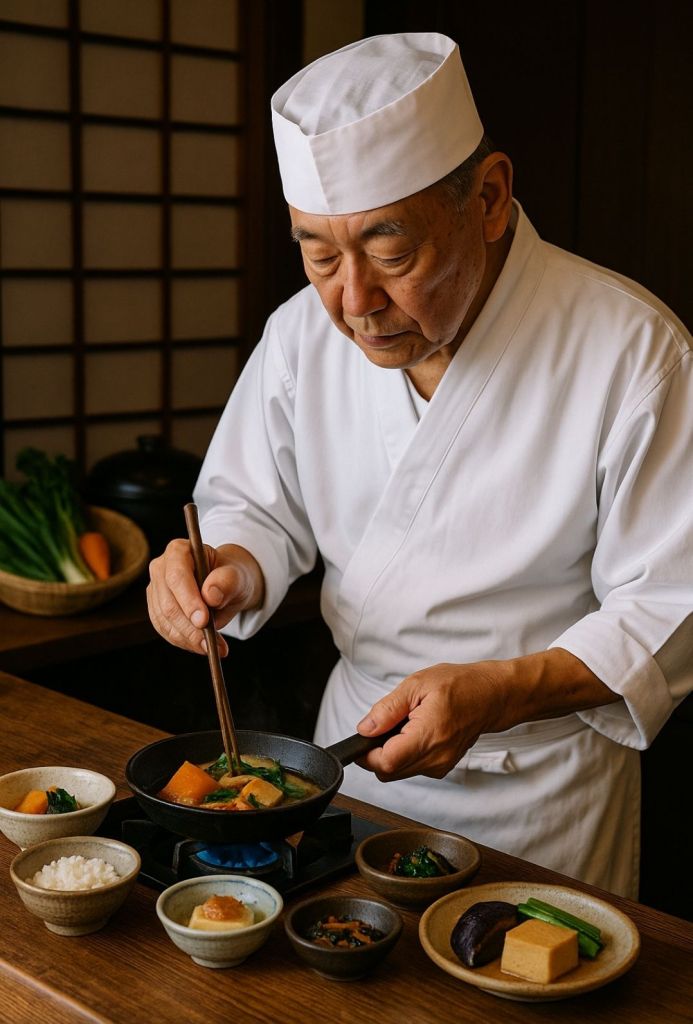
How to Start Cooking Shojin Ryori at Home
While it may look elaborate, you can start simple. Begin with a warm bowl of miso soup. Add tofu cubes, wakame seaweed, and a few scallions.
Steam some seasonal vegetables. Serve them with a light sesame dressing. Cook brown rice with a sprinkle of black sesame seeds.
Try simmered pumpkin with soy and mirin. Or prepare pickled cucumber with rice vinegar. These small dishes, together, form a meal.
Avoid garlic, onion, and animal products. Focus on balance, freshness, and seasonal ingredients.
Most importantly, cook with intention. Respect every ingredient. Avoid over-seasoning. Let natural flavors shine.
Shojin Ryori in a Fast World
In our fast-paced lives, Shojin Ryori offers a pause. It reminds us that food is not just fuel. It is a ritual. A communion with nature. A way to care for ourselves and the planet.
It also offers a gentle rebellion. Against waste. Against cruelty. Against haste.
With every meal, Shojin Ryori whispers: Be present. Eat consciously. Live gently.
#ShojinRyori #MindfulEating #ZenCuisine #JapaneseVegan #TempleFood #PebbleGalaxyEats #PlantBasedLiving #ShojinSpirit #BlogchatterFoodFest


 Poetry Hub
Hello. Thanks for visiting. I’d love to hear your thoughts! What resonated with you in this piece? Drop a comment below and let’s start a conversation.