What’s the oldest thing you own that you still use daily?
In the corner of my kitchen counter,
weathered and worn smooth by decades of devotion,
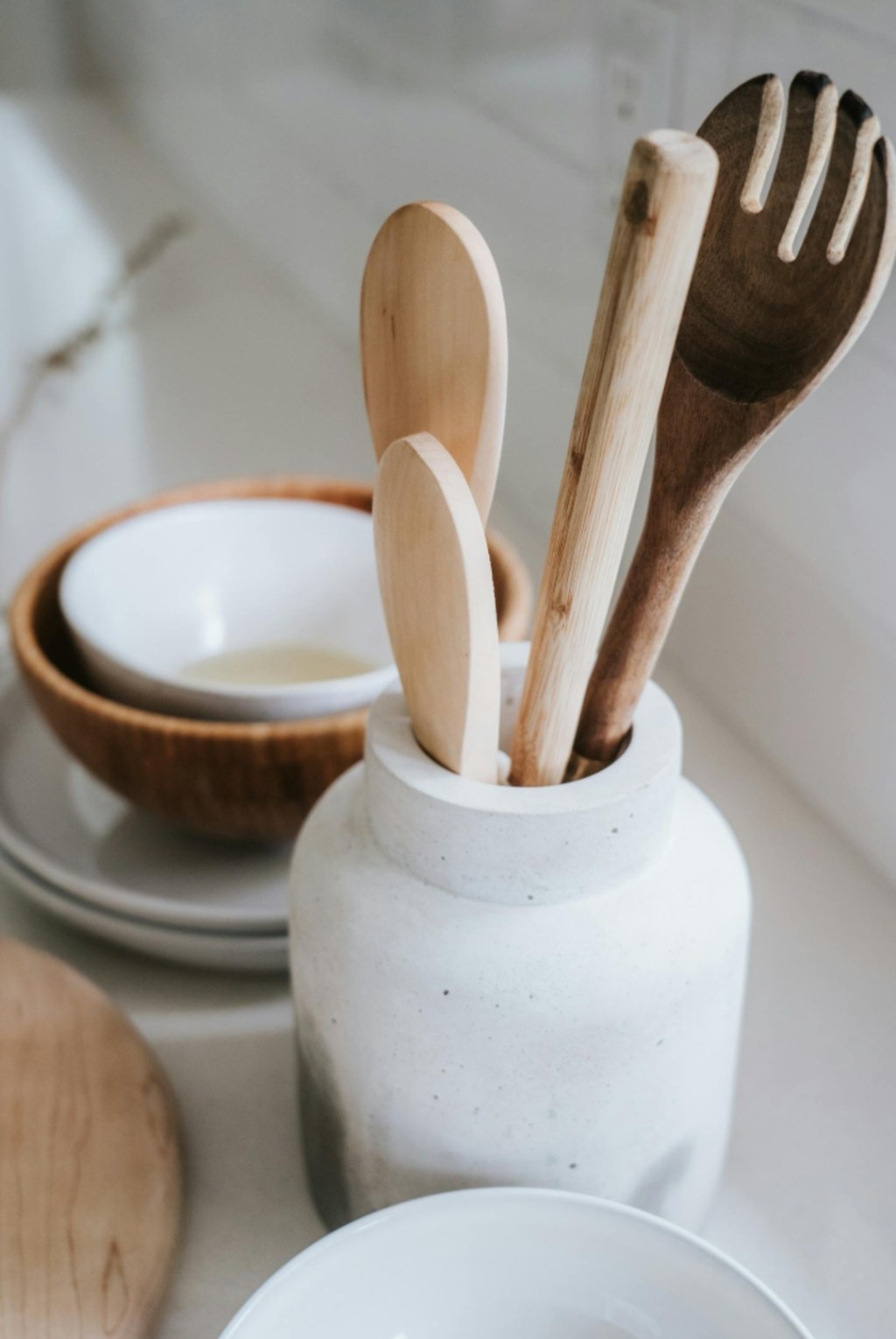
sits my grandmother's wooden spoon—
carved from olive wood in a village
whose name I can barely pronounce,
whose streets I have never walked,
but whose essence lives in the grain
of this humble instrument.

Forty-seven years it has stirred
the same clockwise circles,
scraping against cast iron pots
that have long since been replaced,
outlasting three kitchen renovations,
two divorces,
one cross-country move,
and countless arguments about
whether salt goes in before or after
the water boils.

The handle bears the fingerprints
of women who came before me—
my grandmother's arthritic grip,
my mother's hurried embrace
during dinner rushes when we were small
and hungry and impatient,
and now mine,
softer perhaps,
less certain,
but carrying forward the tradition
of stirring love into every meal.

There are scorch marks near the bowl
from the time I left it resting
against a hot burner,
battle scars that tell stories
I'm still learning to read.
The wood has darkened with age,
absorbed olive oil and tears,
tomato sauce and laughter,
becoming something more
than what it was carved to be.

Every morning I reach for it
without thinking,
muscle memory guiding my hand
to this faithful companion
that has outlived appliances,
relationships,
and the woman who first
wrapped her fingers around its weight.
It scrambles my eggs with the same
patient persistence
it once used to stir her minestrone,
connecting breakfast to history
in ways I'm only beginning to understand.

When friends visit my kitchen,
they notice the modern gadgets first—
the gleaming stand mixer,
the precise digital scale,
the intimidating espresso machine
that requires a PhD to operate.
But I always find myself
reaching past the chrome and steel
for this simple piece of carved wood,
this ambassador from another time
when cooking was ceremony,
when stirring was meditation,
when every meal carried the weight
of generations.

The spoon has witnessed transformations—
watched me burn my first attempt at risotto,
celebrated when I finally mastered
my grandmother's sauce recipe,
sat patiently while I cried
over a pot of soup
the night after her funeral,
somehow knowing that stirring
could be both practical and sacred,
both necessary and healing.

In a world of planned obsolescence,
of devices designed to break
just past their warranty dates,
this wooden spoon defies
the modern notion of utility.
It has no built-in timer,
no digital display,
no Bluetooth connectivity
to announce its presence
to the smart home ecosystem.
It simply endures,
growing more beautiful
with each passing year,
each new stain adding character
rather than diminishing value.

I've tried to replace it—
bought sleek silicone versions
that promise not to scratch,
invested in bamboo alternatives
marketed as more sustainable,
even splurged on artisanal pieces
from craft fairs and boutique stores.
But none carries the weight
of lived experience,
none holds the accumulated wisdom
of thousands of meals,
none speaks the language
my hands have learned
through decades of daily ritual.

Sometimes I wonder
what stories it could tell
if wood could speak—
about the late-night feedings
when my mother stirred formula
for colicky babies,
about holiday preparations
that began days in advance,
about quiet Sunday mornings
when pancake batter became
an excuse for conversation,
for staying close,
for stirring slowly
just to extend the moment.

The spoon has traveled
across continents and decades,
from that unnamed village
where my great-grandmother
first carved initials
into its handle—
letters I can barely make out now,
worn smooth by constant use
but still visible
if you know where to look,
if you understand that some marks
grow deeper with time,
become more meaningful
as they fade.

This morning, like every morning
for the past fifteen years
since I inherited this treasure,
I reached for it automatically,
my hand finding its familiar weight
while my mind planned the day ahead.
But today I paused,
really looked at this ancient tool,
this bridge between generations,
this reminder that some things
are meant to last,
meant to be used,
meant to carry forward
the simple, profound act
of nourishing the people we love.

In an age of digital everything,
of virtual connections
and artificial intelligence,
there's something deeply satisfying
about this analog relationship—
hand to wood to food to mouth,
a chain of connection
that predates electricity,
that will outlast
the latest technological revolution,
that reduces cooking
to its most essential elements:
time, attention, care,
and the gentle wisdom
of stirring in one direction,
always clockwise,
always with purpose,
always with love.

Tonight I will use it again
to stir tomorrow's soup,
adding my own small chapter
to its long story,
leaving my own invisible marks
on its surface,
contributing to the patina
of daily devotion
that makes ordinary objects
extraordinary,
that transforms tools
into heirlooms,
that proves some things
grow more valuable
not despite their age,
but because of it.
#Poetry #GenerationalMemory #FamilyHeritage #Kitchen #GrandmothersLegacy #InheritedTreasures #DailyRituals #CookingMemories #FamilyTraditions #HandmadeHeritage #AnalogLife #KitchenWisdom #Memory #FamilyHistory #CulinaryTradition #HeirloomStories #WoodenSpoon #OldestPossession #ModernVsTraditional #GenerationalBond


 Poetry Hub
Leave a reply to Maria Ott Tatham Cancel reply