
Book Review: Undefeatable Krishna — A Battle Between Faith, Destiny, and Human Weakness
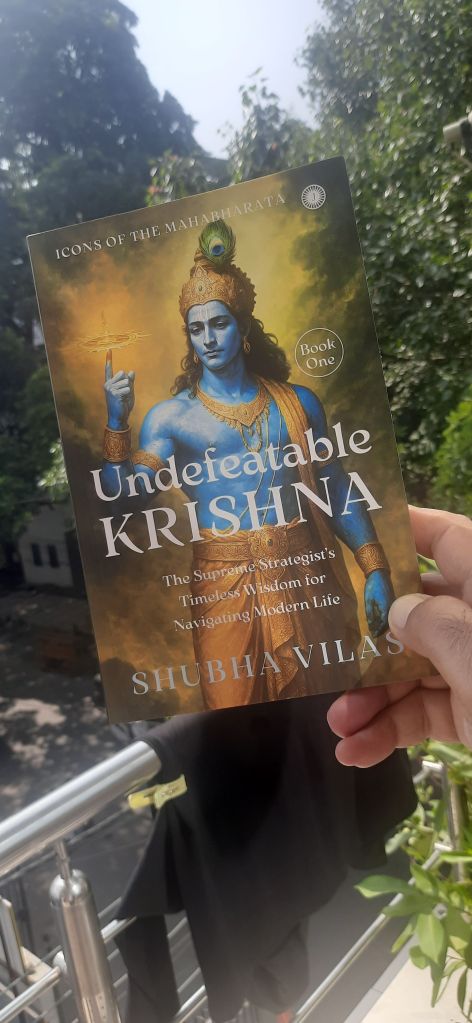
“Undefeatable Krishna” by Shubha Vilas and published by Jaico Books is not just a story told through words; it’s a soul-deep reflection on the timeless dance between divinity and humanity. Written with both reverence and rebellion, the book peels back the sheen of myth to reveal the unyielding spirit of Krishna—portrayed here not merely as a God, but as a strategist, friend, and philosopher navigating a world in turmoil.
The title itself invites contemplation. What does it mean to be “undefeatable”? Is it about physical victory, moral supremacy, or a state of consciousness where defeat loses meaning altogether? The author seems to argue that it’s the latter—the invincible essence of Krishna lies not in his divine power, but in his infinite capacity to remain composed, compassionate, and purposeful amidst chaos.
The Narrative Landscape
“Undefeatable Krishna” unfolds like an epic reimagined for the contemporary soul. While the central narrative is deeply rooted in the Mahabharata, the lens through which it’s told is startlingly modern. The story flows between the epic battlefields of Kurukshetra and the silent chambers of human dilemmas—where faith collides with reason, and victory often feels hollow.
The first few chapters draw readers into a richly textured world where every conversation with Krishna feels like a coded lesson in life management. His dialogues with Arjuna—presented here with poetic restraint—carry echoes of our own modern anxieties: career struggles, ethical conflicts, and the constant battle to balance ambition with integrity.
What’s remarkable is how the author humanizes the divine. Krishna, while radiant, is allowed to appear vulnerable, thoughtful, even sardonic at times. The portrayal liberates him from idealized perfection and reintroduces him as a pragmatic visionary, a mentor whose wisdom transcends religious and cultural boundaries.
Themes and Depth
At its heart, “Undefeatable Krishna” is an exploration of inner strength. The book weaves threads of philosophy, psychology, and spirituality into one seamless fabric. Some recurring themes include:
- Duty vs. Desire: The eternal tug-of-war between what one must do and what one wants to do plays out vividly through Arjuna’s crisis and Krishna’s counsel.
- The Illusion of Defeat: The narrative insists that defeat is never an external outcome—it is always an internal concession.
- The Power of Detachment: Krishna’s teaching on detachment is rendered not as indifference but as enlightened engagement—doing what’s right without being enslaved by results.
- Faith in Motion: Rather than blind devotion, the book celebrates active faith—the courage to act even when clarity is momentary.
Every theme feels intentionally aligned with today’s fractured world, where spiritual fatigue often overshadows moral clarity. Yet, the writing never preaches. It invites reflection through storytelling, not sermonizing.
Language and Style
The prose is lyrical yet sharp, alternating between intense emotional outbursts and tranquil meditative passages. The author’s grasp of rhythm is exquisite; sentences often flow like mantras, each holding a contemplative weight. The metaphors are vivid—storms, mirrors, rivers, and chariots all become living symbols of human struggle and divine guidance.
The pacing maintains a measured balance: slow enough to let each philosophical idea sink in, but dynamic enough to keep readers emotionally invested. The dialogues are particularly strong—imbued with subtext, irony, and timeless truth. Readers accustomed to shallow retellings will find this work refreshingly layered and intellectually stimulating.
Emotional Resonance
What makes Undefeatable Krishna linger in your mind long after finishing it is its emotional honesty. Beneath the divine discourse are moments of aching humanity—the sorrow of separation, the confusion of choice, and the strange comfort that comes from surrender.
The book’s portrayal of Krishna during his quieter moments—his silences, his knowing glances, his restrained grief at human folly—touches a tender chord. These moments remind readers that enlightenment is not the absence of emotion, but the mastery of it.
A Mirror for Modern Readers
In a time when spirituality is often commodified and myth reduced to meme, Undefeatable Krishna emerges as a needed rediscovery of depth. It speaks not only to believers but to rational seekers who are suspicious of rituals yet hungry for meaning. The text offers tools for introspection that feel intensely personal—whether you read it as a theological work or as a guide to psychological resilience.
The book’s undercurrent seems to whisper a quiet message: that Krishna’s undefeated nature resides within every human being who refuses to be broken by circumstance. His victory is symbolic—a reminder that clarity can coexist with chaos, and that wisdom is often born from the battlefield of doubt.
Final Verdict
Undefeatable Krishna is both literature and philosophy, myth and mirror. It belongs on the same shelf as works that move between the sacred and the cerebral—texts that challenge our moral certainties while offering pathways to transcendence.
It’s not a light read, but it is a transformative one. By the end, you may find yourself questioning what defeat truly means, and whether winning requires anything more than understanding your purpose and walking it without fear.
In its essence, the book celebrates an eternal truth: that divinity is not distant—it is simply undefeated awareness within us all.
Excerpt-worthy line: “He who conquers the battlefield within never fears the outcome without.”
Rating: 4.8/5 – Profound, poetic, and powerfully relevant.
Recommended for: Readers of mythology, philosophy enthusiasts, seekers of inner balance, and anyone navigating the modern chaos with a questioning heart.
This post is part of the Bookish League blog hop hosted by Bohemian Bibliophile.


 Poetry Hub
Leave a reply to Matheikal Cancel reply