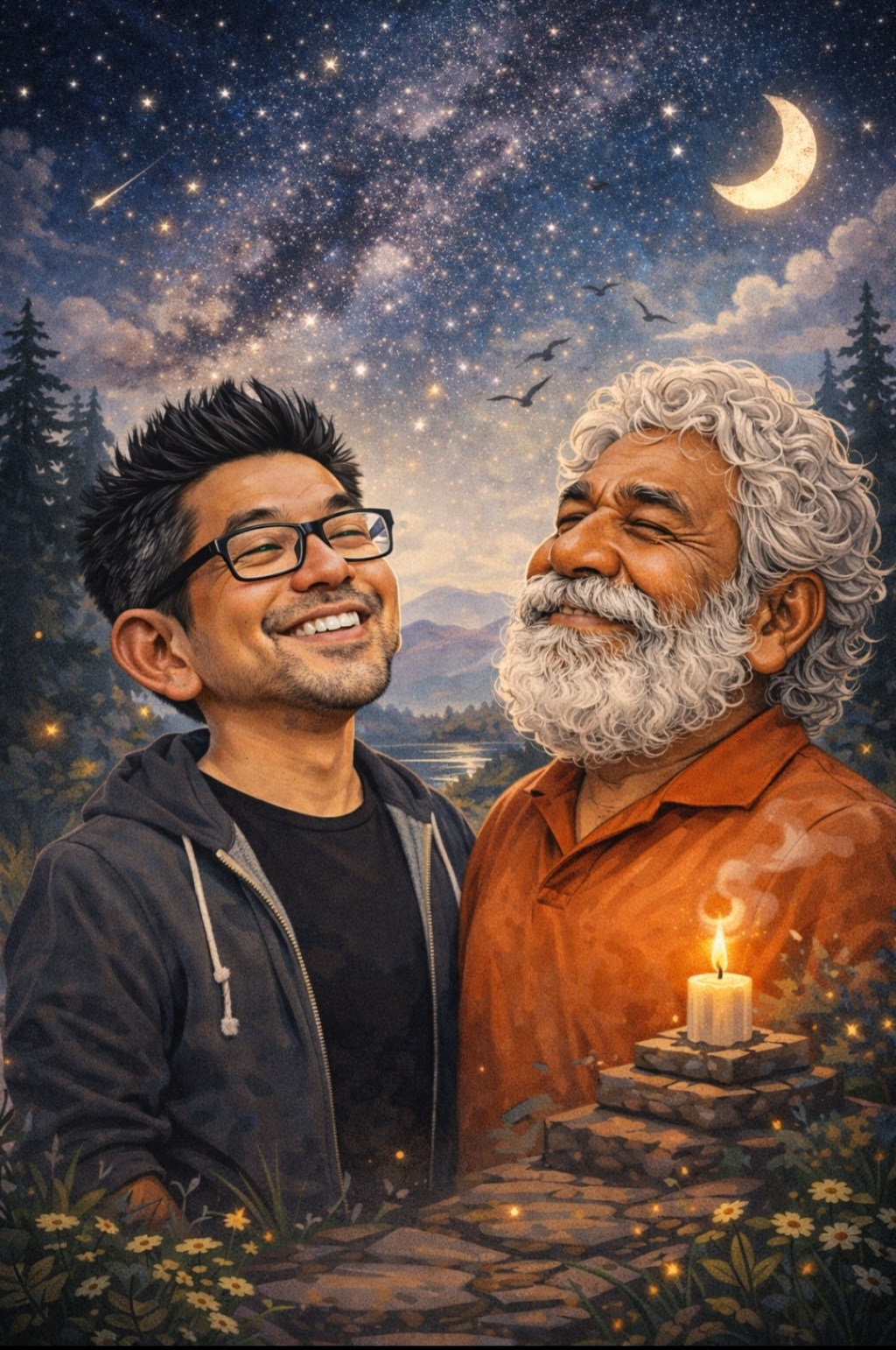
I learned many things
inside rooms with bells,
chalk dust settling like tired snow
on wooden desks,
maps peeling at the corners,
equations marching obediently
across blackboards.
I learned to underline,
to circle the “right” option,
to wait for permission
before speaking.
But the most useful thing I learned
did not arrive with a syllabus.
It did not ask for my roll number.
It did not fit into a three-hour exam
or a neat paragraph answer.
It came quietly,
like moss growing on stone,
like night arriving without ceremony.
I learned
that life does not move in straight lines,
and neither should I.
This came to me late,
after the grades were printed,
after the degrees were framed,
after the applause had faded
into polite memory.
It came to me while standing still—
on a railway platform at dawn,
tea cooling in a paper cup,
watching trains rush past
toward destinations I was told
I should want.
I watched them go,
steel snakes carrying urgency,
and felt something loosen inside me.
Not everything needs to be boarded.
Not every departure is meant for you.
This was not taught.
This was absorbed.
I learned it from the sky,
which never hurries
yet never misses an appointment.
From clouds that rearrange themselves
without asking permission.
From the moon,
which waxes and wanes
without apologizing for change.
In school,
change was called inconsistency.
Outside,
it was called survival.
I learned this lesson slowly,
the way rivers learn stone—
by staying,
by touching,
by wearing down resistance
without violence.
I learned it when plans failed
with embarrassing enthusiasm.
When certainty cracked
like thin ice under confidence.
When the future I memorized
refused to show up
and sent a substitute
I didn’t recognize.
At first,
I resisted.
I tried to negotiate with time,
to bargain with fate
using credentials and effort,
as if the universe
accepted résumés.
It didn’t.
Instead, it handed me mornings
where motivation was missing,
afternoons heavy with doubt,
nights where the ceiling fan
became my only audience.
And somewhere between those hours,
I learned how to sit with myself
without demanding improvement.
This was radical.
No teacher had said:
“Sometimes the lesson is to pause.”
No textbook suggested:
“Rest is not failure in disguise.”
Yet my body knew.
My breath knew.
The ache behind my ribs
knew before I did.
I learned to listen.
Not the listening that waits to reply,
but the listening that dissolves the listener.
The kind that trees do
when wind moves through them,
the kind oceans do
when the moon calls their name.
I learned that attention
is a form of love.
Give it fully,
and the world reveals itself
without being asked.
I learned this while washing dishes,
while walking without headphones,
while watching ants negotiate crumbs
with more patience
than I ever gave my own hunger.
Ants do not hurry,
yet their cities thrive.
In classrooms,
speed was rewarded.
Outside,
depth was.
I learned the cost of rushing—
missed sunsets,
half-heard stories,
meals eaten without taste,
conversations treated like transactions.
And I learned the wealth of slowness—
how silence ripens into insight,
how boredom opens hidden doors,
how loneliness,
when not resisted,
teaches self-companionship.
This was the hardest lesson.
To be alone
without narrating it as a problem.
To sit beside myself
like a friend who doesn’t need fixing.
I learned this under trees
that offered shade without questions.
Under stars that never asked
what I had achieved that day.
The cosmos, I discovered,
is not impressed.
It expands regardless of my productivity.
Galaxies collide without concern
for my deadlines.
Nebulae bloom
without asking if they are worthy.
This was strangely comforting.
If the universe could be vast
without justification,
perhaps I could be enough
without constant proof.
This thought landed gently,
like ash from a distant star.
I learned to measure days
not by output
but by presence.
Not by what I finished
but by what I felt fully.
The warmth of sunlight
on the back of my hand.
The sound of rain rehearsing patience
on tin roofs.
The way grief moves like weather—
unpredictable,
honest,
necessary.
No exam prepared me for loss.
No lecture explained
how absence echoes.
Yet loss taught me
how fragile attention is,
how easily we postpone love,
how foolish we are
to assume time is cooperative.
This lesson arrived with tears,
with unfinished conversations,
with names that now live
only in memory and habit.
And still,
it taught me tenderness.
It taught me to speak sooner,
to forgive faster,
to hold people
as if they were already memory.
I learned that control
is a comforting myth.
That certainty is often fear
wearing a uniform.
Outside the classroom,
I learned to make peace
with not knowing.
Not knowing became a landscape—
wide, open, breathable.
A place where curiosity could stretch
without being graded.
I learned to ask better questions,
not louder answers.
Questions like:
What feels alive today?
What is asking for my care?
What can I release
without collapsing?
These questions
did not seek conclusions.
They sought alignment.
And alignment,
I learned,
is quieter than ambition
but stronger than willpower.
It feels like rowing
with the current
instead of against it.
I learned this watching birds
adjust mid-flight,
never clinging to a single direction
as if it were destiny.
They respond.
They adapt.
They trust invisible physics.
So did I, eventually.
I learned that meaning
is not assigned;
it is grown.
It grows where attention lingers,
where care is consistent,
where ego loosens its grip.
I learned that comparison
is a thief of clarity.
That every path looks foolish
from the outside
until you walk it long enough
to recognize its intelligence.
The world is full of secret wisdom,
available only to those
who stop performing long enough
to notice.
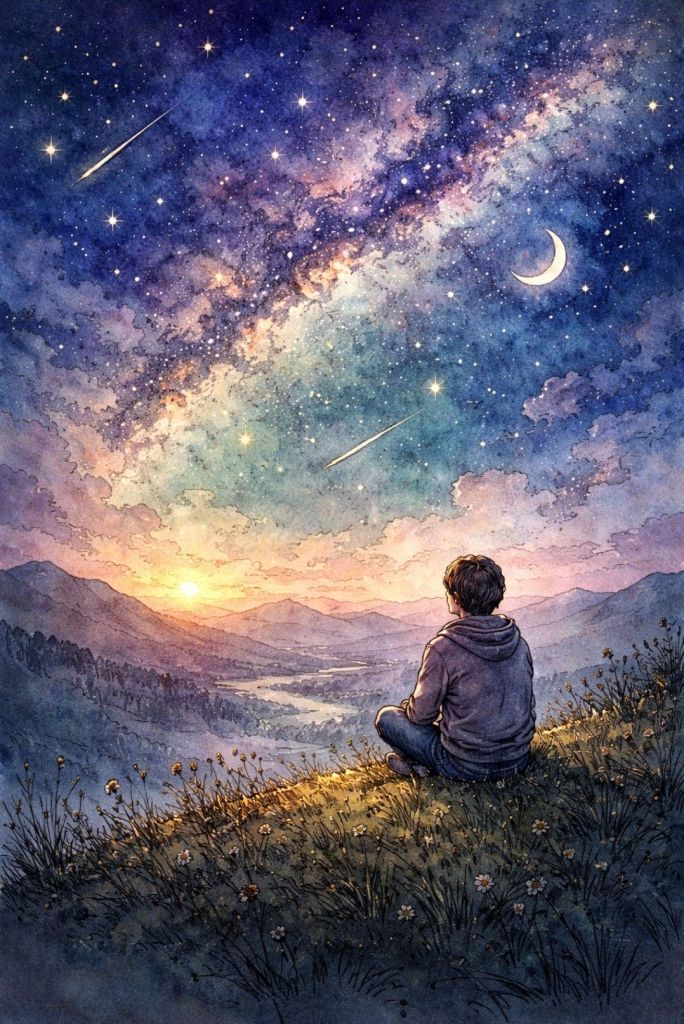
This, above all,
was the lesson:
Life is not an exam
you pass once.
It is a conversation
that changes tone
depending on how honestly you listen.
And now,
when I look back
at those rooms with bells,
with their tidy answers
and controlled variables,
I do not resent them.
They taught me structure.
But the world taught me soul.
And the soul,
once trusted,
becomes its own teacher—
patient,
cosmic,
infinitely unfinished.
This is what I learned
outside school,
outside approval,
outside certainty:
That to be alive
is to be in dialogue
with mystery—
and to answer,
not with mastery,
but with presence.


 Poetry Hub
Leave a reply to Choosing Myself First, and Finding the Shape of My Life – Poetry Hub Cancel reply