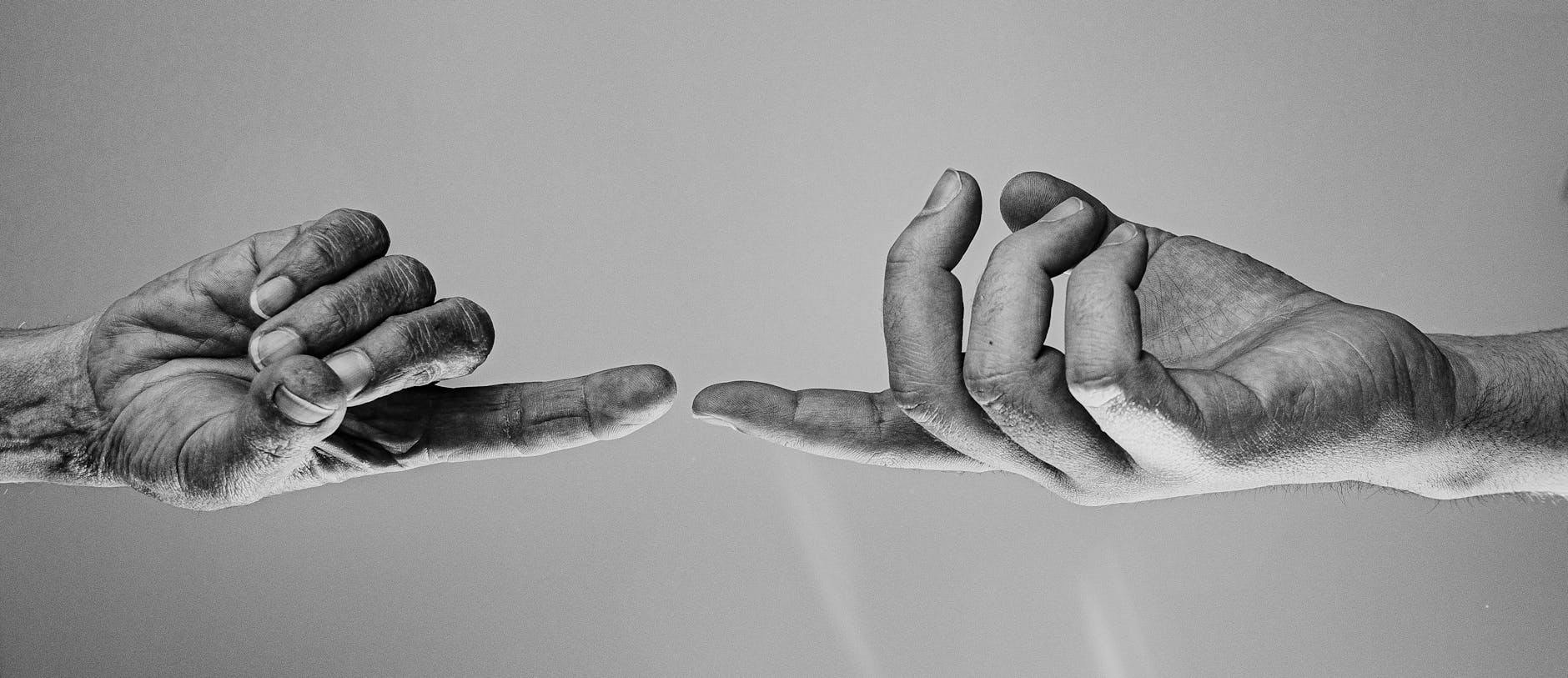
There is a moment
before a river decides
it will no longer follow itself—
not a loud moment,
not a breaking you can point to,
but a hesitation in the current,
a slight uncertainty
in the way water leans forward.
No one standing at the bank
would notice it.
The surface still glides,
still carries reflections
of sky and passing birds.
But beneath,
something has already begun
to loosen.
—
Promises are often like this.
They are spoken
in the language of certainty,
in the firm architecture of now—
as if the ground beneath us
has agreed to remain
exactly where it is.
As if time
has signed a quiet pact
not to interfere.
I will stay.
I will not change.
I will be here
in the same way
you found me.
We say these things
not because we are lying,
but because in that moment
they are true.
Completely,
beautifully,
undeniably true.
—
But truth, it seems,
is not a fixed place.
It is a season.
And seasons
do not ask permission
before they turn.
—
A leaf does not fall
because it has betrayed the tree.
It falls
because the air has changed,
because something invisible
has rewritten the agreement
between branch and sky.
The leaf held on
as long as it could.
Perhaps even longer.
—
And yet,
when it lets go,
we call it inevitable.
Not failure.
—
Why then
do we not grant ourselves
the same quiet mercy?
—
I remember the promise
as it was spoken—
clear as morning light,
steady as a mountain
that had never imagined
it could erode.
There was no hesitation in it.
No shadow.
Only the clean horizon
of belief.
I thought
that was enough.
That belief
was a kind of permanence.
—
But belief,
like wind,
does not stay where it begins.
It travels.
It learns new directions.
It carries with it
the dust of distances
we did not know we would cross.
—
And somewhere along the way,
without announcement,
the path shifted.
Not abruptly.
Not cruelly.
Just enough
that the steps I was taking
no longer matched
the road I had promised to walk.
—
At first,
I tried to correct it.
Turn back.
Re-align.
Convince the ground
to return
to what it had been.
But the ground
was no longer listening.
Or perhaps
it never had been.
—
A river does not apologize
for finding a new course.
It does not turn to the banks
and explain
why the water has chosen differently.
It simply moves.
And in moving,
it becomes something else.
—
This is the part
we struggle to name.
Because we are taught
that to break a promise
is to fracture trust,
to step outside
the moral line
drawn so carefully around us.
And sometimes,
it is.
Sometimes it is carelessness,
or fear,
or the quiet convenience
of forgetting what we once held sacred.
But not always.
Not always.
—
Sometimes
it is the slow realization
that the person who made the promise
is no longer the one
who must keep it.
Not because they disappeared,
but because they grew
in directions
the promise did not account for.
—
There is a kind of grief
in this understanding.
A soft, persistent ache
that does not accuse,
but lingers.
It asks:
What does it mean
to be true
if truth itself
is changing?
—
The stars above us
do not remain
as we first saw them.
Some have already vanished,
their light still traveling
toward our eyes—
a delayed honesty
arriving too late
to correct what we believed.
We look up
and call it permanence.
But it is only distance.
—
Perhaps promises are like that.
Light from a moment
we are no longer inside.
Still visible.
Still beautiful.
But no longer real
in the way we thought.
—
I have wondered
if the breaking
is where the truth begins.
Not the breaking
that comes from disregard—
but the one
that comes quietly,
reluctantly,
like a door opening
in a house you thought
had no more rooms.
—
What if
to hold a promise
beyond its truth
is a deeper kind of unfaithfulness?
What if
staying
when you have already changed
is a slower,
more silent form
of leaving?
—
These are not questions
with clean answers.
They move
like wind through tall grass—
visible only
in the way things bend.
—
And so I stand here,
not at the place
where the promise was made,
but somewhere farther along—
where the path
no longer resembles
its beginning.
I do not deny
what I said.
I do not erase it.
It belonged
to a version of me
that was real.
That mattered.
That loved
with the only language
it knew.
—
But I cannot pretend
that I am unchanged.
I cannot force the river
to return
to its previous shape.
I cannot ask the leaf
to climb back
onto the branch.
—
So I let the promise
be what it has become—
not a failure,
but a record.
Not a betrayal,
but a boundary
of who I once was.
—
And in the quiet that follows,
there is something unexpected—
not relief,
not entirely—
but a kind of stillness
that does not accuse.
A space
where honesty
can finally sit
without fear
of contradicting itself.
—

Perhaps this is what we learn:
Promises are not broken
because we intended to deceive,
but because life
refuses
to remain still enough
for any word
to hold it completely.
—
And in that refusal,
there is not cruelty,
but motion.
—
And in motion,
there is truth.
—
And in truth,
even when it arrives
after the breaking,
there is still
something
that remains unbroken.
—
Not the promise.
But the meaning
we carried
when we made it.

Leave a Reply