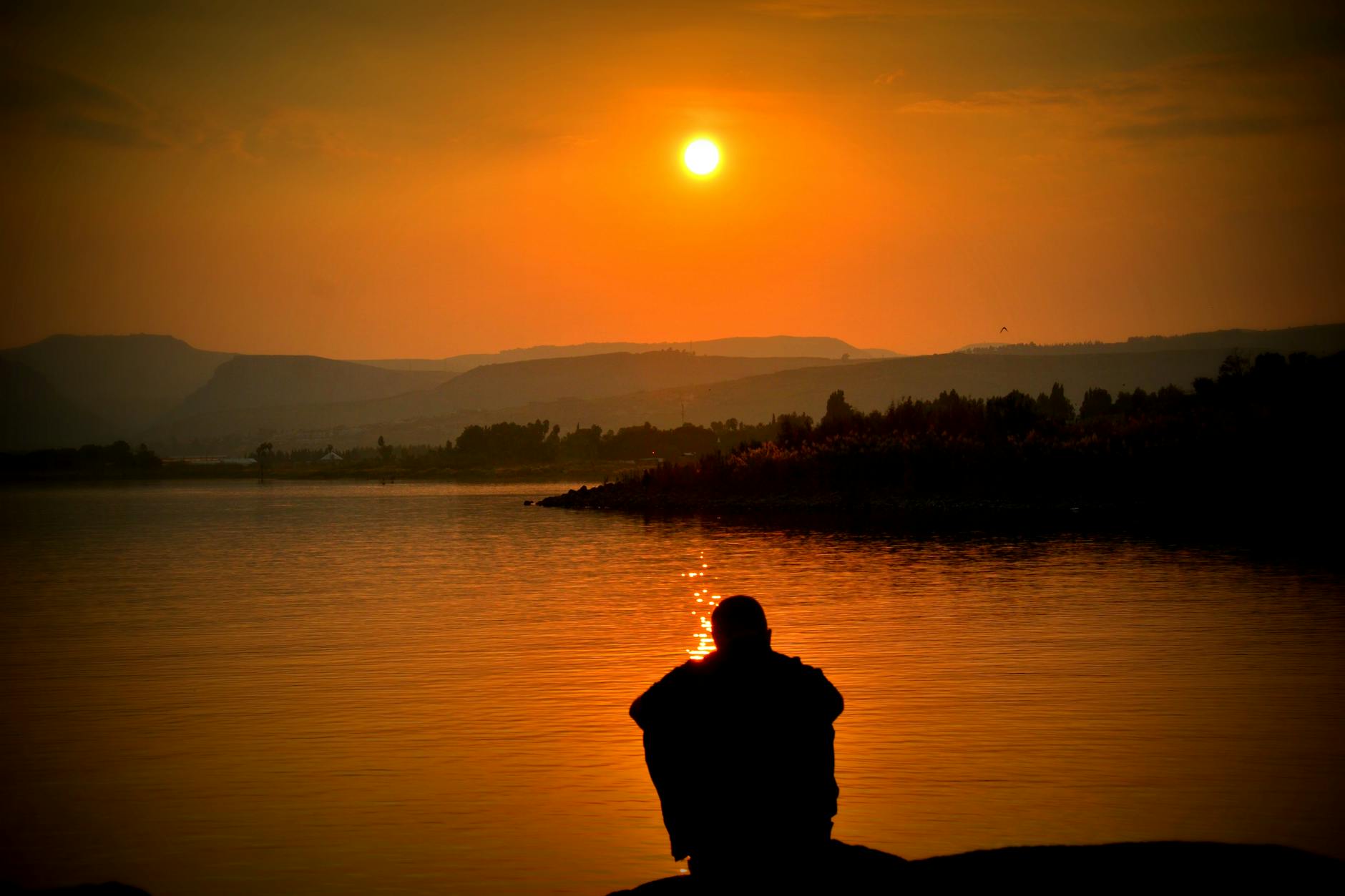
There is a kind of strength
that never announces itself—
no thunder, no applause,
no visible fracture lines.
It arrives quietly,
like dusk slipping into a room
where no one thought to light a lamp,
and stays—
because someone must.
You became that someone
without ceremony.
Not in a moment of decision,
but in a series of small surrenders—
a swallowed word here,
a held-back tear there,
a habit of saying “I’m fine”
until the phrase forgot its meaning
and became your name.
People learned you
as they learn the sky—
reliable, wide,
always there to hold their weather.
And so they came
with storms in their throats,
with questions that had no answers,
with grief cupped carefully in their palms
as though you were a place
where it could be set down safely.
You listened.
You held.
You steadied their trembling edges
until they could stand again.
You became the quiet architecture
of other people’s survival.
—
But no one ever asked
what it costs
to be a shelter
that is never sheltered.
No one imagines
the interior of a lighthouse
that has never seen its own light.
They see only the beam—
cutting clean through darkness,
guiding ships away from ruin—
but inside,
there is only a spiral of empty steps
and the echo of waves
that never come close enough
to touch.
You are that lighthouse.
You stand
at the edge of everyone else’s chaos,
turning, always turning,
keeping them from breaking
on the rocks you’ve memorized
by heart.
And still—
no one asks
what it means
to never leave your post.
—
There are days
when your strength feels like a myth
you have to keep performing.
You wake up already tired,
already full
of conversations that haven’t happened yet,
already bracing
for the weight of being needed.
You move through the day
like a river
that keeps giving itself away—
cup after cup,
hand after hand—
until the surface looks full,
but underneath,
something has begun to thin.
No one sees the dryness
beneath the current.
They only see
that you still flow.
—
Sometimes,
in the rare silence
between one person’s pain
and another’s arrival,
you feel it—
that quiet, unnamed emptiness
stretching inside you
like a room
no one has ever entered.
It is not dramatic.
Not loud.
It does not collapse you
in obvious ways.
It simply…
lingers.
A soft, persistent ache
that asks nothing
and receives even less.
You try to explain it
once or twice—
“I feel a little tired.”
“I think I need some space.”
But the words sound smaller
than the truth.
Because how do you say
that you have become
so fluent in holding others
that you’ve forgotten
the language of being held?
—

There is a loneliness
in being the strong one
that no one warns you about.
Not the loneliness
of being alone—
but the loneliness
of being unseen
in a crowd that leans on you.
You can sit
in a room full of people
who trust you with everything,
and still feel
like a ghost
passing quietly between them.
Because they know
what you give—
but not what you carry.
They know
your steadiness—
but not the trembling
you tuck carefully out of sight.
They know
your answers—
but not the questions
that keep you awake.
—
You have become
a tree
that holds many nests.
Birds come and go—
resting, building,
raising entire lives
on your branches.
You do not mind.
In fact,
you take pride
in how much you can hold.
But somewhere along the years,
your trunk has hollowed
just slightly—
a quiet erosion
from giving too much
of yourself away.
From the outside,
you are still strong.
Still standing.
Still necessary.
But inside,
there is a softness
that no one touches.
—
And yet—
you continue.
Because stopping
feels like failure.
Because rest
feels like selfishness.
Because somewhere,
someone might need you—
and you have trained your heart
to respond
before it even hears your own name.
You tell yourself
this is kindness.
And it is.
But it is also
a slow forgetting.
—
There is a moment—
it comes quietly,
as most truths do—
when you begin to wonder
what it would feel like
to not be the strong one.
Not forever.
Not even for long.
Just…
long enough
to set everything down.
To not anticipate
the emotional weather
of every room you enter.
To not translate silence
into responsibility.
To not feel
like the absence of your strength
would cause everything
to fall apart.
—
You imagine it sometimes—
what it would be like
to be held
without explanation.
To speak
without measuring your impact.
To say
“I am not okay”
and let the sentence exist
without immediately
trying to soften it
for someone else’s comfort.
But the habit of strength
is difficult to unlearn.
It clings to you
like a second skin—
familiar, protective,
and quietly suffocating.
—
Still,
something inside you
has begun to shift.
Not loudly.
Not dramatically.
Just a subtle turning—
like a river
deciding, at last,
to remember its own source.
You begin to notice
the weight
you have been carrying
as if it were invisible.
You begin to see
how often
you abandon yourself
to remain available to others.
And slowly—
carefully—
you start to ask a different question:
What if my strength
is not meant
to erase me?
—
What if strength
is not the absence of need,
but the courage
to acknowledge it?
What if being the strong one
does not require
you to be the silent one?
What if the lighthouse
could, even for a moment,
turn its light inward—
and see itself?
—
This is where
the poem softens.
Not into resolution—
but into possibility.
Because reclaiming yourself
does not happen all at once.
It happens
in small, almost unnoticeable acts:
Saying no
without a long explanation.
Letting a message wait.
Allowing someone else
to sit with their own discomfort
without rushing in
to fix it.
Admitting—first to yourself—
that you are tired
in a way sleep cannot solve.
—
You begin to keep
a small portion of yourself
unspent.
At first,
it feels unfamiliar—
almost wrong.
But then,
something remarkable happens:
You do not collapse.
The world does not unravel.
People adjust.
And in that space,
you start to feel
something you haven’t felt
in a long time—
Not relief.
Not yet.
But a quiet return.
—
You realize
that you were never meant
to be a reservoir
for everyone else’s emptiness.
You were meant
to be a living, breathing being
with edges,
with limits,
with a center
that belongs only to you.
You can still be kind.
Still be present.
Still be strong.
But not at the cost
of your own existence.
—
The loneliness
does not vanish overnight.
It lingers—
like an old echo
in a familiar room.
But it begins to change shape.
Because now,
you are no longer
completely alone inside it.
You are there, too.
Present.
Listening.
Learning
how to sit with yourself
the way you have always sat
with others.
—
And maybe—
just maybe—
one day,
someone will meet you there.
Not as a storm
seeking shelter,
but as a quiet presence
willing to stay
even when you are not
holding everything together.
Until then,
you learn
to become
your own refuge.
Not perfectly.
Not completely.
But enough.
Enough
to rest.
Enough
to breathe.
Enough
to remember
that strength
was never meant
to be a lonely place
you lived in forever.
—
And so you stand—
still a lighthouse,
still a tree,
still a river—
but now,
with a small, steady light
kept just for yourself.
Not for guidance.
Not for others.
Just to remind you—
in the quiet hours
no one else sees—
that you exist, too.

Leave a Reply to Every Moment in Life, Like a Wave, Carries Both Presence and Departure – Between Stars & SilenceCancel reply